This Post Contains Affiliate Links. Please Read Our Disclosure for Full Information.
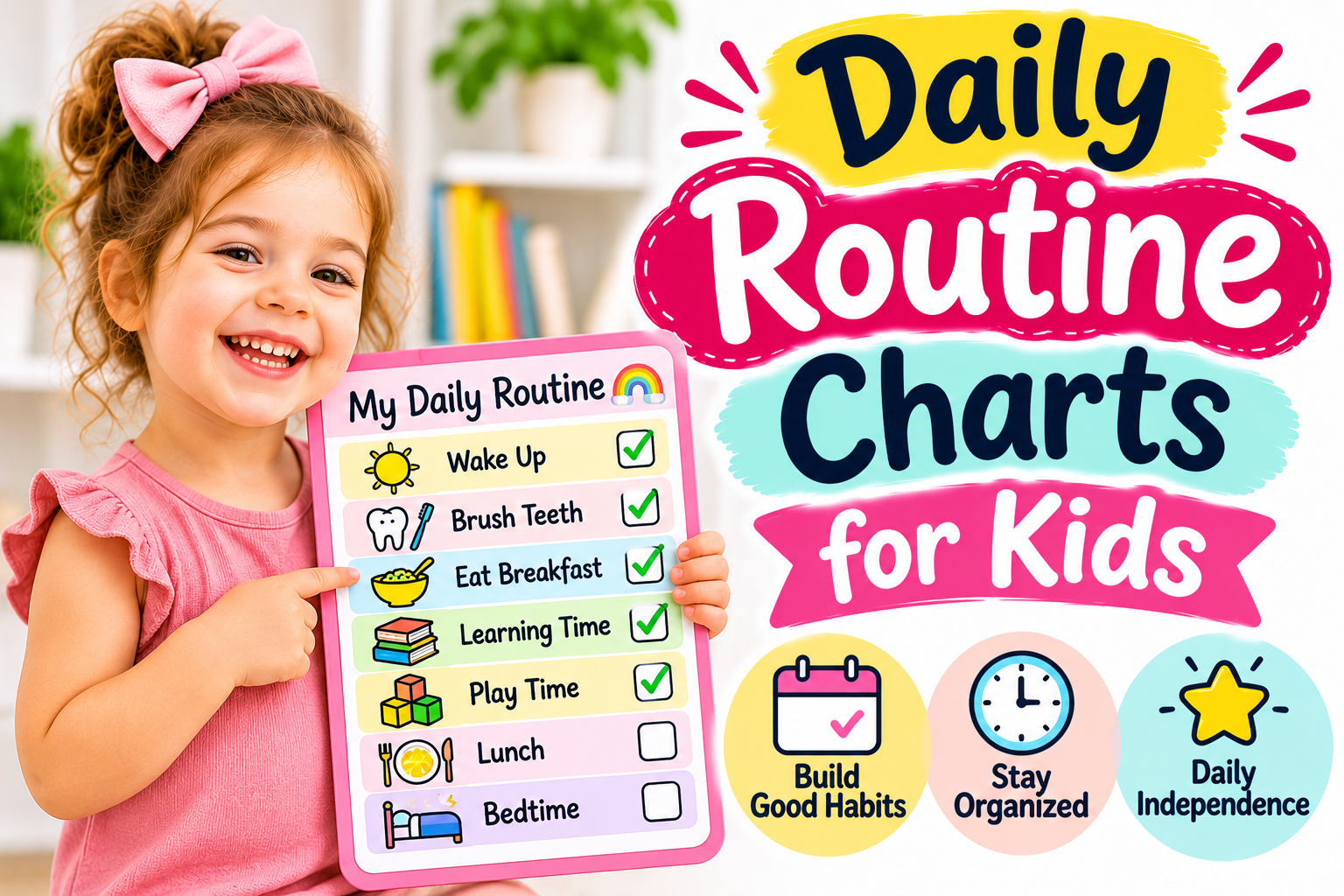
Getting kids to follow daily routines doesn’t have to mean constant reminders or expensive organizers! With a little creativity and a few affordable supplies, you can make colorful routine charts that turn everyday tasks into fun activities.
These 25 DIY routine charts for kids using budget-friendly supplies will help make mornings, bedtimes, chores, and after-school routines easier to manage.
1. DIY Morning Routine Chart With Construction Paper
A colorful construction paper chart is one of the easiest ways to introduce a morning routine.
Use a large sheet of paper and divide it into sections for waking up, brushing teeth, getting dressed, eating breakfast, and packing a school bag.
Add simple drawings or printed pictures beside each task so younger children can understand the steps.
✨ Parenting Tip: Start with four or five essential tasks rather than creating an overwhelming morning checklist.
Shop colorful construction paper for kids.


2. Magnetic Daily Routine Chart
A magnetic routine chart is a fun, reusable option for families who want to avoid printing new checklists every week.
Use a small magnetic whiteboard and attach picture magnets representing different daily activities.
Children can move each magnet from a “To Do” section to a “Done” section after completing a task.
This makes progress easy to see.
✨ Parenting Tip: Use large, securely attached magnets and keep small or loose magnets away from young children.
Shop magnetic whiteboards for kids.

3. DIY Bedtime Routine Chart With Picture Cards
Bedtime can feel smoother when children know what comes next.
Create a simple picture chart showing bath time, pajamas, brushing teeth, storytime, and bedtime.
Attach the pictures to a piece of cardstock and display it near your child’s bedroom.
You can use hand-drawn pictures, printed icons, or stickers to make the chart visually appealing.
✨ Parenting Tip: Keep the bedtime steps in the same order each evening to help build a predictable routine.
Shop bedtime routine picture cards.

4. Popsicle Stick Routine Chart
Craft sticks can become a creative, interactive routine chart with very little preparation.
Write one daily task on each jumbo craft stick and place them in a decorated container labeled “To Do.”
After completing a task, your child can move the stick into a second container labeled “Done.”
It’s a simple way to make daily responsibilities feel more manageable.
✨ Parenting Tip: Use wide, smooth craft sticks and let your child decorate the containers with washable markers.
Shop jumbo craft sticks for kids.

5. Laminated Reusable Routine Checklist
A laminated checklist is perfect for families who want a routine chart that lasts.
Print or draw a simple daily checklist and cover it with laminating sheets.
Use a compatible dry-erase marker so your child can check off completed tasks and wipe the chart clean afterward.
This works beautifully for morning, bedtime, and homework routines.
✨ Parenting Tip: Attach the marker to the chart with a suitable holder so it doesn’t get misplaced.
Shop self adhesive laminating sheets.

6. DIY Chore Chart With Stickers
A sticker chore chart can make everyday household responsibilities feel more engaging.
Create a simple grid with tasks such as putting toys away, making the bed, and placing dirty clothes in the laundry basket.
Let your child add a sticker whenever they complete a task.
Choose age-appropriate responsibilities and keep expectations realistic.
✨ Parenting Tip: Celebrate participation and effort rather than expecting every chore to be completed perfectly.
Shop kids reward chart stickers.

7. Velcro Picture Routine Chart
A Velcro-style routine chart is especially useful for younger children who aren’t reading independently yet.
Attach picture cards to a sturdy board using hook-and-loop dots.
Arrange the cards in the order your child should complete each activity.
Once a task is finished, they can move the picture to a completed section.
✨ Parenting Tip: Use large picture cards and securely attached fasteners. Avoid small detachable pieces for children who still mouth objects.
Shop self adhesive hook and loop dots.

8. DIY After-School Routine Chart
After-school hours can become chaotic when homework, snacks, playtime, and chores all compete for attention.
Create a colorful chart showing the order of your child’s afternoon activities.
Include steps such as putting away shoes, washing hands, eating a snack, completing homework, and enjoying free play.
A visual routine helps children understand what to expect.
✨ Parenting Tip: Include downtime after school so your child has an opportunity to rest before tackling additional responsibilities.
Shop colorful poster boards.

9. Clothespin Daily Routine Chart
A clothespin chart is a simple hands-on way for kids to track their daily tasks.
Write activities around the edge of a cardboard circle or along a sturdy strip of cardstock.
Children can move a clothespin to indicate the task they’re currently completing.
This creates an easy visual reminder without requiring a complicated system.
✨ Parenting Tip: Use large, smooth clothespins with adult supervision, especially for younger children.
Shop wooden craft clothespins.

10. DIY Weekly Routine Calendar
A weekly routine calendar helps children understand how activities change throughout the week.
Draw seven columns on a large sheet of paper and add simple pictures for school days, family activities, chores, and weekend plans.
Use different colors to distinguish between categories.
This is especially helpful for children who benefit from knowing what the upcoming week looks like.
✨ Parenting Tip: Review the calendar together each evening and make changes when plans shift.
Shop large weekly planner whiteboards.

11. Flip-Card Morning Routine Chart
A flip-card chart makes completing daily tasks feel interactive.
Create small cardstock cards for each morning activity and attach them to a larger board with tape hinges.
When your child finishes a task, they can flip the card over to reveal a checkmark or cheerful picture.
This simple design makes progress visible.
✨ Parenting Tip: Keep the chart at your child’s eye level so they can use it independently.
Shop colorful cardstock paper.

12. Dry-Erase Bathroom Routine Chart
Bathroom routines are easier to remember when the steps are displayed where children use them.
Create a waterproof or laminated checklist for brushing teeth, washing hands, brushing hair, and putting away toiletries.
Attach it in a safe, dry location near the bathroom sink.
Children can mark each completed task with a dry-erase marker.
✨ Parenting Tip: Use pictures for younger children and supervise toothbrushing according to your child’s age and needs.
Shop small dry erase boards.

13. DIY Homework Routine Chart
A homework routine chart helps school-age children organize their after-school responsibilities.
Create sections for preparing supplies, checking assignments, completing homework, packing the school bag, and putting materials away.
Use simple checkboxes or colorful symbols to make the chart easy to follow.
This can help children practice planning and independence.
✨ Parenting Tip: Include short movement breaks when appropriate and adjust homework expectations to your child’s age and school workload.
Shop kids homework planner pads.

14. Paper Plate Routine Clock
A paper plate routine clock is a creative way to introduce the sequence of daily activities.
Divide a paper plate into colorful sections representing breakfast, school, playtime, dinner, and bedtime.
Add pictures to each section and attach a movable cardboard pointer with adult help.
Children can move the pointer as their day progresses.
✨ Parenting Tip: Focus on the order of activities rather than exact clock times for younger children.
Shop paper plates for kids crafts.

15. DIY Weekend Routine Chart
Weekends often have a different rhythm from school days, so a separate chart can be helpful.
Create a flexible weekend routine with activities such as breakfast, outdoor play, family time, tidying toys, and bedtime.
Use removable picture cards so you can rearrange activities when plans change.
This gives children structure without making weekends feel overly scheduled.
✨ Parenting Tip: Leave plenty of room for unstructured play, relaxation, and spontaneous family activities.
Shop reusable kids activity cards.

16. Pocket Chart Daily Routine Organizer
A pocket chart is a practical way to display routine cards without permanently attaching them to a board.
Use a small hanging pocket organizer and fill each compartment with a picture or written task.
Arrange activities from top to bottom in the order they should happen.
Children can remove or turn over cards as they complete each step.
✨ Parenting Tip: Choose a chart with large, easy-to-access pockets and hang it securely at a comfortable height.
Shop kids pocket chart organizers.

17. DIY Toy Cleanup Routine Chart
Cleaning up toys becomes easier when children know exactly what belongs where.
Create a simple picture chart showing tasks such as putting blocks in a basket, returning books to a shelf, and placing stuffed animals in their storage area.
Use photographs of your child’s actual toys and storage containers.
This makes the routine more concrete and easier to follow.
✨ Parenting Tip: Start with one cleanup task at a time and work alongside your child until they become familiar with the process.
Shop kids toy storage labels.

18. DIY Self-Care Routine Chart
A self-care routine chart can help children practice everyday personal care habits.
Include simple activities such as brushing teeth, washing their face, getting dressed, combing hair, and preparing for bed.
Use colorful illustrations to make the chart inviting.
This is a great way to encourage age-appropriate independence while keeping routines predictable.
✨ Parenting Tip: Offer assistance whenever needed and avoid expecting young children to complete every self-care task independently.
Shop kids daily hygiene routine charts.

19. Color-Coded Family Routine Chart
A color-coded chart works well for families with multiple children.
Assign each child a different color and create a shared routine board.
Use colored markers or paper strips to show individual responsibilities, such as packing bags, feeding pets with supervision, or tidying bedrooms.
This helps everyone see their tasks without needing separate charts.
✨ Parenting Tip: Make sure each child’s responsibilities are appropriate for their age and abilities rather than assigning identical tasks.
Shop colorful washable markers.

20. DIY School Morning Checklist
School mornings can feel rushed, especially when children forget important steps.
Create a checklist for getting dressed, eating breakfast, brushing teeth, packing lunch, and collecting school supplies.
Place it near the bedroom door or family command center.
Older children can use written instructions, while younger kids may benefit from pictures.
✨ Parenting Tip: Prepare clothes and school supplies the night before to reduce morning stress.
Shop kids morning checklist boards.

21. DIY Routine Chart With Washi Tape
Washi tape is an affordable way to create a colorful routine chart without complicated crafting supplies.
Use different tape colors to divide a sheet of poster board into morning, afternoon, and evening sections.
Add handwritten tasks or simple picture cards to each section.
The result is a neat, customizable chart that looks lovely on a bedroom wall.
✨ Parenting Tip: Let your child choose the tape colors to make the chart feel personal and exciting.
Shop colorful washi tape sets.

22. DIY Reading Routine Tracker
A reading routine tracker encourages children to make books part of their daily schedule.
Create a simple chart with spaces for reading time throughout the week.
Children can color a book illustration, add a sticker, or mark a checkbox after enjoying a story.
For younger children, shared reading with a parent counts too.
✨ Parenting Tip: Keep reading enjoyable and pressure-free. Let your child choose books that interest them.
Shop kids reading tracker stickers.

23. DIY Visual Schedule With Family Photos
Using real family photos can make routine charts especially meaningful for young children.
Take pictures of your child completing familiar activities, such as brushing teeth, eating breakfast, putting on shoes, and reading before bed.
Print the photos and arrange them in sequence on a poster board.
This creates a personalized routine chart that feels familiar.
✨ Parenting Tip: Use simple, clear photos showing one activity at a time so your child can easily recognize each step.
Shop photo printing paper.

24. DIY Responsibility Chart With Checkboxes
A responsibility chart can help school-age children remember everyday tasks.
Create a weekly grid with responsibilities such as making the bed, putting away laundry, organizing school supplies, and tidying personal belongings.
Add checkboxes beside each activity so children can track their progress.
Keep the chart simple and adjust responsibilities as your child grows.
✨ Parenting Tip: Focus on building habits and teamwork rather than using the chart to criticize missed tasks.
Shop weekly responsibility chart pads.

25. DIY All-in-One Daily Routine Board
An all-in-one routine board is perfect for families who want a single place to organize the entire day.
Divide a large poster board or whiteboard into morning, afternoon, and evening sections.
Add picture cards, checkboxes, or movable labels for each activity.
You can include school preparation, playtime, homework, family meals, and bedtime routines.
✨ Parenting Tip: Review the board together at the beginning of the day and keep the schedule flexible when unexpected changes happen.
Shop large magnetic whiteboards.

Budget-Friendly Supplies for DIY Routine Charts
You don’t need a big crafting budget to create an effective routine chart.
| Supply | Best Use | Budget-Friendly Alternative |
|---|---|---|
| Construction paper | Colorful routine charts | Recycled paper |
| Cardstock | Durable picture cards | Clean cardboard boxes |
| Stickers | Progress tracking | Hand-drawn checkmarks |
| Laminating sheets | Reusable checklists | Clear sheet protectors |
| Dry-erase markers | Daily task tracking | Washable markers on paper |
| Hook-and-loop dots | Movable routine cards | Fold-over paper tabs |
| Craft sticks | Interactive task tracking | Cardboard strips |
| Washi tape | Chart decoration | Colored pencils |
| Magnetic whiteboard | Reusable schedules | Poster board |
| Printed pictures | Visual routines | Hand-drawn illustrations |
How to Make a DIY Routine Chart That Kids Actually Use
A successful routine chart should be easy to understand, realistic, and enjoyable.
Start with one routine. Choose mornings, bedtime, or after-school activities before creating multiple charts.
Keep the number of tasks manageable. Younger children may do best with three to five simple steps.
Use pictures for nonreaders. Clear illustrations help children follow routines more independently.
Let your child participate. Allow them to choose colors, decorate the chart, or arrange picture cards.
Place the chart somewhere visible. A routine chart works best when children can easily see and reach it.
Celebrate progress. Encourage effort and participation rather than expecting perfect completion every day.
Make adjustments when needed. If a routine isn’t working, simplify it or change the order of tasks.
Common Routine Chart Mistakes to Avoid
Even a beautifully designed chart won’t help if it’s too complicated.
Adding too many tasks: Overloaded charts can overwhelm young children.
Expecting immediate independence: Children often need reminders, modeling, and support while learning new habits.
Using rewards for everything: Stickers can be fun, but encouragement and a sense of accomplishment are often enough.
Making the schedule too rigid: Leave room for rest, play, and unexpected changes.
Creating charts without involving kids: Children may be more interested when they help choose the design.
Treating missed tasks as failures: Routine charts should support learning, not create anxiety or punishment.
Final Thoughts
Creating daily routines doesn’t have to be expensive or complicated. 💛
With a few simple craft supplies, you can make colorful, interactive charts that help children understand their responsibilities and develop everyday habits.
From magnetic schedules and picture cards to sticker trackers and DIY flip charts, these 25 DIY routine charts for kids using budget-friendly supplies offer plenty of creative ways to make family routines easier.
Start with one routine, keep the steps simple, and involve your child in the process.
Remember, the goal isn’t a perfectly completed chart every day. It’s helping children build confidence, independence, and a sense of accomplishment.
Less reminding, more independence, and smoother family routines—one little step at a time! ✨