This Post Contains Affiliate Links. Please Read Our Disclosure for Full Information.
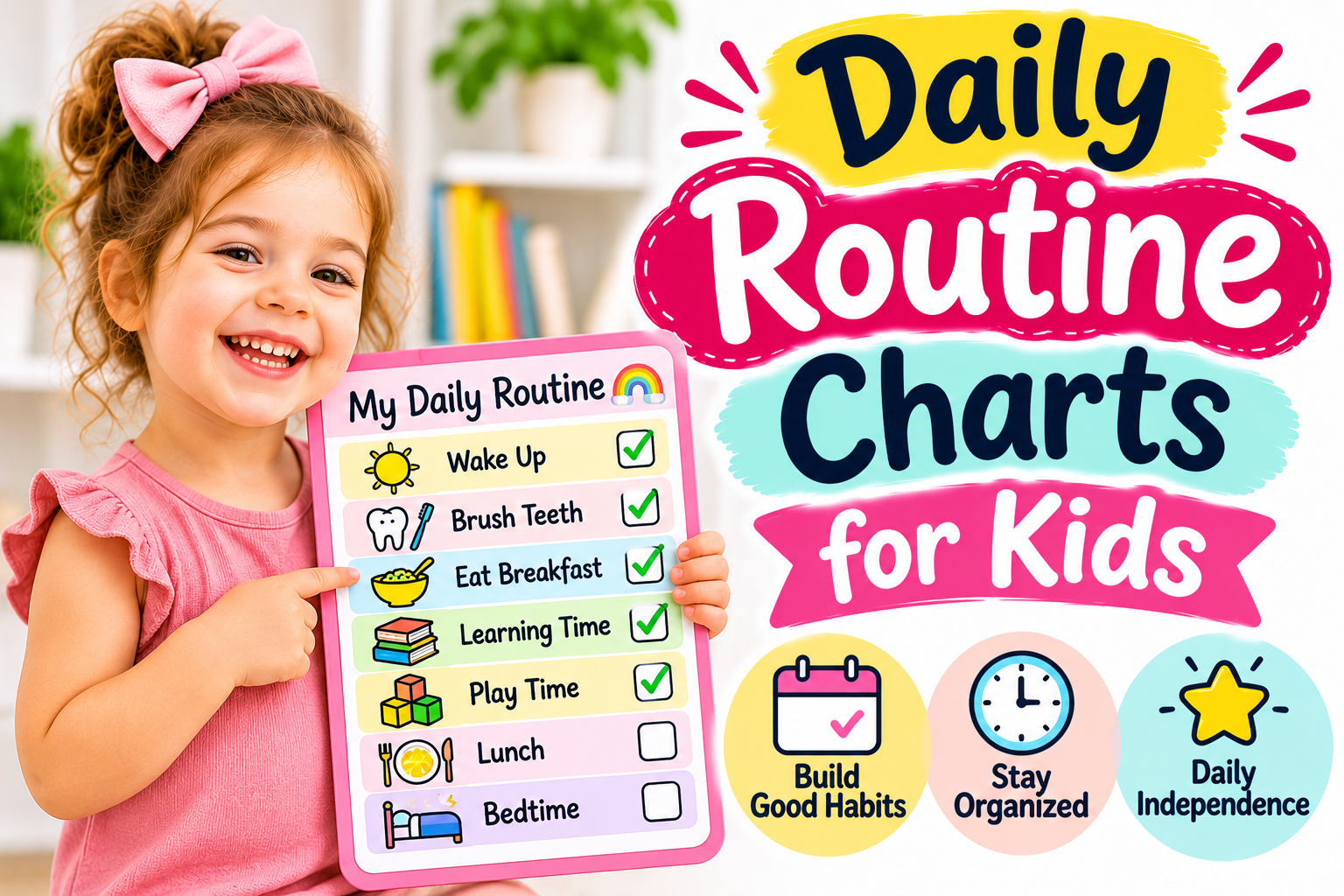
Getting kids through daily routines doesn’t have to mean endless reminders and morning chaos! A simple visual chart can make everyday tasks easier, more predictable, and even fun. 🌈
These 25 daily routine chart ideas for kids will help you organize mornings, bedtime, chores, homework, and other everyday activities while encouraging independence.
1. Create a Simple Morning Routine Chart
A morning routine chart can make getting ready for school or daycare much easier.
Include basic tasks such as brushing teeth, getting dressed, eating breakfast, packing a backpack, and putting on shoes.
Use colorful pictures alongside short labels so younger children can follow the routine independently.
✨ Parenting Tip: Start with four or five essential tasks instead of creating an overwhelming checklist. Keep the chart at your child’s eye level.
Shop kids morning routine charts.

2. Use a Bedtime Routine Chart
Bedtime can become stressful when kids aren’t sure what comes next.
A bedtime routine chart creates a predictable sequence that helps children transition from playtime to sleep.
Include tasks such as putting away toys, taking a bath, changing into pajamas, brushing teeth, reading a book, and getting into bed.
✨ Parenting Tip: Keep bedtime activities in the same general order each evening. A calm, predictable routine is often more helpful than strict timing.
Try a kids bedtime routine chart.
3. Make a Magnetic Daily Routine Chart
Magnetic routine charts are perfect for kids who enjoy moving pieces around.
Choose a magnetic board with illustrated task cards that children can move from a “To Do” section to a “Done” section.
This provides a clear visual reminder of their progress throughout the day.
✨ Parenting Tip: Use large, securely attached magnetic pieces appropriate for your child’s age. Keep small or loose magnets away from young children.
Shop magnetic daily routine charts for kids.
4. Create a Picture-Based Toddler Routine Chart
Toddlers may not be able to read yet, but they can recognize familiar pictures.
Create a simple chart featuring illustrations of breakfast, getting dressed, brushing teeth, playtime, and bedtime.
Arrange the pictures in the order the activities usually happen.
✨ Parenting Tip: Use real photographs of your toddler completing each task. Familiar images can make the routine easier to understand.
Try visual routine charts for toddlers.

5. Use a Dry-Erase Daily Checklist
A dry-erase routine chart is a reusable option for busy families.
Write your child’s daily responsibilities on a small whiteboard and let them check off each completed task.
You can update the checklist whenever schedules or responsibilities change.
✨ Parenting Tip: Use different marker colors for morning, afternoon, and evening tasks to make the chart easier to follow.
Shop dry erase daily routine charts.

6. Make a Kids Chore Routine Chart
A chore chart helps children understand their everyday household responsibilities.
Include age-appropriate tasks such as putting toys away, placing dirty clothes in the hamper, feeding a pet with supervision, or setting napkins on the table.
Keep the tasks realistic for your child’s age and abilities.
✨ Parenting Tip: Start with one or two simple chores and gradually introduce more responsibilities as your child becomes confident.
7. Create an After-School Routine Chart
After-school routines can help children transition from a busy school day to home activities.
Include tasks such as putting away shoes, washing hands, having a snack, unpacking a backpack, and enjoying some downtime.
Add homework or reading time when appropriate.
✨ Parenting Tip: Build in a short break before homework. Many children benefit from relaxing, moving around, or eating a snack after school.
Shop after school routine charts for kids.

8. Use a Flip-Over Routine Chart
A flip-over chart makes completing tasks feel like a little game.
Create a row of illustrated task cards that can be flipped over once each activity is finished.
Children can easily see which tasks remain without repeatedly asking what to do next.
✨ Parenting Tip: Choose sturdy, easy-to-flip cards and let your child decorate the chart with their favorite colors or characters.
Try flip routine charts for kids.
9. Create a Weekend Routine Chart
Weekends often have a different rhythm than school days.
A weekend routine chart can help kids balance chores, family time, outdoor play, and relaxation.
Include flexible activities such as making the bed, eating breakfast, tidying toys, and choosing a family activity.
✨ Parenting Tip: Leave room for spontaneous play. Weekend charts should provide gentle structure without making free time feel overly scheduled.
Shop kids weekend routine planners.

10. Make a Preschool Daily Routine Chart
Preschoolers often enjoy knowing what activities are coming next.
Create a chart with pictures representing circle time, learning activities, snacks, outdoor play, lunch, and quiet time.
This works well for both home learning and preschool-style routines.
✨ Parenting Tip: Use simple icons and review the chart together each morning. Allow extra time for transitions between activities.
Try preschool daily schedule charts.

11. Create a Homework Routine Chart
A homework chart can help school-age children develop consistent study habits.
Include steps such as preparing supplies, checking assignments, completing homework, reviewing work, and packing materials for the next day.
Use a simple checklist rather than a complicated schedule.
✨ Parenting Tip: Break larger assignments into smaller steps and include movement breaks when needed.
Shop kids homework routine charts.
12. Use a Sticker Reward Routine Chart
Sticker charts can make daily routines more engaging for children who enjoy visual encouragement.
Create a chart with simple tasks and let your child add a sticker after completing each one.
Focus on celebrating participation and progress rather than demanding perfection.
✨ Parenting Tip: Use stickers as optional encouragement, not as punishment. Praise effort and avoid taking earned stickers away.
Try kids routine sticker charts.

13. Make a Bathroom Routine Chart
A bathroom routine chart can help younger children practice everyday hygiene skills.
Include tasks such as using the toilet, flushing when appropriate, washing hands, brushing teeth, and putting towels away.
Use clear pictures to show each step.
✨ Parenting Tip: Place the chart near the sink or bathroom door and supervise hygiene routines according to your child’s age and abilities.
Shop kids bathroom routine charts.

14. Create a Getting-Dressed Routine Chart
Getting dressed can take forever when kids become distracted by toys or other activities.
A simple dressing chart breaks the process into manageable steps.
Include underwear, shirt, pants, socks, shoes, and weather-appropriate outerwear.
✨ Parenting Tip: Lay out clothing the night before and let your child choose between two suitable outfits to encourage independence.
Try kids getting dressed visual charts.

15. Use a Color-Coded Family Routine Chart
If you have multiple children, a color-coded chart can help everyone follow their own routines.
Assign each child a color and create separate sections for their daily responsibilities.
This makes it easier to manage different school schedules, activities, and bedtime routines.
✨ Parenting Tip: Keep expectations age-appropriate. Younger children may need pictures, while older kids can use written checklists.
Shop family routine chart organizers.

16. Create a Visual Timer Routine Chart
Some children find transitions easier when they can see how much time remains.
Pair a daily routine chart with a visual timer to help prepare for changes between activities.
For example, use the timer before cleanup, getting dressed, or leaving for school.
✨ Parenting Tip: Give gentle warnings before transitions and use the timer as a helpful cue rather than a source of pressure.
Try visual timers for kids routines.

17. Make a Homeschool Daily Schedule Chart
A homeschool routine chart can help children understand the flow of their learning day.
Include reading, math activities, creative projects, outdoor play, meals, and breaks.
Use movable cards so you can adjust the schedule when plans change.
✨ Parenting Tip: Alternate focused learning with movement and play. Younger children usually benefit from shorter, flexible activities.
Shop homeschool daily schedule charts.

18. Create a Screen-Time Routine Chart
A screen-time chart can help families set clear expectations around digital activities.
Include screen-free routines such as homework, outdoor play, meals, and bedtime preparation.
Use the chart to show when recreational screen time fits into your family’s day.
✨ Parenting Tip: Establish age-appropriate screen habits and consistent family boundaries. Avoid making screens the automatic reward for every completed task.
Try kids screen time routine charts.
19. Make a Simple Meal and Snack Routine Chart
A meal routine chart helps younger children understand when breakfast, lunch, snacks, and dinner usually happen.
Use pictures of meals and familiar activities to show the daily sequence.
This can be particularly helpful for toddlers who enjoy predictable routines.
✨ Parenting Tip: Keep mealtimes flexible and avoid using the chart to pressure children into finishing food. Focus on routine rather than how much they eat.
Shop kids meal routine visual charts.

20. Use a Montessori-Inspired Routine Board
A Montessori-inspired routine board encourages children to participate actively in everyday tasks.
Choose a simple wooden board with movable activity markers or illustrated cards.
Let your child move each marker after completing a task.
✨ Parenting Tip: Place the board where your child can reach it independently and include only responsibilities they can reasonably manage.
Try Montessori daily routine boards.

21. Create a Daily Self-Care Routine Chart
Self-care routines help children practice everyday hygiene and personal responsibility.
Include brushing teeth, washing hands, combing hair, changing clothes, and preparing for bedtime.
Older children can also include activities such as organizing personal belongings or packing their school bag.
✨ Parenting Tip: Model each activity and offer support as needed. Independence develops gradually, and some tasks still require adult supervision.
Shop kids self care routine charts.
22. Make a Weekly Routine Chart With Daily Tasks
A weekly routine chart is useful for families managing different activities throughout the week.
Create columns for Monday through Sunday and add recurring responsibilities such as homework, reading, chores, and extracurricular activities.
Use pictures or simple labels depending on your child’s age.
✨ Parenting Tip: Review the upcoming week together on Sunday evening and let your child help place activity cards on the chart.
Try weekly routine charts for kids.

23. Create a Morning and Evening Combo Chart
If you don’t want multiple charts around the house, combine morning and bedtime routines into one simple board.
Divide the chart into two sections with different colors or illustrations.
Include only the essential tasks for each part of the day.
✨ Parenting Tip: Use a sun icon for morning tasks and a moon icon for evening tasks so younger children can easily recognize each section.
Shop morning and night routine charts for kids.
24. Make a DIY Velcro Routine Chart
A DIY Velcro chart is a budget-friendly option that children can interact with throughout the day.
Create illustrated task cards, laminate them if desired, and attach them to a board using hook-and-loop fasteners.
Move completed tasks into a separate section.
✨ Parenting Tip: Use large cards and securely attached fasteners for younger children. Avoid small detachable pieces that could become choking hazards.
Try DIY visual schedule Velcro supplies.

25. Create a Personalized Daily Routine Chart
The most effective routine chart is often the one designed around your child’s actual needs.
Create a personalized chart featuring your child’s name, favorite colors, and familiar daily activities.
Include photographs, drawings, or simple written instructions depending on their age.
✨ Parenting Tip: Let your child help choose the design and review the routine together. Update the chart as their responsibilities and abilities change.
Shop personalized kids daily routine charts.

How to Make a Daily Routine Chart for Kids
Creating a daily routine chart doesn’t have to be complicated. Follow these simple steps to make one your child will actually enjoy using.
- Choose one routine: Start with mornings, bedtime, or another part of the day that needs extra structure.
- List the essential tasks: Include only activities your child needs to complete regularly.
- Keep tasks age-appropriate: Toddlers need simple pictures, while older children may prefer written checklists.
- Arrange tasks in order: Create a predictable sequence that matches your family’s schedule.
- Choose a chart format: Try magnetic boards, dry-erase charts, printable checklists, or DIY Velcro cards.
- Place the chart at eye level: Make it easy for your child to see and use independently.
- Practice together: Walk through the routine several times before expecting independent use.
- Adjust when needed: Change tasks or simplify the chart if your child becomes overwhelmed.
Sample Daily Routine Chart for Kids
Here’s a simple example you can adapt for preschoolers and school-age children.
| Time of Day | Daily Routine Tasks |
|---|---|
| Morning | Wake up, use bathroom, brush teeth |
| Before breakfast | Get dressed, make bed |
| After breakfast | Put dishes away, pack backpack |
| After school | Wash hands, have snack, relax |
| Afternoon | Homework or learning activities, playtime |
| Before dinner | Tidy toys, help set table |
| Evening | Family time, bath or shower |
| Bedtime | Put on pajamas, brush teeth, read a book |
Adjust the activities based on your child’s age, school schedule, and family needs.
Best Daily Routine Chart Ideas by Age
| Age Group | Recommended Routine Chart |
|---|---|
| 1–2 years | Simple picture cards with adult guidance |
| 2–3 years | Toddler visual routine chart |
| 3–4 years | Magnetic or flip-over routine chart |
| 4–5 years | Picture-based morning and bedtime checklist |
| 5–7 years | Dry-erase daily routine chart |
| 7–9 years | Weekly routine and chore chart |
| 10+ years | Personalized daily planner or written checklist |
These are general suggestions rather than strict age rules. Choose a format based on your child’s developmental abilities, interests, and support needs.
Tips for Making Kids Routine Charts Actually Work
Even the cutest routine chart won’t be helpful if it’s too complicated.
Keep these tips in mind:
- Start small: Introduce three to five tasks before adding more responsibilities.
- Use clear visuals: Pictures help younger children understand what comes next.
- Make the chart accessible: Place it where your child can easily see and reach it.
- Encourage participation: Let kids move cards, check boxes, or mark completed activities.
- Stay flexible: Some days will require adjustments, and that’s perfectly okay.
- Celebrate effort: Encourage progress without expecting every task to be completed perfectly.
- Avoid overwhelming schedules: Leave time for free play, relaxation, and family connection.
- Review regularly: Update routines as your child grows and your family’s schedule changes.
Common Daily Routine Chart Mistakes to Avoid
A few simple mistakes can make routine charts less effective.
Including too many tasks: Long checklists can overwhelm younger children.
Expecting instant independence: Children often need repeated practice and adult guidance.
Using charts as punishment: Routine charts should support learning, not create fear or shame.
Making schedules too rigid: Leave room for unexpected changes and your child’s individual needs.
Ignoring your child’s interests: Personalized charts are often more engaging.
Forgetting to update the chart: A routine that worked six months ago may no longer fit your child’s abilities or schedule.
Final Thoughts
Daily routines don’t have to feel like a constant battle of reminders, rushing, and frustration. 🤎
These 25 daily routine chart ideas for kids can help make mornings smoother, bedtime calmer, and everyday responsibilities easier to manage.
Whether you choose a magnetic chart, printable checklist, picture schedule, or DIY routine board, the goal is to create a simple system your child can understand and enjoy.
Start with one routine, keep expectations realistic, and celebrate small steps toward independence.
Because sometimes, a few colorful pictures and a predictable routine can make family life feel a whole lot easier!
Which daily routine chart idea are you trying first? Save these ideas for your next parenting organization project and make everyday routines a little more manageable! ✨