This Post Contains Affiliate Links. Please Read Our Disclosure for Full Information.
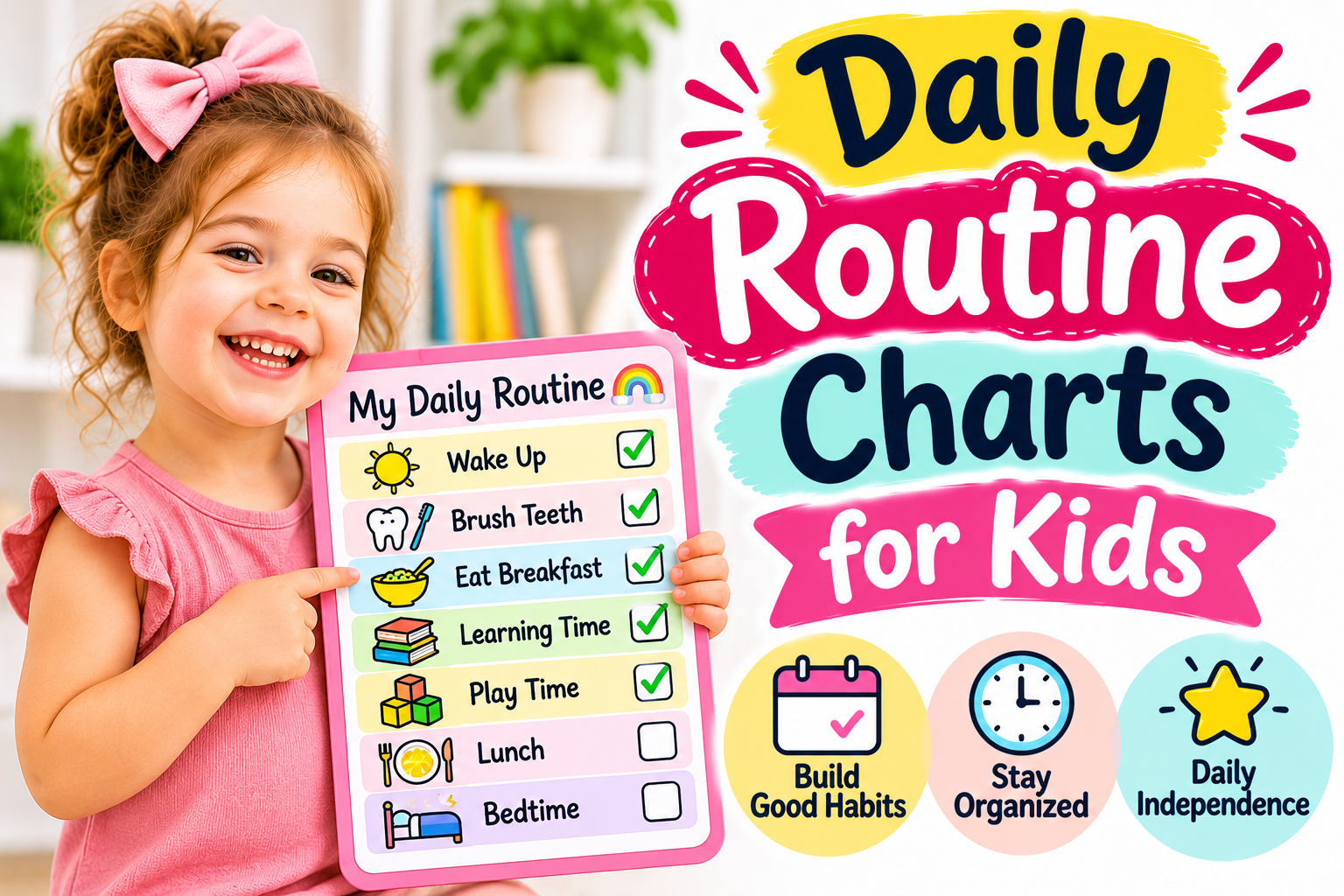
Toddlers don’t need to know how to read to understand their daily routines! With colorful pictures, simple symbols, and familiar activities, a visual schedule can help little ones know what happens next.
These 23 visual schedule ideas for toddlers who cannot read yet make mornings, mealtimes, playtime, and bedtime easier to navigate while encouraging independence and confidence. 🌈
1. Create a Picture-Based Morning Routine Chart
A picture-based morning routine chart is one of the easiest ways to introduce visual schedules to toddlers.
Use simple illustrations showing waking up, brushing teeth, getting dressed, eating breakfast, and putting on shoes.
Arrange the pictures in order and display the chart at your toddler’s eye level.
Point to each picture as you move through the morning routine.
✨ Parenting Tip: Start with three or four pictures instead of an overwhelming list. Add more steps as your toddler becomes familiar with the routine.
Shop toddler morning routine charts on Amazon.

2. Use a Magnetic Daily Routine Board
A magnetic routine board allows toddlers to see and interact with their daily activities.
Choose a board with large picture magnets representing meals, playtime, naps, outdoor activities, and bedtime.
Arrange the magnets in order each morning so your toddler can see what’s coming next.
As activities finish, move the magnets into a completed section.
✨ Parenting Tip: Use large, securely enclosed magnetic pieces designed for young children. Avoid loose or damaged magnets, which are dangerous if swallowed.
Shop magnetic toddler routine boards on Amazon.

3. Make a Velcro Picture Schedule
A Velcro picture schedule is perfect for toddlers who enjoy hands-on activities.
Attach large picture cards to a sturdy board using hook-and-loop fasteners. Include familiar activities such as breakfast, playing, washing hands, and storytime.
After completing each activity, help your toddler move the picture to a finished section.
This simple interaction makes daily routines more engaging.
✨ Parenting Tip: Use large laminated cards with securely attached fasteners. Check regularly for loose pieces that could become choking hazards.
Shop Velcro visual schedule boards on Amazon.

4. Create a Simple First-Then Visual Schedule
A first-then board is especially helpful for toddlers who find transitions difficult.
Divide a small board into two sections labeled “First” and “Then,” using pictures to represent each activity.
For example, show a picture of washing hands followed by a picture of snack time.
This helps your toddler understand what needs to happen before the next activity.
✨ Parenting Tip: Keep the sequence realistic and positive. Avoid using favorite activities as threats or withholding basic needs to force cooperation.
Shop first then visual schedule boards on Amazon.

5. Design a Picture-Based Bedtime Routine Chart
Bedtime can feel smoother when toddlers know what to expect.
Create a visual chart with pictures showing bath time, pajamas, brushing teeth, reading a book, and going to sleep.
Place the chart near your toddler’s bedroom or bathroom so you can follow it together every evening.
✨ Parenting Tip: Use the same pictures and sequence each night whenever possible. Predictable bedtime routines can help toddlers feel more comfortable and prepared for sleep.
Shop toddler bedtime routine charts on Amazon.

6. Use Real Photos of Your Toddler’s Daily Activities
Sometimes real photographs are easier for toddlers to understand than illustrations.
Take pictures of your child brushing their teeth, eating breakfast, playing with toys, and putting on shoes.
Print the photos and arrange them in a simple daily schedule.
Because the images show familiar people and places, your toddler may recognize the activities more easily.
✨ Parenting Tip: Use clear photos with simple backgrounds so your toddler can focus on the activity rather than distracting details.
Shop photo pocket chart organizers on Amazon.

7. Create a Visual Potty Training Schedule
A visual potty training schedule can help toddlers understand bathroom routines without needing written instructions.
Use simple pictures showing walking to the bathroom, pulling down pants, sitting on the potty, wiping with help, flushing, and washing hands.
Display the pictures near the toilet where your toddler can see them.
✨ Parenting Tip: Keep the routine gentle and flexible. A visual schedule should support potty learning, not pressure a child who isn’t developmentally ready.
Shop toddler potty training visual charts on Amazon.

8. Make a Visual Handwashing Routine
Handwashing involves several steps that can be difficult for toddlers to remember.
Create a picture chart showing turning on the water, wetting hands, adding soap, scrubbing, rinsing, and drying.
Place the chart near the bathroom sink and point to each picture while helping your toddler wash their hands.
✨ Parenting Tip: Use a stable, age-appropriate step stool and supervise handwashing. Make scrubbing fun by singing a short song together.
Shop kids handwashing visual charts on Amazon.

9. Create a Picture Schedule for Getting Dressed
Getting dressed can become a daily struggle when toddlers are distracted or unsure what comes next.
Use pictures showing underwear or a diaper, pants, shirt, socks, and shoes.
Arrange the images in a simple sequence and let your toddler follow along with your assistance.
This activity can also support early self-care skills.
✨ Parenting Tip: Offer two weather-appropriate outfit choices so your toddler feels involved without becoming overwhelmed.
Shop toddler dressing routine charts on Amazon.
10. Use a Visual Mealtime Routine Chart
A mealtime visual schedule can make everyday eating routines more predictable.
Create pictures showing washing hands, sitting at the table, eating, wiping hands, and helping clean up.
Keep the schedule short and display it near your toddler’s eating area.
✨ Parenting Tip: Focus on routines rather than controlling how much your toddler eats. Allow children to respond to their own hunger and fullness cues.
Shop kids mealtime routine charts on Amazon.
11. Create a Visual Toy Cleanup Schedule
Cleaning up toys becomes easier when toddlers can see exactly what they need to do.
Use pictures showing blocks going into a basket, books returning to a shelf, and stuffed animals being placed in their storage bin.
Instead of asking your toddler to clean the entire room, guide them through one picture at a time.
✨ Parenting Tip: Use photographs of your child’s actual toys and storage containers to make the instructions easier to understand.
Shop toy cleanup visual routine charts on Amazon.

12. Make a Visual Daycare Drop-Off Schedule
Daycare drop-offs can be challenging for toddlers who struggle with separation or unfamiliar routines.
Create a small visual schedule showing getting dressed, traveling to daycare, greeting the teacher, playing, and being picked up later.
Review the pictures together before leaving home.
✨ Parenting Tip: Include a clear picture representing pickup or reunion so your toddler can see that a caregiver will return. Avoid promising an exact time they cannot understand.
Shop daycare visual schedule cards on Amazon.

13. Create an Outdoor Play Visual Schedule
Outdoor play is exciting, but getting ready can involve several steps.
Use pictures showing putting on shoes, wearing a hat, applying sunscreen with caregiver help, going outside, and coming back indoors.
This helps toddlers understand the sequence before heading to the playground or backyard.
✨ Parenting Tip: Use a simple first-then sequence if your toddler finds the full routine overwhelming. Keep outdoor plans flexible for weather and safety.
Shop outdoor activity visual schedule cards on Amazon.
14. Use a Picture Schedule for Nap Time
A nap-time visual schedule can help toddlers recognize the familiar steps leading up to rest.
Create pictures showing lunch, diaper change or potty time, choosing a book, cuddling, and lying down.
Display the schedule in a quiet area and review it before naps.
✨ Parenting Tip: Keep the routine calm and predictable, but remember that nap needs change as children grow. Avoid forcing sleep when your toddler is no longer tired.
Shop toddler nap time routine charts on Amazon.
15. Create a Picture-Based Weekly Activity Board
A weekly visual board helps toddlers recognize familiar activities throughout the week.
Use large pictures for daycare, library visits, playground time, family outings, and quiet days at home.
Rather than explaining all seven days at once, focus on today’s activity and what comes next.
✨ Parenting Tip: Keep the board simple and update it regularly. Toddlers usually understand immediate routines better than abstract weekly calendars.
Shop kids weekly visual schedule boards on Amazon.
16. Use a Visual Schedule for Grocery Shopping
Grocery shopping can feel overwhelming for toddlers, especially when stores are busy.
Create a simple picture sequence showing getting into the car, entering the store, choosing groceries, paying, and returning home.
Review the pictures before leaving and point to each step during the trip.
✨ Parenting Tip: Include a picture of a favorite activity after returning home, such as reading together, to help your toddler understand the overall plan.
Shop portable visual schedule cards on Amazon.

17. Make a Visual Schedule for Doctor Visits
Doctor appointments can feel unfamiliar and intimidating for young children.
Use simple pictures showing traveling to the clinic, waiting, meeting the doctor, having a checkup, and going home.
You can practice the sequence with a toy doctor kit before the appointment.
✨ Parenting Tip: Explain procedures in simple, truthful language. Avoid promising that something won’t hurt if discomfort is possible.
Shop kids doctor visit visual schedule cards on Amazon.

18. Create a Visual Transition Board for Playtime
Switching from one activity to another can be difficult for toddlers who are deeply engaged in play.
Use a small board showing the current activity and the next activity.
For example, display a picture of building blocks followed by a picture of lunchtime.
Point to the images and give your toddler a gentle warning before transitioning.
✨ Parenting Tip: Pair visual schedules with calm verbal reminders. A visual timer may also help some children understand when playtime is ending.
Shop visual transition boards for toddlers on Amazon.

19. Use a Visual Choice Board for Daily Activities
A visual choice board gives toddlers a simple way to communicate their preferences.
Display pictures of two or three activities, such as coloring, reading, or playing with blocks.
Let your toddler point to the activity they would like to do.
This can be especially helpful for children who are still developing spoken language.
✨ Parenting Tip: Offer only choices that are genuinely available. If outdoor play isn’t possible, don’t include it on the board.
Shop toddler visual choice boards on Amazon.
20. Create a Visual Bath Time Routine
Bath time can become more predictable with a simple picture schedule.
Use images showing getting ready, entering the bath with caregiver help, washing, rinsing, drying off, and putting on pajamas.
Point to each picture as you move through the routine.
✨ Parenting Tip: Keep bath supplies within reach before starting. Never leave a toddler unattended in or near water, even for a moment.
Shop kids bath time routine charts on Amazon.

21. Make a Portable Visual Schedule Ring
A portable picture schedule is useful when your toddler needs reminders outside the home.
Attach a few large laminated picture cards to a sturdy, caregiver-controlled ring or keep them in a small flip-book.
Include common activities such as bathroom breaks, snacks, car rides, and going home.
✨ Parenting Tip: Choose a secure, child-safe format without loose rings or detachable small parts. Keep the schedule accessible to caregivers rather than allowing unsupervised play with hardware.
Shop portable visual schedule flip books on Amazon.
22. Create a Visual Schedule for Family Chores
Toddlers often enjoy helping with simple household tasks when they can see what to do.
Create picture cards showing putting clothes in a hamper, placing books on a shelf, wiping a table with help, and watering a plant.
Choose age-appropriate tasks that don’t involve dangerous tools or cleaning chemicals.
✨ Parenting Tip: Focus on participation rather than perfect results. A toddler who helps put away two toys is already practicing a valuable life skill.
Shop toddler picture chore charts on Amazon.
23. Build a Personalized All-Day Visual Schedule
A personalized all-day visual schedule combines your toddler’s most familiar routines into one easy-to-follow system.
Use pictures for waking up, meals, playtime, outdoor activities, naps, bath time, and bedtime.
Arrange the pictures in the order that works best for your family.
You can create the schedule using printed photos, laminated cards, or a reusable visual chart.
✨ Parenting Tip: Start with only the most important daily activities and adjust the schedule as your toddler grows. Flexibility matters more than following every picture perfectly.
Shop complete toddler visual schedule kits on Amazon.
Sample Visual Schedule for a Toddler
Here’s an example of how you can organize a toddler’s day using simple picture symbols.
| Daily Activity | Picture or Symbol to Use |
|---|---|
| Wake up | ☀️ Sun or child getting out of bed |
| Brush teeth | 🪥 Toothbrush |
| Eat breakfast | 🥣 Breakfast bowl |
| Get dressed | 👕 Shirt |
| Playtime | 🧸 Teddy bear |
| Outdoor play | 🌳 Tree or playground |
| Lunch | 🍽️ Plate of food |
| Nap or quiet time | 🛏️ Bed |
| Afternoon snack | 🍎 Apple |
| Toy cleanup | 🧺 Toy basket |
| Bath time | 🛁 Bathtub |
| Bedtime story | 📚 Books |
| Sleep | 🌙 Moon |
For toddlers who cannot recognize these symbols yet, replace them with clear photographs or simple illustrations of the actual activities.
Tips for Making Visual Schedules Work for Toddlers
A visual schedule doesn’t need to be complicated or expensive to be useful.
- Start with a few pictures: Three to five familiar activities are often enough for beginners.
- Use real photographs: Pictures of your toddler’s actual belongings and routines can be easier to recognize.
- Keep images simple: Avoid busy backgrounds and complicated illustrations.
- Display schedules at eye level: Make it easy for your toddler to see the pictures.
- Review the schedule together: Point to each picture while explaining what happens next.
- Allow flexibility: Change the schedule when plans, energy levels, or family needs change.
- Celebrate participation: Praise your toddler for looking at pictures, making choices, or following a familiar step.
- Keep materials safe: Avoid small magnets, loose fasteners, sharp edges, and detachable pieces.
- Follow your child’s communication needs: Some toddlers benefit from larger pictures, fewer steps, gestures, or support from a speech-language professional.
Remember that visual schedules are tools for communication and predictability, not strict rules toddlers must follow perfectly.
Final Thoughts
Helping toddlers understand daily routines doesn’t require reading skills, complicated instructions, or expensive learning materials. 💕
These 23 visual schedule ideas for toddlers who cannot read yet offer simple ways to make everyday activities more predictable, organized, and enjoyable.
Whether you’re creating a morning routine chart, a bedtime picture schedule, or a portable visual board, the goal is to help your toddler understand what happens next.
Start with familiar activities, use clear pictures, and introduce new steps gradually.
Some toddlers may enjoy moving picture cards independently, while others may prefer pointing to images with your help. Both approaches can support learning.
Most importantly, remember that visual schedules should make family life easier, not create additional pressure.
A few simple pictures can make a big difference in helping little ones feel confident, involved, and ready for their day. 🌈✨