This Post Contains Affiliate Links. Please Read Our Disclosure for Full Information.
Tired of reminding your kids to brush their teeth, get dressed, and put on their shoes every morning? You’re definitely not alone! ☀️
These 21 morning routine chart ideas for kids ages 3–6 make mornings more organized, fun, and stress-free. From colorful picture charts to simple reward systems, these ideas help little ones build independence through predictable daily routines.
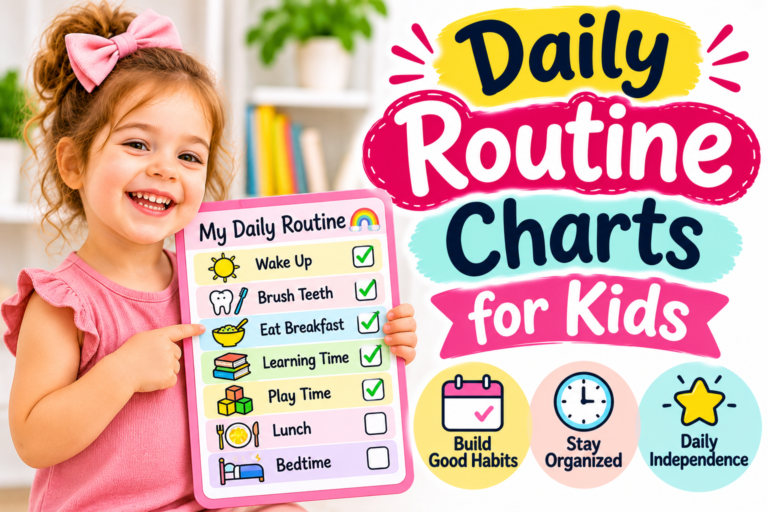
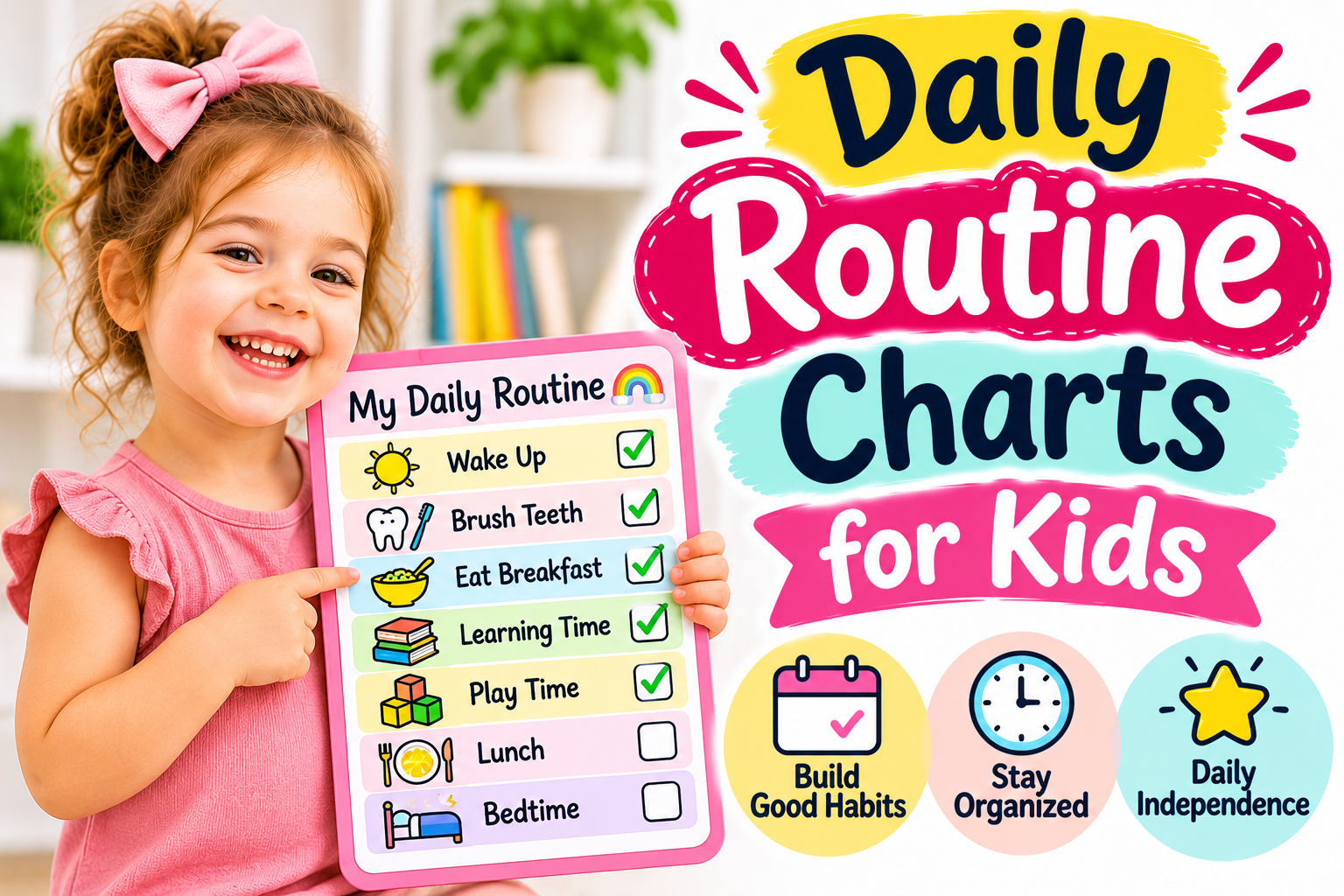
1. Create a Colorful Picture Morning Routine Chart
A colorful picture chart is one of the easiest ways to introduce morning routines to preschoolers.
Instead of relying on written instructions, use simple pictures showing everyday tasks such as brushing teeth, getting dressed, eating breakfast, and putting on shoes.
Arrange the pictures in the order your child usually completes each activity.
This makes the routine easier to understand, especially for younger children who aren’t reading yet.
✨ Parenting Tip: Start with four or five essential tasks rather than overwhelming your child with a long checklist.
Shop kids picture morning routine charts on Amazon.

2. Use a Magnetic Morning Routine Board
Magnetic routine boards make everyday tasks feel more interactive.
Create a morning checklist with magnetic pieces representing activities such as washing hands, brushing teeth, and packing a backpack.
After completing each task, your child can move the corresponding magnet into a finished section.
This simple action gives children a visual sense of progress.
✨ Parenting Tip: Choose large, securely enclosed magnetic pieces designed for young children. Loose or detachable magnets can be extremely dangerous if swallowed.
Shop magnetic routine charts for kids on Amazon.
3. Make a DIY Morning Routine Chart With Velcro
A Velcro routine chart is a fun, hands-on option for preschoolers.
Print or draw pictures of your child’s morning activities and attach them to a sturdy board using hook-and-loop fasteners.
Once a task is finished, your child can move the picture to a completed section.
This works especially well for children who enjoy interactive activities.
✨ Parenting Tip: Laminate the pictures for durability and use large, securely attached pieces. Avoid small detachable components for children who still mouth objects.
Shop kids Velcro routine chart supplies on Amazon.

4. Create a Simple Morning Checklist for Preschoolers
Sometimes the simplest routine chart works best.
Make a short checklist with five everyday activities:
- Wake up and use the bathroom.
- Brush teeth and wash face.
- Get dressed.
- Eat breakfast.
- Put on shoes and grab a backpack.
Add small pictures beside each task so younger children can follow along.
✨ Parenting Tip: Keep the chart at your child’s eye level and use encouraging reminders instead of repeatedly asking whether they’ve finished.
Shop preschool morning routine checklists on Amazon.

5. Use a Dry-Erase Morning Routine Chart
A reusable dry-erase chart is perfect for families who want a flexible routine.
Write your child’s morning tasks on a laminated sheet or small dry-erase board.
Each morning, your child can mark completed activities with a checkmark or smiley face.
At the end of the day, wipe the board clean for tomorrow.
✨ Parenting Tip: Use washable, child-appropriate markers under supervision. Keep the checklist simple enough that your child can understand it without constant explanations.
Shop dry-erase routine charts for kids on Amazon.
6. Create a Morning Routine Chart With Animal Characters
If your preschooler loves animals, turn their morning checklist into an adorable animal-themed chart.
Use pictures of bears brushing their teeth, rabbits getting dressed, or puppies eating breakfast.
Each animal can represent a different morning activity.
This makes the routine more inviting for children who enjoy stories and imaginative play.
✨ Parenting Tip: Let your child choose their favorite animals for the chart. Personalizing the design can increase their interest in using it.
Shop animal-themed kids routine charts on Amazon.

7. Use a Morning Routine Sticker Chart
Sticker charts can make completing morning tasks feel exciting.
Create a simple chart with pictures of daily activities and a space beside each one for a sticker.
Your child can add a sticker after finishing a task with appropriate support.
Use colorful stars, smiley faces, or their favorite character stickers.
✨ Parenting Tip: Focus on encouragement rather than perfection. Stickers should celebrate participation, not become a source of pressure or punishment.
Shop morning routine sticker charts on Amazon.
8. Make a Rainbow Morning Routine Chart
A rainbow-themed routine chart can add a cheerful touch to your child’s bedroom or bathroom.
Assign a different rainbow color to each morning task.
For example, red might represent brushing teeth, yellow could mean getting dressed, and green could represent eating breakfast.
Arrange the tasks in a colorful sequence.
✨ Parenting Tip: Pair every color with a picture or written label so your child doesn’t have to remember the routine through colors alone.
Shop rainbow kids routine charts on Amazon.

9. Create a Morning Routine Chart With Flip Cards
Flip-card charts are a clever way to help children track completed tasks.
Create a row of cards showing morning activities such as brushing teeth, getting dressed, and packing a bag.
When your child finishes a task, they flip the card over to reveal a checkmark or cheerful message.
This gives children a clear visual signal that they’ve completed a step.
✨ Parenting Tip: Use sturdy cards with rounded corners and securely attached hinges or fasteners. Keep the chart within comfortable reach.
Shop kids flip routine charts on Amazon.
10. Use a Montessori-Inspired Morning Routine Board
A Montessori-inspired routine board emphasizes independence and practical life skills.
Create a simple board showing tasks your child can gradually learn to complete with less assistance.
Include activities such as putting pajamas away, choosing clothes, brushing teeth, and placing shoes by the door.
Use realistic pictures and clear labels.
✨ Parenting Tip: Provide child-height hooks, accessible clothing storage, and a stable step stool where appropriate. Independence grows when the environment supports it.
Shop Montessori morning routine boards on Amazon.

11. Create a Morning Routine Chart With a Space Theme
For little astronauts, a space-themed routine chart can make mornings feel like an adventure.
Turn each task into a mission.
Brushing teeth becomes Mission One, getting dressed becomes Mission Two, and packing the backpack becomes Mission Three.
Your child can move a rocket marker along the chart as they complete each activity.
✨ Parenting Tip: Use large, securely attached markers and keep the number of missions manageable. A fun theme works best when the routine remains simple.
Shop space-themed kids reward charts on Amazon.

12. Make a Morning Routine Chart With Photos of Your Child
A personalized photo routine chart can be especially helpful for younger preschoolers.
Take pictures of your child completing everyday morning tasks.
For example, photograph them brushing their teeth, putting on shoes, and sitting at the breakfast table.
Print the pictures and arrange them in sequence.
This creates a familiar visual guide using real-life examples.
✨ Parenting Tip: Let your child help choose the photos. Seeing themselves successfully completing tasks can make the routine feel more achievable.
Shop DIY photo routine chart supplies on Amazon.

13. Use a Morning Routine Chart With a Reward Jar
A reward jar can add a playful element to a morning routine chart.
Create a simple checklist and allow your child to add a large token or paper star to a jar after participating in their routine.
The goal is to encourage consistency rather than reward speed or perfect behavior.
✨ Parenting Tip: Use large, age-appropriate tokens or paper pieces instead of small beads or marbles. Keep rewards simple, such as choosing a family game or favorite story.
Shop kids routine reward jars on Amazon.

14. Create a Minimalist Morning Routine Chart
Not every routine chart needs bright colors and elaborate decorations.
A minimalist chart with simple illustrations and clear labels can work beautifully.
Choose neutral colors, easy-to-recognize pictures, and a straightforward layout.
This can be especially useful for children who become distracted by busy visual designs.
✨ Parenting Tip: Use plenty of spacing between tasks and avoid unnecessary decorations. The goal is to make each step easy to identify.
Shop minimalist kids routine charts on Amazon.
15. Make a Morning Routine Chart With a Weather Theme
Turn the morning routine into a cheerful weather adventure.
Use sunshine, clouds, rainbows, and stars to represent different tasks.
For example, a sun could represent waking up, a cloud could represent getting dressed, and a rainbow could represent being ready for the day.
✨ Parenting Tip: Keep the pictures consistent so your child can easily connect each symbol with its task. Review the chart together during the first few mornings.
Shop weather-themed preschool routine charts on Amazon.

16. Use a Morning Routine Chart With a Visual Timer
Some children find transitions easier when they can see how much time is available.
Pair a simple morning routine chart with an age-appropriate visual timer.
Use the timer for individual activities such as getting dressed or putting toys away.
The chart shows what comes next, while the timer provides a visual reminder.
✨ Parenting Tip: Use timers as gentle transition tools, not as threats or strict deadlines. Allow extra time when your child needs help.
Shop visual timers for preschoolers on Amazon.

17. Create a Morning Routine Chart With a Train Theme
All aboard the morning routine express! 🚂
Draw a colorful train with each carriage representing a morning task.
The first carriage might show waking up, followed by brushing teeth, getting dressed, eating breakfast, and putting on shoes.
Your child can follow the train from beginning to end.
✨ Parenting Tip: Use large pictures and a clear left-to-right sequence. Let your child point to the next carriage when they’re ready to move on.
Shop train-themed kids routine charts on Amazon.
18. Make a Morning Routine Chart With Sliding Checkmarks
A sliding checklist is a satisfying way for children to mark completed tasks.
Choose a reusable routine board with large sliding markers.
As your child finishes each morning activity, they move the corresponding marker from unfinished to completed.
This creates a clear visual record without needing stickers or markers every day.
✨ Parenting Tip: Select a child-safe design with securely attached sliders and no accessible small parts. Demonstrate how to move the markers gently.
Shop sliding checklist routine boards on Amazon.

19. Create a Morning Routine Chart for Siblings
If you have two young children, a shared morning routine board can help everyone stay organized.
Divide the chart into separate columns with each child’s name or photo.
Use similar tasks where appropriate, but adjust expectations based on each child’s age and abilities.
This creates one central place to check the morning routine.
✨ Parenting Tip: Avoid turning the chart into a competition. Celebrate each child’s individual progress instead of comparing who finishes first.
Shop family routine charts for kids on Amazon.

20. Use a Morning Routine Chart With a School-Ready Checklist
For kindergarten and preschool mornings, a school-ready checklist can make leaving the house easier.
Include tasks such as getting dressed, eating breakfast, brushing teeth, putting on shoes, and checking the backpack.
Add pictures of familiar school items to help your child recognize each step.
✨ Parenting Tip: Prepare clothes, lunch supplies, and school materials the night before whenever possible. This reduces the number of decisions your child faces in the morning.
Shop school morning routine charts on Amazon.
21. Create a Personalized Morning Routine Chart With Your Child
One of the most effective ways to introduce a routine chart is to let your child help create it.
Sit together and choose the pictures, colors, and tasks.
Ask simple questions like “What do we do after breakfast?” or “Where should brushing teeth go?”
Your child can help decorate the chart with crayons, stickers, or drawings.
✨ Parenting Tip: Keep the final chart realistic and flexible. Children are often more interested in routines they’ve helped design, especially when they feel included rather than controlled.
Shop DIY kids routine chart kits on Amazon.
Sample Morning Routine Chart for Kids Ages 3–6
Here’s a simple morning routine you can customize for your preschooler or kindergartener.
| Order | Morning Task | Picture Idea |
|---|---|---|
| 1 | Wake up | ☀️ Sunshine |
| 2 | Use the bathroom | 🚽 Toilet |
| 3 | Brush teeth | 🪥 Toothbrush |
| 4 | Wash face and hands | 💧 Water drops |
| 5 | Get dressed | 👕 T-shirt |
| 6 | Eat breakfast | 🥣 Breakfast bowl |
| 7 | Put on shoes | 👟 Sneakers |
| 8 | Grab backpack | 🎒 Backpack |
| 9 | Ready for the day | ⭐ Star |
For younger 3-year-olds, start with just four or five tasks. Older children may be comfortable following a longer sequence with less assistance.
Morning Routine Chart Ideas by Age
Children between ages three and six can have very different levels of independence.
| Age | Recommended Chart Style | Suggested Focus |
|---|---|---|
| 3 years | Large picture chart | Recognizing routines with adult help |
| 4 years | Velcro or flip-card chart | Following simple task sequences |
| 5 years | Magnetic or dry-erase chart | Building independence with reminders |
| 6 years | Visual checklist | Completing familiar routines with increasing independence |
These are general suggestions, not developmental requirements. Choose a format based on your child’s individual needs, abilities, and interests.
How to Make a DIY Morning Routine Chart for Kids
You don’t need expensive supplies to create a helpful routine chart at home.
Materials you’ll need:
- Cardstock or a sturdy sheet of paper
- Printed pictures or hand-drawn illustrations
- Crayons or washable markers
- Child-safe glue or tape
- Optional laminating sheets
- Optional large hook-and-loop fasteners
Step 1: Choose the essential tasks. Start with four to six activities your child completes most mornings.
Step 2: Create simple pictures. Use recognizable illustrations or photographs for each task.
Step 3: Arrange the tasks in order. Place them from top to bottom or left to right.
Step 4: Let your child decorate. Encourage them to choose colors or add drawings.
Step 5: Display the chart. Hang it at your child’s eye level in an accessible location.
Step 6: Practice together. Walk through the routine for several mornings and offer support when needed.
Step 7: Adjust the chart. Remove unnecessary tasks or add new ones as your child becomes more independent.
7 Tips for Making Morning Routine Charts Actually Work
1. Keep the routine realistic. A chart with too many tasks can overwhelm young children.
2. Use pictures instead of relying only on words. Visual instructions are especially helpful for preschoolers who aren’t reading yet.
3. Prepare the night before. Lay out clothes and organize school supplies to make mornings easier.
4. Give gentle reminders. Instead of repeating instructions, ask your child to check what comes next on their chart.
5. Celebrate effort. Notice when your child tries a task independently, even if they still need help.
6. Allow extra time. Young children are still developing self-care skills and may need support with dressing, brushing teeth, and transitions.
7. Stay flexible. Illness, poor sleep, schedule changes, and difficult mornings happen. A routine chart should support your family, not create additional stress.
Common Morning Routine Chart Mistakes to Avoid
Making the chart too complicated: Too many steps can make the routine confusing.
Expecting complete independence immediately: Preschoolers still need supervision, reminders, and hands-on help with certain tasks.
Using rewards as pressure: Stickers and checkmarks should encourage participation rather than create anxiety about mistakes.
Changing the routine constantly: A predictable sequence helps children understand what comes next.
Ignoring your child’s preferences: A chart featuring familiar pictures or favorite themes may be more engaging.
Rushing every task: A little extra time can prevent unnecessary frustration.
Treating the chart like a strict rulebook: The goal is to develop confidence and independence, not achieve perfect mornings.
Frequently Asked Questions About Morning Routine Charts for Kids
What should be included in a morning routine chart for a 3-year-old?
Start with simple tasks such as using the bathroom, brushing teeth with adult help, getting dressed, eating breakfast, and putting on shoes. Use large pictures and keep the routine short.
Do morning routine charts work for preschoolers?
They can be helpful because visual routines show children what to expect and what comes next. Their effectiveness depends on the child’s needs, the simplicity of the chart, and consistent adult support.
How many tasks should a morning routine chart have?
Many younger preschoolers benefit from starting with around four or five tasks. You can gradually add more steps as your child becomes comfortable with the routine.
Should I use rewards with a morning routine chart?
Rewards are optional. Some children enjoy stickers or checkmarks, while others respond well to encouragement and a sense of accomplishment. Avoid making rewards a source of pressure.
How can I get my child to follow a morning routine without arguing?
Keep the sequence predictable, offer limited choices, prepare supplies the night before, and use gentle reminders. A visual chart can reduce repeated verbal instructions, but young children will still need support.
What if my child refuses to use the routine chart?
Try simplifying the chart, changing its design, or allowing your child to help create it. If the chart causes frustration, take a break and introduce it again later.
Are morning routine charts helpful for children with different learning needs?
Visual routines can support many children, including those who benefit from predictable sequences or nonverbal reminders. Adapt the chart to your child’s communication, sensory, and developmental needs.
Final Thoughts
Mornings with young kids don’t have to feel like a race against the clock! ☀️💕
These 21 morning routine chart ideas for kids ages 3–6 offer fun, practical ways to help preschoolers understand daily routines and gradually build independence.
Whether you choose a colorful picture chart, an interactive Velcro board, a magnetic checklist, or a personalized DIY design, the best routine chart is one that works for your child and your family.
Start small, keep expectations realistic, and remember that children learn through repetition, encouragement, and practice.
A little patience and a simple visual routine can make mornings feel calmer and more predictable for everyone.
Save these morning routine chart ideas to your Pinterest kids routines board for inspiration when you’re ready to create a happier, more organized morning routine! 🌈✨