This Post Contains Affiliate Links. Please Read Our Disclosure for Full Information.
After-school afternoons can get chaotic with backpacks, snacks, homework, and bedtime preparations. But a simple routine chart can make everything feel more manageable! 🎒💛
These 21 after-school routine chart ideas for kids will help children build independence, stay organized, and transition smoothly from school to home. From colorful printable charts to interactive magnetic boards, there’s something for every family!
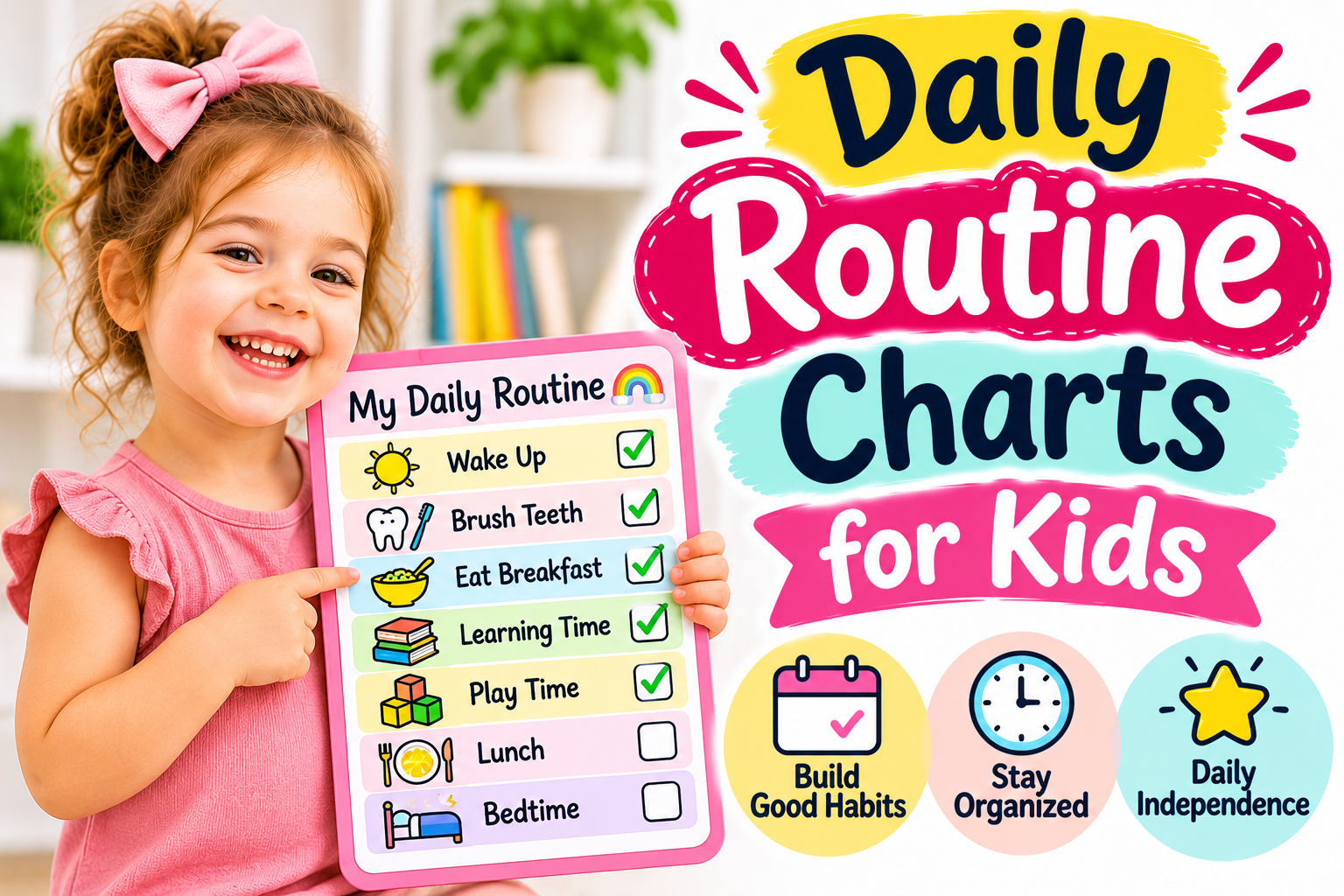
1. Colorful Printable After-School Routine Chart
A colorful printable chart is one of the easiest ways to introduce an after-school routine.
Create a simple checklist featuring tasks like putting away shoes, washing hands, eating a snack, completing homework, and enjoying free time.
Use bright colors and fun illustrations to make the chart inviting for younger children.
✨ Parenting Tip: Start with four or five essential tasks instead of overwhelming your child with a long checklist.
Shop printable kids routine charts.

2. Magnetic After-School Routine Board
A magnetic routine board makes daily tasks interactive and easy to follow.
Children can move large magnetic markers from a “To Do” section to a “Done” section after completing each activity.
It’s a reusable option that works well on a suitable magnetic surface.
✨ Parenting Tip: Choose a child-appropriate board with large, securely enclosed magnets. Small or loose magnets can be dangerous if swallowed.
Shop magnetic kids routine charts.
3. Picture-Based Routine Chart for Younger Kids
Children who aren’t reading independently yet can benefit from a visual routine chart.
Use simple pictures showing a backpack, handwashing, a snack, homework, playtime, and dinner.
Arrange the pictures in the order your child usually completes each activity.
✨ Parenting Tip: Use photographs of your child’s actual belongings and routine to make the chart easier to understand.
Shop visual routine charts for kids.

4. Dry-Erase After-School Checklist
A dry-erase checklist is perfect for families who want a simple, reusable organization system.
Write your child’s afternoon tasks on a laminated sheet or dry-erase board.
They can check off each activity and wipe the chart clean for the next school day.
✨ Parenting Tip: Leave room to adjust the routine for homework-heavy days, extracurricular activities, or family plans.
Shop dry-erase kids routine boards.

5. Backpack Unpacking Routine Chart
Backpacks can quickly become a collection of forgotten lunch containers, homework sheets, and school notices.
Create a mini chart specifically for unpacking after school.
Include steps like hanging up the backpack, placing lunch containers in the kitchen, and putting important papers in a designated spot.
✨ Parenting Tip: Place the chart near your child’s backpack station so it’s easy to follow as soon as they arrive home.
Shop kids backpack organization charts.


6. After-School Snack and Relaxation Chart
Not every after-school routine needs to begin with homework.
Many children benefit from a snack, some movement, and a little downtime after a busy school day.
Create a chart that includes washing hands, eating a snack, relaxing, and transitioning to the next activity.
✨ Parenting Tip: Let your child choose between a few relaxing activities, such as drawing, reading, or quiet play.
Shop kids daily activity routine charts.
7. Homework and Playtime Routine Chart
A homework and playtime chart can help children understand how different activities fit into their afternoon.
Divide the chart into simple sections for homework, breaks, outdoor play, and family time.
This provides structure without making the entire afternoon feel like work.
✨ Parenting Tip: Adjust the order based on your child’s energy and school workload. Some children focus better after a movement break.
Shop homework routine charts for kids.
8. Velcro After-School Routine Chart
A Velcro routine chart adds a fun hands-on element to everyday tasks.
Attach picture cards to a board and let your child move each one into a completed section.
This makes progress visible and gives children a small sense of accomplishment.
✨ Parenting Tip: Use large, securely attached pieces and supervise younger children who may put loose items in their mouths.
Shop Velcro visual schedule charts.
9. Rainbow-Themed After-School Routine Chart
A rainbow chart can make an ordinary routine feel colorful and cheerful.
Assign a different color to each activity, such as blue for homework, green for outdoor play, and yellow for snack time.
Your child can mark each colorful section as they move through the afternoon.
✨ Parenting Tip: Keep the color system consistent so children can recognize their activities more easily.
Shop rainbow routine charts for kids.

10. After-School Routine Chart With a Timer
A visual timer can help children understand how long certain activities will last.
Pair a simple routine chart with an age-appropriate timer for homework sessions, cleanup, or transitions between activities.
This can be particularly helpful for children who struggle with sudden changes.
✨ Parenting Tip: Use timers as gentle reminders rather than strict deadlines. Allow flexibility when your child needs extra time.
Shop visual timers for kids routines.
11. DIY Clothespin Routine Chart
A clothespin chart is an inexpensive DIY project that makes routine tracking interactive.
Write each after-school activity on a piece of sturdy cardboard and attach a large clothespin beside it when completed.
You can decorate the chart with colors, stickers, and simple drawings.
✨ Parenting Tip: This activity works best for older children who can safely handle clothespins. Avoid small or breakable pieces around younger siblings.
Shop large wooden craft clothespins.

12. Weekly After-School Routine Planner
A weekly planner is useful when your child’s schedule changes throughout the week.
Create columns for Monday through Friday and add schoolwork, sports, music lessons, or other regular activities.
This helps children anticipate what comes next.
✨ Parenting Tip: Review the planner together at the beginning of the week and update it when plans change.
Shop weekly routine planners for kids.

13. After-School Chore Chart
A simple chore chart can help children contribute to family routines in age-appropriate ways.
Include manageable tasks such as putting shoes away, hanging up a jacket, feeding a pet with supervision, or tidying toys.
Keep the list short enough that children still have plenty of time to relax.
✨ Parenting Tip: Assign chores based on your child’s age and abilities. Avoid making after-school time feel like an endless list of responsibilities.
Shop kids chore charts.

14. Animal-Themed After-School Routine Chart
If your child loves animals, use their favorite creatures to make the routine chart more engaging.
Create sections featuring friendly bears, cats, dinosaurs, or jungle animals.
Each animal can represent a different part of the afternoon routine.
✨ Parenting Tip: Let your child choose the animals and help decorate the chart. Personalizing it can encourage participation.
Shop animal-themed kids routine charts.

15. Personalized Name Routine Chart
A personalized routine chart can help children feel more involved in managing their afternoons.
Add your child’s name at the top and decorate the chart with their favorite colors or characters.
Include simple tasks that match their current responsibilities.
✨ Parenting Tip: Invite your child to help choose the tasks. A routine they helped create may feel more manageable.
Shop personalized routine charts for kids.

16. Screen-Time and Outdoor Play Routine Chart
Balancing screen time with other activities can be challenging after school.
Create a chart showing time for snacks, homework, outdoor play, hobbies, and any planned screen time.
A visual schedule helps children understand when different activities fit into their day.
✨ Parenting Tip: Set realistic family screen-time expectations and include enjoyable alternatives rather than treating screens as a punishment or reward.
Shop kids screen-time routine charts.
17. Flip-Card After-School Routine Chart
A flip-card chart makes daily tasks feel like a little game.
Create a row of cards with pictures or words describing each activity.
After completing a task, your child flips the card to reveal a checkmark or “Done” message.
✨ Parenting Tip: Use sturdy laminated cards that can withstand everyday handling. Keep the chart at your child’s eye level.
Shop flip routine charts for kids.
18. After-School Self-Care Routine Chart
After a busy school day, children may need time to recharge emotionally and physically.
Create a gentle self-care chart with activities like drinking water, eating a snack, changing into comfortable clothes, and taking a quiet break.
You can also include a simple feelings check-in.
✨ Parenting Tip: Ask your child how they’re feeling without requiring them to explain everything immediately. Some children need quiet time before talking about their day.
Shop kids self-care routine charts.

19. School-Night Preparation Routine Chart
A school-night preparation chart helps children get ready for the following day.
Include tasks such as checking homework, packing the backpack, choosing clothes, and preparing school supplies.
This can reduce rushed mornings and forgotten items.
✨ Parenting Tip: Keep the preparation routine short and offer assistance when needed. Younger children may not be able to manage everything independently.
Shop school night routine charts.
20. After-School Reward Sticker Chart
A sticker chart can add a little excitement to routine building.
Choose a few manageable habits, such as putting away a backpack or beginning homework with support.
Let your child add a sticker when they practice these routines.
✨ Parenting Tip: Recognize effort and growing independence rather than demanding a perfect afternoon. Never remove earned stickers because of difficult moments.
Shop kids routine reward sticker charts.

21. Minimalist After-School Routine Chart
If you prefer a calm, clutter-free look, a minimalist routine chart may be the perfect choice.
Use a simple whiteboard or printable with neutral colors, clear lettering, and a few essential tasks.
Place it near your child’s study area or family organization station.
✨ Parenting Tip: Keep the chart focused on your family’s actual routine. A simple system that’s easy to follow is often more useful than a complicated one.
Shop minimalist kids routine charts.
Sample After-School Routine Chart for Kids
Here’s a simple example you can customize to fit your family’s schedule.
| Order | After-school activity | Done |
|---|---|---|
| 1 | Put away shoes and backpack | ☐ |
| 2 | Wash hands | ☐ |
| 3 | Eat a snack and drink water | ☐ |
| 4 | Relax or enjoy free play | ☐ |
| 5 | Complete homework or reading | ☐ |
| 6 | Play outside or enjoy a hobby | ☐ |
| 7 | Help with a small household task | ☐ |
| 8 | Prepare school supplies for tomorrow | ☐ |
| 9 | Enjoy dinner and family time | ☐ |
This is only an example. Children have different school schedules, homework needs, extracurricular activities, and energy levels.
How to Make an After-School Routine Chart That Actually Works
A good routine chart should make afternoons easier, not create extra pressure.
- Keep it age-appropriate. Younger children benefit from pictures and fewer steps, while older kids may prefer written checklists.
- Include downtime. Children often need time to decompress after school before starting structured activities.
- Make it visible. Place the chart where your child can easily see and use it.
- Let your child participate. Allow them to choose colors, decorations, or the order of flexible activities.
- Stay consistent but flexible. A predictable routine is helpful, but unexpected changes are part of family life.
- Celebrate progress. Encourage effort and independence without expecting every afternoon to go perfectly.
Final Thoughts
After-school routines don’t have to be stressful or complicated! 🎒💛
With these 21 after-school routine chart ideas for kids, you can create a more organized afternoon while helping your child build confidence, independence, and healthy daily habits.
Whether you choose a colorful printable, magnetic board, interactive flip chart, or simple checklist, the best routine is one that works for your family’s real life.
Start with a few manageable steps, make room for play and relaxation, and adjust the schedule as your child’s needs change.
Because a great after-school routine isn’t about filling every minute—it’s about creating a comfortable balance between responsibility, rest, and fun. ✨
Here’s to calmer afternoons, happier kids, and smoother school-day transitions!