This Post Contains Affiliate Links. Please Read Our Disclosure for Full Information.
No playroom? No problem! 🧸✨
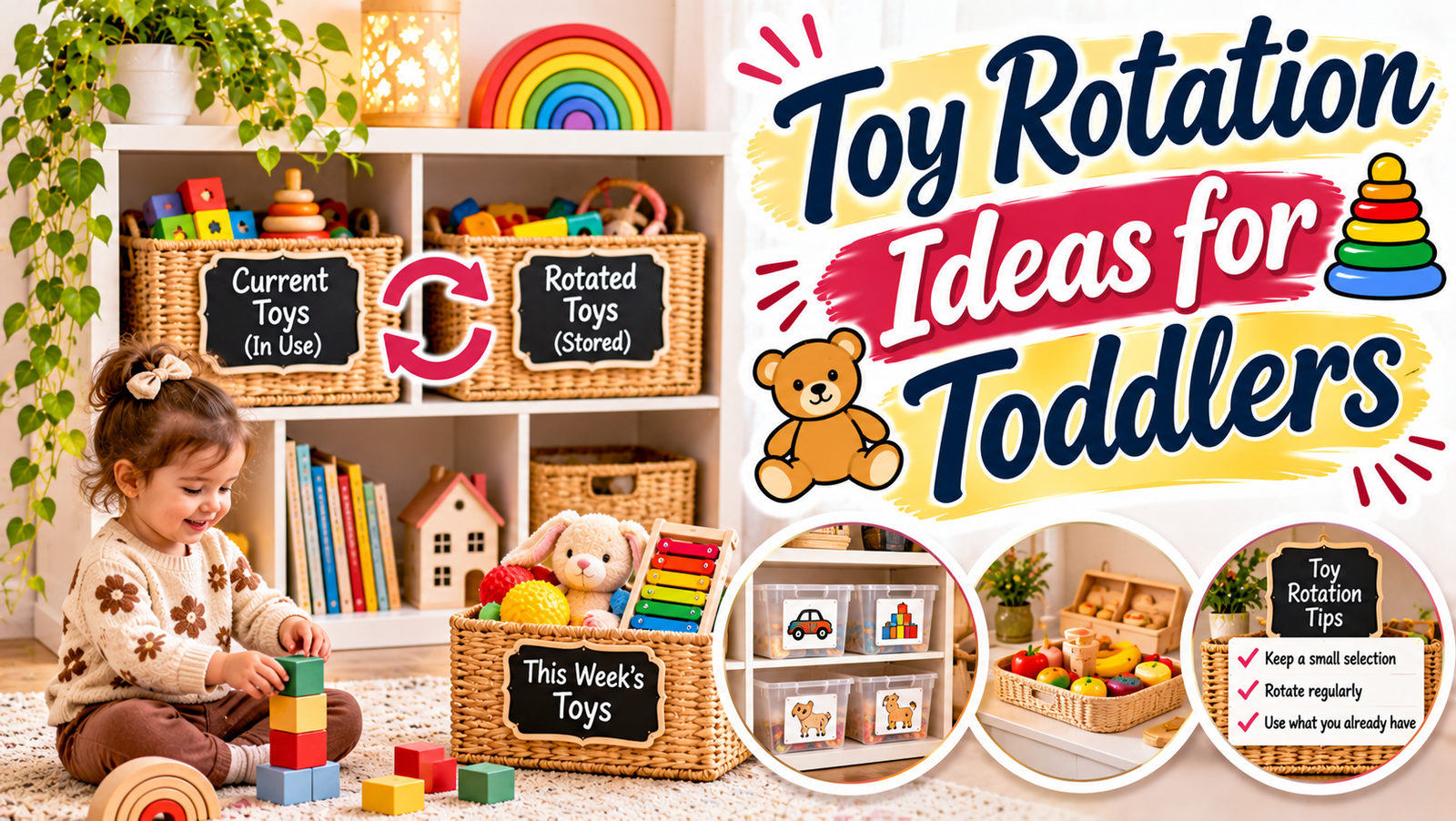
These 15 toy rotation storage ideas for homes without a playroom will help you organize toys, reduce clutter, and make the most of small spaces. From under-bed bins to clever closet organizers, these simple solutions keep toys accessible without taking over your entire home.
1. Use Clear Plastic Storage Bins for Toy Rotation
Clear plastic bins are one of the easiest ways to organize toys when you don’t have a dedicated playroom.
Sort toys into categories like building blocks, puzzles, pretend play, and toy vehicles. Keep one or two bins available while storing the others out of sight.
✨ Parenting Tip: Choose lightweight bins with secure lids and place heavier containers on lower shelves.
Shop clear toy storage bins on Amazon.

2. Store Rotated Toys Under the Bed
Under-bed storage is perfect for keeping extra toys hidden without using valuable floor space.
Choose shallow storage containers that slide easily beneath your child’s bed or your own bed.
Use separate bins for different toy categories so switching activities is quick and simple.
✨ Parenting Tip: Look for containers with handles and avoid overfilling them so they’re easy for adults to pull out.
Shop under-bed toy storage containers on Amazon.

3. Create a Toy Rotation Shelf in the Living Room
A small bookshelf can become a beautiful toy rotation station in your living room.
Display a few toys on the lower shelves and store the remaining toys elsewhere.
Choose a simple shelf that blends with your home decor while keeping play materials easy to access.
✨ Parenting Tip: Anchor the shelf securely to the wall and place age-appropriate toys at your child’s height.
Shop small toy storage shelves on Amazon.


4. Use Fabric Storage Cubes Inside a Cube Organizer
Fabric storage cubes make toy rotation easy and visually organized.
Place labeled fabric bins inside a cube shelf and assign each one a toy category.
Keep a few cubes accessible while using the remaining compartments for toys that aren’t currently in rotation.
✨ Parenting Tip: Add picture labels to help toddlers recognize where their favorite toys belong.
Shop fabric toy storage cubes on Amazon.

5. Organize Extra Toys in a Closet
A small section of a bedroom or hallway closet can become your hidden toy rotation storage area.
Use labeled bins on shelves to organize puzzles, educational toys, stuffed animals, and building sets.
Bring out one category at a time to keep the main living areas less cluttered.
✨ Parenting Tip: Store heavier bins on lower shelves and keep small parts or unsuitable toys out of younger children’s reach.
Shop closet toy storage organizers on Amazon.

6. Use a Storage Ottoman for Hidden Toy Storage
A storage ottoman is a clever solution for small living rooms.
Choose a sturdy ottoman with a spacious interior for storing toys that aren’t currently being used.
It can double as extra seating or a footrest while keeping your home looking tidy.
✨ Parenting Tip: Choose an ottoman with a child-safe, soft-close lid or a removable lightweight top to reduce finger-pinching risks.
Shop toy storage ottomans on Amazon.

7. Create a Toy Rotation System With Labeled Baskets
Baskets are a simple and affordable way to organize toys without making your home feel like a playroom.
Use separate baskets for pretend play, sensory toys, books, and building activities.
Rotate the baskets every week or whenever your child seems ready for something different.
✨ Parenting Tip: Choose lightweight baskets without sharp edges so children can help put toys away safely.
Shop woven toy storage baskets on Amazon.

8. Use a Rolling Cart for Flexible Toy Storage
A rolling cart makes it easy to move toys between rooms.
Organize different activities on separate shelves, such as puzzles on top, building toys in the middle, and art supplies below.
Move the cart into a closet or quiet corner when playtime is over.
✨ Parenting Tip: Choose a stable cart with locking wheels and avoid placing heavy items on the upper shelves.
Shop rolling toy storage carts on Amazon.

9. Store Toy Rotation Bins on High Closet Shelves
If your home has limited storage, upper closet shelves can hold toys that aren’t currently in rotation.
Pack toys into lightweight, clearly labeled containers and organize them by category.
Keep only the current rotation within your child’s reach.
✨ Parenting Tip: Use high shelves only for lightweight bins that adults can retrieve safely. Never encourage children to climb furniture to reach stored toys.
Shop lightweight closet storage bins on Amazon.

10. Use a Toy Storage Bench in the Entryway
A storage bench can provide hidden toy storage while serving another purpose.
Place a compact bench in your entryway, bedroom, or living room and use its interior for larger toys or rotating activity sets.
Choose a design that complements your furniture.
✨ Parenting Tip: Look for a bench with a safe lid mechanism, ventilation, and no child-accessible locking compartment.
Shop toy storage benches on Amazon.

11. Organize Small Toys With Drawer Units
Small plastic drawer units are ideal for puzzles, toy animals, cars, and pretend play accessories.
Assign each drawer a different category and label it clearly.
You can rotate individual drawers instead of moving large storage containers.
✨ Parenting Tip: Keep small pieces away from children who still mouth objects, and secure tall drawer units against tipping.
Shop small toy drawer organizers on Amazon.

12. Use a Bookcase With Storage Baskets
A narrow bookcase can hold books, toys, and storage baskets without taking up much floor space.
Display a few favorite toys on the lower shelves and keep rotating toys inside baskets on the remaining shelves.
This creates a neat, organized look that works beautifully in shared family spaces.
✨ Parenting Tip: Keep the display simple with just a few toys per shelf to make cleanup easier and play choices less overwhelming.
Shop bookcases with storage baskets on Amazon.

13. Create a Toy Rotation Station Inside a Cabinet
A living room cabinet or sideboard can double as a hidden toy storage station.
Use small bins to organize toys inside the cabinet while keeping the doors closed when playtime is over.
This is especially useful if you prefer a clutter-free living room.
✨ Parenting Tip: Use child-safe cabinet hardware where needed and keep toys intended for independent play on accessible lower shelves.
Shop cabinet storage bins for toys on Amazon.

14. Use Stackable Toy Storage Containers
Stackable containers help maximize limited closet or storage space.
Organize toys into separate boxes and stack them neatly inside a storage area.
Choose transparent or labeled containers so you can identify each toy category without opening every box.
✨ Parenting Tip: Keep stacks low and stable, with heavier containers at the bottom. Avoid stacking bins where children could pull them down.
Shop stackable toy storage containers on Amazon.

15. Create a Simple Weekly Toy Rotation Basket System
You don’t need expensive furniture to create an effective toy rotation routine.
Prepare three or four baskets with different combinations of toys, books, and activities.
Keep one basket accessible and store the others in a closet or cabinet. Swap them whenever your child needs fresh play options.
✨ Parenting Tip: Observe which toys your child genuinely enjoys rather than following a strict rotation schedule. Favorite toys can stay available longer.
Shop toy rotation storage baskets on Amazon.
Quick Tips for Organizing Toy Rotation Without a Playroom
A simple toy rotation system can help you maintain a tidy home while keeping playtime interesting.
- Start by decluttering: Remove broken, incomplete, or outgrown toys before organizing.
- Group toys by category: Keep building toys, puzzles, pretend play sets, and books in separate containers.
- Use hidden storage: Closets, cabinets, and under-bed bins are perfect for toys not currently in rotation.
- Keep fewer toys accessible: Display a manageable selection that your child can explore independently.
- Use picture labels: Help toddlers identify where toys belong during cleanup.
- Rotate based on interest: Switch toys when your child seems ready, rather than following a rigid schedule.
- Choose multifunctional furniture: Storage benches, ottomans, and bookcases save space.
- Prioritize safety: Anchor furniture, avoid unstable stacks, and keep choking hazards away from younger children.
- Make cleanup simple: Use lightweight baskets and easy-to-reach shelves.
Final Thoughts
You don’t need a dedicated playroom to create an organized, inviting play space for your child. 🧸🤍
These 15 toy rotation storage ideas for homes without a playroom show how everyday furniture, simple baskets, and clever storage solutions can help you manage toys without overwhelming your home.
Whether you use under-bed bins, a living room shelf, closet organizers, or a few labeled baskets, the goal is to make toys easy to access, rotate, and put away.
Start with the storage you already have, create a few simple toy categories, and adjust your system as your child grows.
Save these 15 toy rotation storage ideas to your Pinterest toy organization board for practical inspiration when organizing toys in a small home! ✨