This Post Contains Affiliate Links. Please Read Our Disclosure for Full Information.
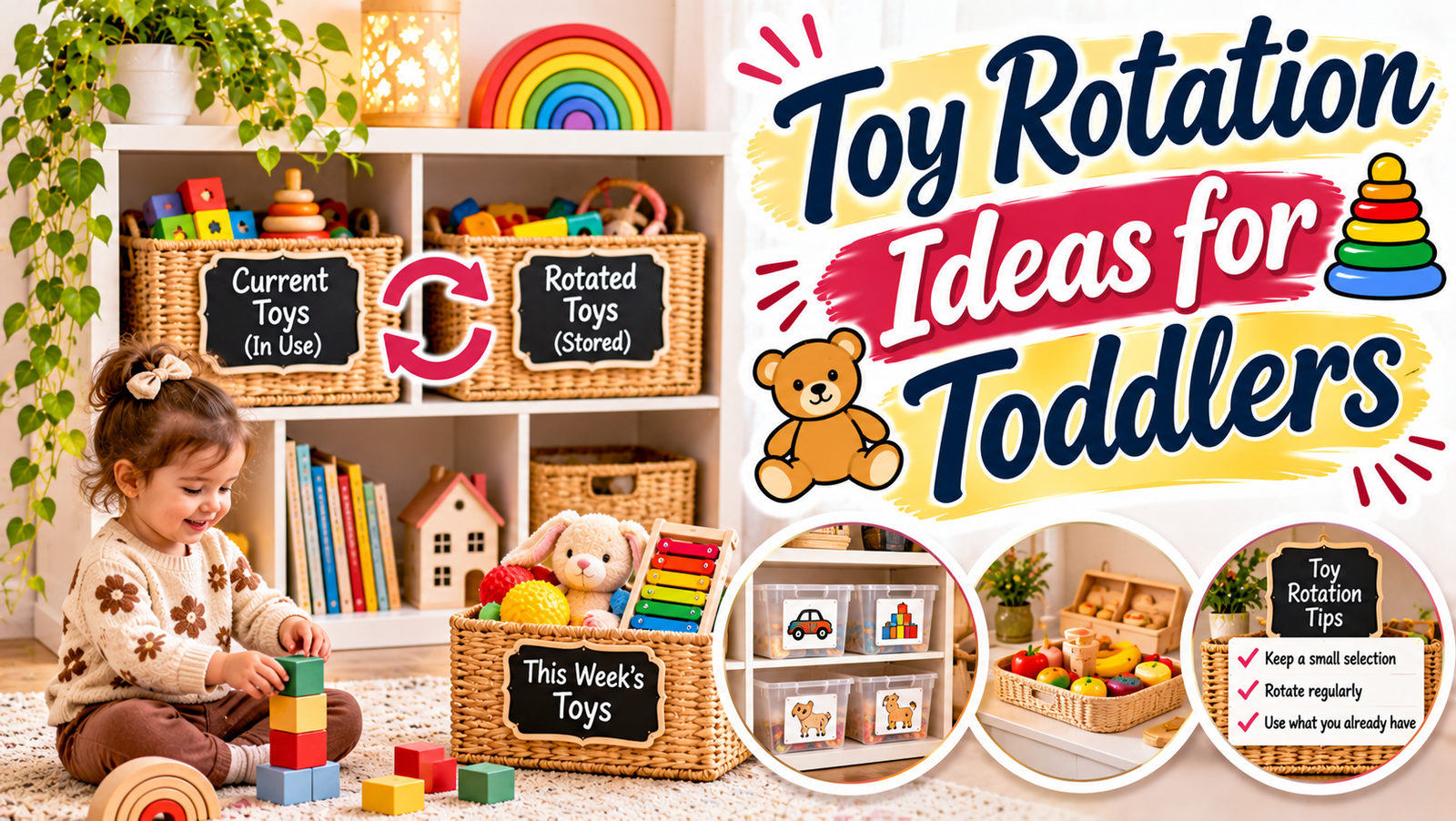
Sharing a playroom can be challenging when siblings have different ages, interests, and favorite toys. 🧸 These 13 toy rotation tips for siblings who share a play space will help you reduce clutter, organize toys fairly, and create a more peaceful play environment. Best of all, you can start with toys and storage containers you already own!
1. Create Separate Toy Rotation Bins for Each Child
One of the easiest ways to manage toy rotation for siblings is to give each child a designated storage bin.
Choose two or more containers and label them with each child’s name, favorite color, or picture.
Use these bins to store toys that belong to each child, especially toys they aren’t ready to share.
This approach helps siblings recognize their personal belongings while keeping the shared play space organized.
For example, one child might have a bin for dolls and pretend-play accessories, while another has a bin for toy vehicles and building sets.
✨ Organization Tip: Use matching storage bins in different colors so children can quickly identify their belongings.
Best For: Siblings with different toy preferences or personal collections.
Explore kids toy storage bins.

2. Keep a Separate Collection of Shared Toys
Not every toy needs to belong to one specific child.
Create a small collection of shared toys that everyone can enjoy.
Good options include building blocks, play food, toy animals, magnetic tiles, and age-appropriate pretend-play sets.
Place these toys in a central location where siblings can access them during playtime.
Rotate the shared collection separately from each child’s personal toys.
✨ Organization Tip: Choose open-ended toys that encourage cooperative play without requiring every child to use them in the same way.
Best For: Encouraging sibling cooperation and imaginative play.
Explore open-ended toys for kids.

3. Rotate Toys Based on Each Child’s Age
Siblings often have different developmental needs, especially when there’s a noticeable age gap.
A toddler may enjoy stacking cups, chunky puzzles, and simple shape sorters.
An older child might prefer construction sets, board games, or more complicated puzzles.
Instead of rotating every toy together, organize toys into age-appropriate groups.
This helps ensure each child has activities that match their abilities and interests.
✨ Organization Tip: Keep toys with small parts in a secure location that younger siblings cannot access.
Best For: Families with toddlers, preschoolers, and elementary-age children sharing one room.
Explore age-appropriate educational toys.

4. Use a Weekly Toy Rotation Schedule
A simple toy rotation schedule can make shared play spaces easier to manage.
Choose one day each week to review the toys currently available.
Put away toys that haven’t been used recently and bring out a few different options.
You don’t need to replace every toy at once.
For many families, rotating just two or three toy categories is enough to refresh the play area.
✨ Organization Tip: Start with a weekly schedule, then adjust the frequency based on your children’s interests and play habits.
Best For: Families who want a predictable toy organization routine.
Explore weekly family planning boards.

5. Let Each Sibling Choose a Few Toys to Keep Out
Children may feel frustrated when their favorite toys suddenly disappear into storage.
Make toy rotation more collaborative by allowing each sibling to choose a few toys they want to keep available.
For example, each child could select three favorite toys before you rotate the remaining collection.
This gives children some control over their play environment.
It also helps parents understand which toys are currently most meaningful to each child.
✨ Organization Tip: Create a small “favorites basket” for each sibling and avoid rotating those items without discussing it first.
Best For: Reducing frustration and encouraging children to participate in organizing.
Explore small toy storage baskets.

6. Divide the Shared Play Space Into Activity Zones
A shared play space doesn’t need to be large to have different activity areas.
Use shelves, rugs, or small baskets to create simple play zones.
You might designate one corner for building toys, another for pretend play, and a third for books and quiet activities.
Children can move between the zones based on their interests.
This arrangement can make it easier for siblings to play independently while sharing the same room.
✨ Organization Tip: Keep activity zones flexible so they can change as your children grow.
Best For: Small playrooms, shared bedrooms, and living room play areas.
Explore kids playroom storage shelves.
7. Store Rotated Toys in Clear, Labeled Containers
Toy rotation becomes much easier when stored toys are organized.
Use clear storage containers so you can quickly identify what’s inside.
Label each container with a toy category, such as building toys, pretend play, puzzles, or vehicles.
If siblings have separate collections, include their names or color-coded labels.
This prevents you from having to search through multiple boxes whenever it’s time to rotate toys.
✨ Organization Tip: Take a photo of each container’s contents before storing it if you prefer visual labels.
Best For: Keeping rotation supplies organized in closets and storage areas.
Explore clear toy storage containers with lids.

8. Rotate Toy Categories Instead of Individual Toys
Sorting every single toy can make rotation feel overwhelming.
A simpler approach is to rotate entire toy categories.
For example, you might keep building blocks, dolls, and puzzles available during one rotation.
During the next rotation, replace some of those categories with toy vehicles, play food, and art supplies.
This method reduces sorting time while still providing variety.
✨ Organization Tip: Keep one or two favorite categories available consistently if your children use them every day.
Best For: Families with large toy collections or limited organizing time.
Explore toy organizer bins by category.
9. Create a Special Rotation Bin for Cooperative Play
Some toys naturally encourage siblings to work together.
Create a special bin containing activities designed for shared playtime.
You might include large building blocks, pretend grocery store supplies, cooperative board games, or a toy train set.
Bring out this bin when siblings want to play together.
This can provide opportunities to practice communication, turn-taking, and teamwork.
✨ Organization Tip: Choose cooperative activities that allow children of different ages to participate at their own skill levels.
Best For: Encouraging positive sibling interactions and collaborative play.
Explore cooperative games for siblings.

10. Keep Small Parts and Special Toys in Separate Storage
Shared play spaces require extra attention when siblings are different ages.
Small building pieces, tiny accessories, and delicate toys may not be suitable for younger children.
Store these items in secure containers or locations that younger siblings cannot access.
Older children can use them during supervised playtime in an appropriate area.
This also helps protect special projects and collections from accidental damage.
✨ Organization Tip: Use clearly labeled containers for older children’s toys and establish simple rules about where those toys can be used.
Best For: Families with babies or toddlers and older siblings.
Explore secure storage boxes for small toys.

11. Use Low Shelves to Display Rotated Toys
Open shelving can make toys easier for children to see and access.
Instead of filling shelves with every toy you own, display a smaller selection of current rotation toys.
Arrange toys in baskets, trays, or clearly defined spaces.
Keep frequently used toys within comfortable reach.
This can make the play area feel less crowded and encourage children to choose activities independently.
✨ Organization Tip: Secure furniture against tipping, follow manufacturer instructions, and keep heavier items on lower shelves.
Best For: Montessori-inspired play spaces and small shared playrooms.
Explore low toy storage shelves for kids.

12. Make Toy Cleanup Part of the Rotation Routine
A toy rotation system works best when children know where toys belong.
Create a simple cleanup routine that siblings can follow together.
Use picture labels for younger children and written labels for older children.
Before introducing a new rotation, ask everyone to help return current toys to their designated containers.
Keep the process short and age-appropriate.
✨ Organization Tip: Turn cleanup into a simple matching activity by asking children to place toys in bins with corresponding pictures.
Best For: Building independence and maintaining an organized shared play space.
Explore toy storage bins with picture labels.

13. Adjust the Toy Rotation System as Your Children Grow
A toy rotation system doesn’t have to remain the same forever.
As children grow, their interests, abilities, and play styles will change.
A toddler who once loved stacking cups may become interested in puzzles and pretend play.
An older sibling may move toward construction sets, crafts, and more advanced games.
Review your rotation system occasionally and adjust the toys, storage containers, and play zones accordingly.
✨ Organization Tip: Every few months, check which toys are still being used and set aside outgrown items for donation, storage, or another appropriate purpose.
Best For: Creating a flexible toy rotation system that works over time.
Explore adjustable kids toy storage organizers.

Best Toy Rotation Storage Ideas for Siblings
Choosing the right storage system can make toy rotation easier for the whole family.
| Storage Solution | Best For | Budget Level |
|---|---|---|
| Individual toy bins | Personal toys for each sibling | Low |
| Shared toy basket | Cooperative play activities | Low |
| Clear storage containers | Toys kept out of rotation | Low |
| Low open shelves | Displaying current toys | Medium |
| Picture-labeled baskets | Younger children’s cleanup | Low |
| Stackable storage boxes | Closets and small spaces | Low |
| Secure storage containers | Small parts and special toys | Low–Medium |
| Rolling storage cart | Flexible play zones | Medium |
| Reused cardboard boxes | Budget-friendly rotation storage | Free |
| Under-bed storage bins | Shared bedrooms | Low |
Budget Tip: Start with containers you already own before purchasing a complete toy storage system.
How to Set Up a Toy Rotation System for Siblings
Setting up a shared toy rotation system doesn’t have to be complicated.
Follow these simple steps:
- Gather the toys. Bring together toys from the shared play area so you can see what you have.
- Sort by ownership. Separate personal toys from toys that siblings share.
- Check safety and condition. Remove broken toys and identify small parts that need secure storage.
- Group toys by category. Organize building toys, puzzles, pretend-play sets, vehicles, and other collections.
- Choose current rotation toys. Select a manageable variety of age-appropriate toys for each child.
- Store the remaining toys. Place out-of-rotation items in labeled containers.
- Arrange the play space. Keep available toys easy to see and return.
- Introduce a flexible schedule. Try rotating some toys every one or two weeks.
- Observe how children play. Notice which toys receive the most attention.
- Adjust when needed. Change the system based on interests, developmental needs, and family routines.
Remember that toy rotation should make daily life easier, not create another complicated household responsibility.
A Simple 4-Week Toy Rotation Schedule for Siblings
If you’re unsure how to organize your first month, try this flexible schedule.
| Week | Shared Toys | Younger Sibling | Older Sibling |
|---|---|---|---|
| Week 1 | Large building blocks | Stacking cups | Age-appropriate puzzles |
| Week 2 | Pretend kitchen toys | Play food | Pretend shopping accessories |
| Week 3 | Toy animals | Chunky animal figures | Animal habitat building |
| Week 4 | Art and creative play | Large washable crayons | Drawing and craft supplies |
Keep favorite books, comfort items, and a few frequently used toys available throughout the month.
Important: All toys and activities should be appropriate for each child’s age and abilities. Keep small parts, sharp tools, and other hazards inaccessible to younger siblings.
7 Tips for Making Toy Rotation Fair Between Siblings
When children share a play space, fairness can be just as important as organization.
These tips can help create a more cooperative routine.
- Give each child a voice. Let siblings help choose some of the toys included in each rotation.
- Respect personal belongings. Avoid treating every toy as shared property.
- Keep favorite comfort items available. Special toys don’t need to be rotated.
- Offer age-appropriate choices. Fairness doesn’t always mean giving every child identical toys.
- Create shared play opportunities. Include toys that encourage teamwork and imagination.
- Use simple turn-taking rules. Help children understand how to share popular toys without forcing immediate sharing.
- Stay flexible. Adjust the system when a child becomes particularly interested in a toy or activity.
The goal is to create a shared space where each child feels respected and has meaningful opportunities to play.
Common Toy Rotation Mistakes Parents Can Avoid
Even a well-intentioned toy rotation system can become frustrating if it’s too complicated.
Here are common mistakes to watch for:
- Rotating every toy at once: Start by changing only a few categories.
- Removing favorite toys without warning: Allow children to keep meaningful comfort items.
- Expecting siblings to enjoy identical toys: Consider individual interests and developmental stages.
- Keeping too many toys available: A crowded play area can make cleanup harder.
- Using inaccessible storage: Children should be able to reach and return appropriate toys safely.
- Ignoring small-part hazards: Store older children’s small toys securely away from younger siblings.
- Following a rigid schedule: Rotate based on actual play patterns rather than arbitrary deadlines.
- Forcing siblings to share everything: Respect personal ownership and individual boundaries.
A successful toy rotation system should support independent play, cooperative activities, and a manageable cleanup routine.
Frequently Asked Questions About Toy Rotation for Siblings
How do you rotate toys when siblings share a playroom?
Separate personal toys from shared toys, organize them into categories, and display a manageable selection at a time.
Rotate some toys periodically while keeping favorites available.
How often should I rotate toys for siblings?
Many families start with a rotation every one or two weeks.
However, there’s no required schedule. You can rotate toys when interest decreases or the play area feels crowded.
Should siblings have separate toy rotation bins?
Separate bins can be helpful when siblings have different interests, ages, or personal belongings.
You can also maintain a shared bin for cooperative play.
How many toys should be available at one time?
There isn’t one ideal number for every family.
Start with a small variety of age-appropriate toys for each child and adjust based on available space and how your children play.
What if one sibling wants a toy that’s currently in storage?
You can allow occasional swaps or keep a small selection of favorite toys permanently available.
Toy rotation should remain flexible enough to accommodate children’s interests.
How do I rotate toys for a toddler and an older child?
Keep toddler-safe toys accessible while storing older children’s small-part toys in a secure location.
Choose shared activities that both children can enjoy safely, with appropriate supervision.
Does toy rotation help reduce sibling arguments?
Toy rotation may help some families by reducing clutter and making toy choices easier to manage.
However, sibling disagreements are normal, and toy rotation alone won’t eliminate conflicts. Clear expectations, respectful boundaries, and adult guidance remain important.
Final Thoughts
Creating an organized shared play space doesn’t require a huge playroom, expensive storage furniture, or an elaborate toy rotation schedule. 🧸💛
These 13 toy rotation tips for siblings who share a play space can help you manage toys more efficiently while respecting each child’s interests and belongings.
From separate storage bins and shared toy collections to flexible rotation schedules and simple cleanup routines, small changes can make a noticeable difference.
Start with the toys and containers you already have, involve your children in the process, and adjust the system as your family grows.
Save these toy rotation tips for siblings to your Pinterest Toy Rotation Ideas board so you can revisit them whenever your shared play area needs a little refresh.
Happy organizing and playing! ✨