This Post Contains Affiliate Links. Please Read Our Disclosure for Full Information.
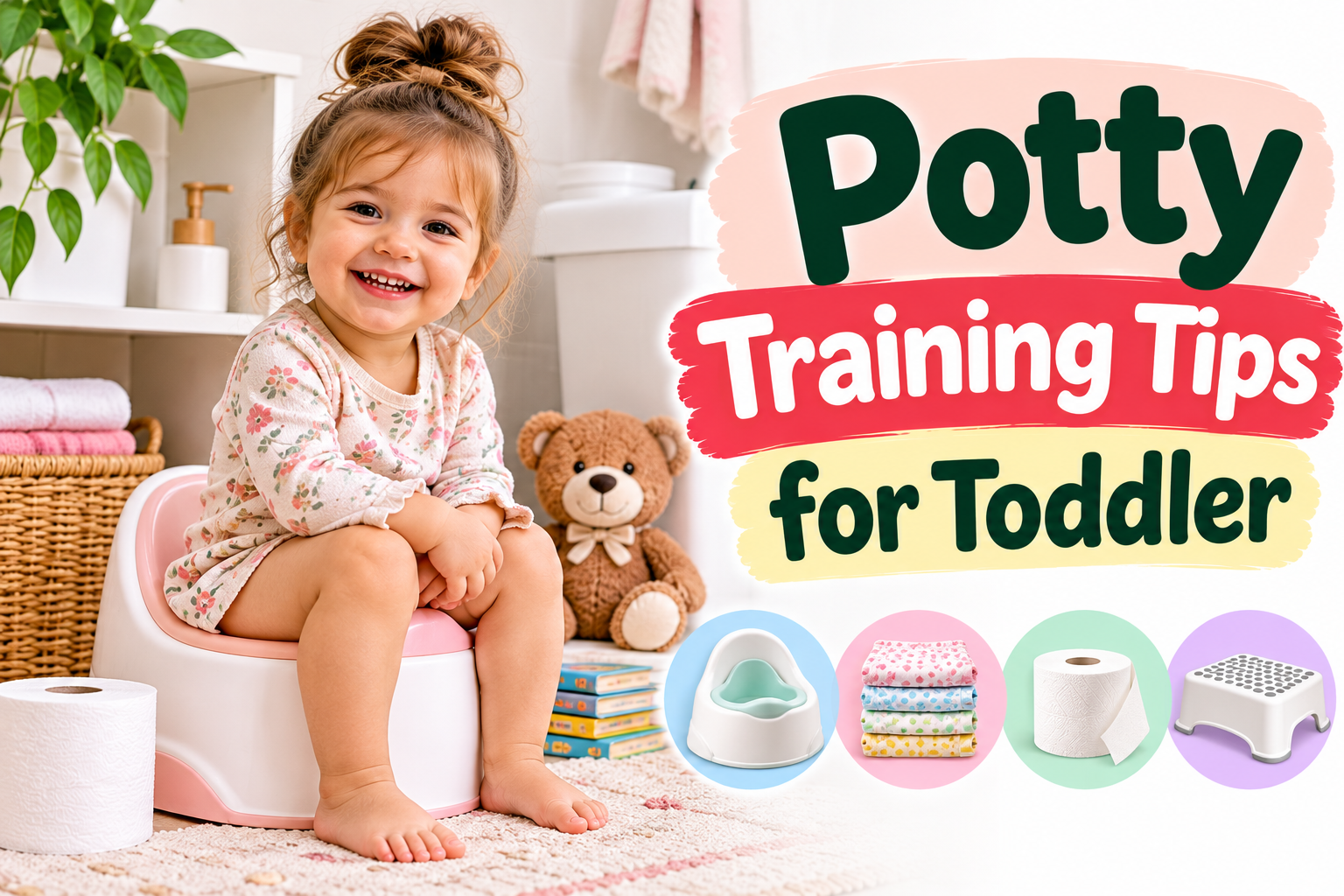
Potty training is a big milestone, and having the right supplies can make the process a whole lot easier! 🚽💛 From toddler-friendly potty chairs to accident-proof mattress protectors, a few practical essentials can help you feel prepared.
These 25 potty training essentials every parent needs will help you create a comfortable, encouraging, and less stressful potty training routine.
1. Toddler Potty Training Chair
A toddler potty chair is one of the most useful potty training essentials because it gives your little one a comfortable, child-sized place to practice.
Choose a sturdy chair with a stable base, a comfortable seat, and a removable bowl for easy cleaning. Some toddlers prefer a standalone potty because their feet can rest naturally on the floor.
Place it in an accessible bathroom location so your child can become familiar with it.
✨ Parenting Tip: Let your toddler sit on the potty fully clothed at first if they’re hesitant. Familiarity matters more than rushing.
Shop toddler potty training chairs.


2. Potty Training Toilet Seat
A potty training toilet seat helps toddlers use the regular toilet without feeling like they might slip into the bowl.
Choose a secure, child-sized seat that fits your toilet properly. A nonslip design can provide additional stability.
This is especially helpful for children who prefer copying adults rather than using a separate potty chair.
✨ Parenting Tip: Always supervise your toddler while using the toilet and provide stable foot support so they feel comfortable.
Shop toddler potty training toilet seats.

3. Nonslip Bathroom Step Stool
A sturdy step stool helps toddlers reach the toilet or bathroom sink more comfortably.
Choose a wide, nonslip stool with a stable base and enough height for your child’s needs.
Proper foot support can also make sitting on the toilet more comfortable, especially during bowel movements.
Avoid unstable household stools or furniture that could tip over.
✨ Parenting Tip: Keep the stool positioned securely and supervise your toddler whenever they’re climbing or using it.
Shop nonslip toddler bathroom step stools.

4. Comfortable Potty Training Underwear
Switching to toddler underwear can help your child recognize the difference between diapers and regular clothing.
Choose soft cotton underwear with a comfortable waistband that your toddler can pull up and down independently.
Fun colors or favorite characters may make the transition more exciting.
Keep several extra pairs available because accidents are a normal part of learning.
✨ Parenting Tip: Let your toddler choose between two underwear designs to encourage independence without overwhelming them.
Shop toddler potty training underwear.

5. Reusable Potty Training Pants
Reusable training pants offer a little extra absorbency while helping toddlers transition toward regular underwear.
They’re especially useful during the early stages when accidents happen frequently.
Choose breathable materials, comfortable leg openings, and a fit that allows your child to move freely.
Remember that training pants aren’t completely leakproof, so clothing changes may still be necessary.
✨ Parenting Tip: Use training pants as a practical learning tool rather than expecting them to prevent every accident.
Shop reusable toddler training pants.
6. Waterproof Mattress Protector
Potty training doesn’t stop at the bathroom, and nighttime accidents can happen even after daytime progress.
A waterproof mattress protector helps protect your child’s mattress and makes cleanup easier.
Choose a breathable, machine-washable protector that fits securely without bunching.
Nighttime dryness develops at different ages, so there’s no need to rush overnight training.
✨ Parenting Tip: Keep an extra clean mattress protector nearby for quick bedding changes.
Shop waterproof toddler mattress protectors.

7. Portable Travel Potty
A portable potty can be a lifesaver during road trips, park visits, or outings where bathrooms aren’t easily accessible.
Choose a lightweight, compact design that folds or packs conveniently.
Some portable potties can also function as travel toilet seats, making them useful in different situations.
Keep it clean and follow the manufacturer’s instructions for safe use.
✨ Parenting Tip: Let your toddler practice using the travel potty at home before relying on it during outings.
Shop portable travel potties for toddlers.

8. Potty Training Reward Stickers
Stickers can make potty training feel playful and encouraging for toddlers who enjoy visual recognition.
Choose colorful stickers featuring animals, stars, or favorite characters.
Celebrate participation, such as sitting on the potty, practicing handwashing, or telling you they need the bathroom.
Avoid making rewards dependent on producing pee or poop, since children can’t always control when that happens.
✨ Parenting Tip: Keep encouragement light and positive. Stickers are optional, and some toddlers prefer a simple high-five.
Shop potty training reward stickers.

9. Potty Training Progress Chart
A potty training chart gives toddlers a simple visual way to follow their new routine.
Choose a colorful chart with easy-to-understand pictures and space for stickers.
Focus on learning activities rather than perfect results. Your toddler might earn a sticker for trying the potty, washing their hands, or practicing pulling down their pants.
✨ Parenting Tip: Never remove stickers or punish your child for accidents. The chart should feel encouraging, not stressful.
Shop potty training progress charts.

10. Potty Training Storybooks
Potty training books help toddlers understand what happens in the bathroom through familiar characters and simple stories.
Choose colorful, age-appropriate books that explain using the potty, flushing, and washing hands.
Reading together can make the experience feel less unfamiliar.
Books are especially helpful for toddlers who learn through repetition and storytelling.
✨ Parenting Tip: Read potty-themed books during relaxed moments rather than only when your child needs to use the bathroom.
Shop potty training books for toddlers.

11. Easy Pull-On Toddler Pants
Complicated buttons, tight waistbands, and overalls can make potty training unnecessarily difficult.
Choose comfortable pants with stretchy waistbands that your toddler can pull down quickly.
Soft leggings, joggers, and loose cotton pants are practical choices for everyday potty training.
Simple clothing encourages independence and reduces frustration.
✨ Parenting Tip: Practice pulling pants up and down during playtime so your child becomes comfortable with the movement.
Shop easy pull on toddler pants.

12. Extra Toddler Clothing Sets
Accidents are a completely normal part of potty training, so having spare clothes ready can make your day much easier.
Keep a few extra pairs of pants, underwear, and socks in a designated basket.
Choose comfortable, easy-to-change clothing that doesn’t require complicated fasteners.
This is especially useful for daycare, family outings, and travel.
✨ Parenting Tip: Prepare complete spare outfits in individual bags so you can grab one quickly after an accident.
Shop toddler clothing sets.

13. Waterproof Wet Bag
A waterproof wet bag is incredibly useful for storing soiled clothes when you’re away from home.
Choose a reusable bag with a secure zipper and a washable interior.
Keep one in your diaper bag, backpack, or car so you’re prepared for unexpected accidents.
Wet bags help separate damp clothing from clean belongings until you can wash everything properly.
✨ Parenting Tip: Empty and clean wet bags promptly after use to prevent lingering odors and moisture buildup.
Shop waterproof wet bags for toddlers.

14. Gentle Toddler Hand Soap
Handwashing is an important part of building a healthy bathroom routine.
Choose a gentle hand soap that’s suitable for your child’s skin.
Teach your toddler to wash their hands with soap and water after using the potty, with adult help as needed.
A familiar routine can help bathroom habits become more automatic over time.
✨ Parenting Tip: Sing a short handwashing song while helping your toddler scrub for at least 20 seconds.
Shop gentle hand soap for kids.

15. Soft Toddler Toilet Paper
Learning to wipe is another important potty training skill, but it takes practice.
Choose soft, unscented toilet paper that’s gentle on sensitive skin.
Young toddlers will usually need adult assistance with wiping, especially after bowel movements.
Teach wiping from front to back to help maintain good hygiene.
✨ Parenting Tip: Demonstrate the wiping motion using a doll or pretend-play activity before expecting your child to do it independently.
Shop soft unscented toilet paper.

16. Flushable-Look Potty Training Seat With Handles
Some toddlers feel more confident using a toilet training seat with handles.
Choose a secure seat that fits your toilet and provides comfortable support.
Handles can give little ones something to hold while sitting, especially when they’re still learning to balance.
Always check the product’s fit and stability before use.
✨ Parenting Tip: Pair the seat with a stable footstool so your toddler doesn’t have to sit with their legs dangling.
Shop potty training seats with handles.

17. Potty Training Timer
A simple timer can help parents remember to offer regular potty opportunities during the early learning stage.
Choose a gentle timer with an easy-to-read display or soft alert.
Use it as a reminder to check in with your toddler rather than as a strict schedule they must follow.
Children should still be encouraged to recognize their own body signals.
✨ Parenting Tip: Offer the potty at natural transition times, such as after waking or before leaving home, without forcing your toddler to sit.
Shop potty training timers.

18. Easy-Clean Bathroom Floor Mat
A washable bathroom floor mat can help make your potty training setup more comfortable.
Choose a nonslip mat that stays securely in place and can be cleaned easily.
Position it where it won’t create a tripping hazard or interfere with the potty chair.
Machine-washable materials are especially practical during this stage.
✨ Parenting Tip: Avoid thick, slippery rugs near the potty and clean accidents promptly to keep the bathroom floor safe.
Shop washable nonslip bathroom mats.

19. Potty Training Cleaning Supplies
Accidents happen, and having appropriate cleaning supplies nearby makes cleanup much easier.
Keep paper towels, washable cloths, and a suitable household surface cleaner in a secure location.
Choose products appropriate for your bathroom surfaces and follow their label directions.
Never leave cleaning chemicals accessible to toddlers.
✨ Parenting Tip: Respond calmly to accidents and focus on cleanup rather than blame. Never mix cleaning products, especially bleach with ammonia-containing cleaners.
Shop bathroom cleaning supply caddies.

20. Portable Toilet Seat Covers
Public restrooms can feel unfamiliar to toddlers who are still learning to use the toilet.
Disposable toilet seat covers can provide a convenient barrier on suitable public toilet seats.
Choose a compact pack that fits easily into your travel bag.
Remember that seat covers don’t replace handwashing or adult supervision.
✨ Parenting Tip: Practice using different bathrooms gradually so your toddler feels more comfortable when away from home.
Shop disposable toilet seat covers for kids.

21. Toddler-Friendly Bathroom Light
Some toddlers feel nervous about using the bathroom when it’s dark or unfamiliar.
A soft night-light can make nighttime bathroom visits feel less intimidating.
Choose a child-safe light that provides enough visibility without being overly bright.
Battery-operated or properly installed plug-in options can work well depending on your bathroom layout.
✨ Parenting Tip: Keep the path to the bathroom clear and supervise nighttime potty visits until your child can navigate safely.
Shop toddler bathroom night lights.

22. Potty Training Travel Bag
A dedicated potty training travel bag helps you stay organized when leaving home.
Choose a compact backpack or tote with separate compartments for spare clothes, wipes, wet bags, and portable potty supplies.
Keeping everything in one place makes unexpected accidents easier to manage.
You don’t need an expensive specialty bag—a practical, washable backpack works just as well.
✨ Parenting Tip: Refill your potty training bag after every outing so it’s always ready for the next trip.
Shop potty training travel bags.

23. Toddler Potty Training Activity Books
Activity books can make potty training feel less intimidating by introducing bathroom routines through playful learning.
Look for age-appropriate books with simple pictures, stickers, or interactive pages.
Use them to talk about recognizing body signals, sitting on the potty, flushing, and washing hands.
Keep activities relaxed and separate from expectations about immediate success.
✨ Parenting Tip: Let your toddler explore the book at their own pace and avoid using it to pressure them into sitting longer.
Shop potty training activity books.
24. Easy-Clean Potty Chair Liners
If you’re using a standalone potty chair, compatible liners may make cleanup more convenient.
Choose liners designed for your specific potty model and follow the manufacturer’s instructions.
Some parents prefer reusable bowls that can be emptied and washed, while others appreciate disposable liners for travel.
Both approaches can work depending on your routine.
✨ Parenting Tip: Dispose of liners according to product instructions. Don’t flush liners or wipes unless your local plumbing guidance specifically permits them.
Shop potty chair liners.

25. Potty Training Routine Visual Cards
Visual routine cards help toddlers understand the steps involved in using the bathroom.
Choose simple picture cards showing actions such as pulling down pants, sitting on the potty, wiping, flushing, and washing hands.
Display them at your child’s eye level in a safe, dry location.
Visual reminders can be especially helpful for toddlers who enjoy predictable routines.
✨ Parenting Tip: Practice the steps together without expecting your child to master everything immediately. Independence develops gradually.
Shop potty training visual routine cards.

Potty Training Essentials Checklist
You don’t need to purchase every potty training product to get started. A few practical essentials are usually enough.
| Essential | Why It’s Helpful | Priority |
|---|---|---|
| Potty chair or toilet training seat | Provides a comfortable place to practice | High |
| Stable step stool | Supports safe toilet and sink access | High if using the regular toilet |
| Easy-pull clothing | Encourages independence | High |
| Spare underwear and clothes | Makes accidents easier to manage | High |
| Gentle hand soap | Supports proper hygiene | High |
| Waterproof mattress protector | Protects bedding from nighttime accidents | Optional |
| Portable potty | Useful during travel | Optional |
| Wet bag | Holds soiled clothing during outings | Optional |
| Potty training books | Builds familiarity with bathroom routines | Optional |
| Progress chart | Provides playful encouragement | Optional |
How to Know If Your Toddler Is Ready for Potty Training
Potty training usually works best when your child shows signs of readiness rather than simply reaching a particular age.
Common signs include:
- Showing interest in the toilet or copying bathroom routines.
- Noticing when their diaper is wet or dirty.
- Communicating that they need to pee or poop through words, gestures, or behavior.
- Following simple instructions.
- Being able to sit comfortably and participate in pulling clothing up or down.
- Showing interest in greater independence.
Not every toddler will show all these signs at once.
Many children begin developing readiness between 18 months and 3 years, but the timeline varies considerably. Daytime and nighttime dryness may develop at different times.
If your toddler resists, becomes upset, or seems uncomfortable, consider taking a break and trying again later.
Potty Training Mistakes to Avoid
Even with the best supplies, a few common mistakes can make potty training more stressful than necessary.
Starting before your child is ready: Look for developmental readiness rather than following a strict age-based deadline.
Forcing your toddler to sit: Offer opportunities, but don’t require long or uncomfortable potty sessions.
Punishing accidents: Accidents are part of learning and should be handled calmly.
Using too many rewards: Encouragement can be helpful, but avoid turning every bathroom visit into a negotiation.
Ignoring constipation: Painful bowel movements can lead to stool withholding and potty avoidance. Speak with your pediatrician if constipation becomes a concern.
Expecting nighttime dryness immediately: Overnight bladder control often develops later than daytime toilet skills.
Final Thoughts
Potty training can feel overwhelming at first, but having a few practical essentials can make everyday routines much easier. 💛
From comfortable potty chairs and step stools to spare clothing and waterproof mattress protectors, these 25 potty training essentials every parent needs can help you feel prepared for this exciting milestone.
Remember, every toddler learns at their own pace.
Some children become comfortable using the potty quickly, while others need more time, encouragement, and practice.
Focus on creating a positive experience, celebrating small steps, and responding calmly when accidents happen.
Less potty training stress, more confidence, and plenty of little victories along the way! 🚽✨