This Post Contains Affiliate Links. Please Read Our Disclosure for Full Information.
Potty training can feel like a roller coaster of tiny victories, unexpected accidents, and endless laundry! 🚽 But it doesn’t have to be stressful.
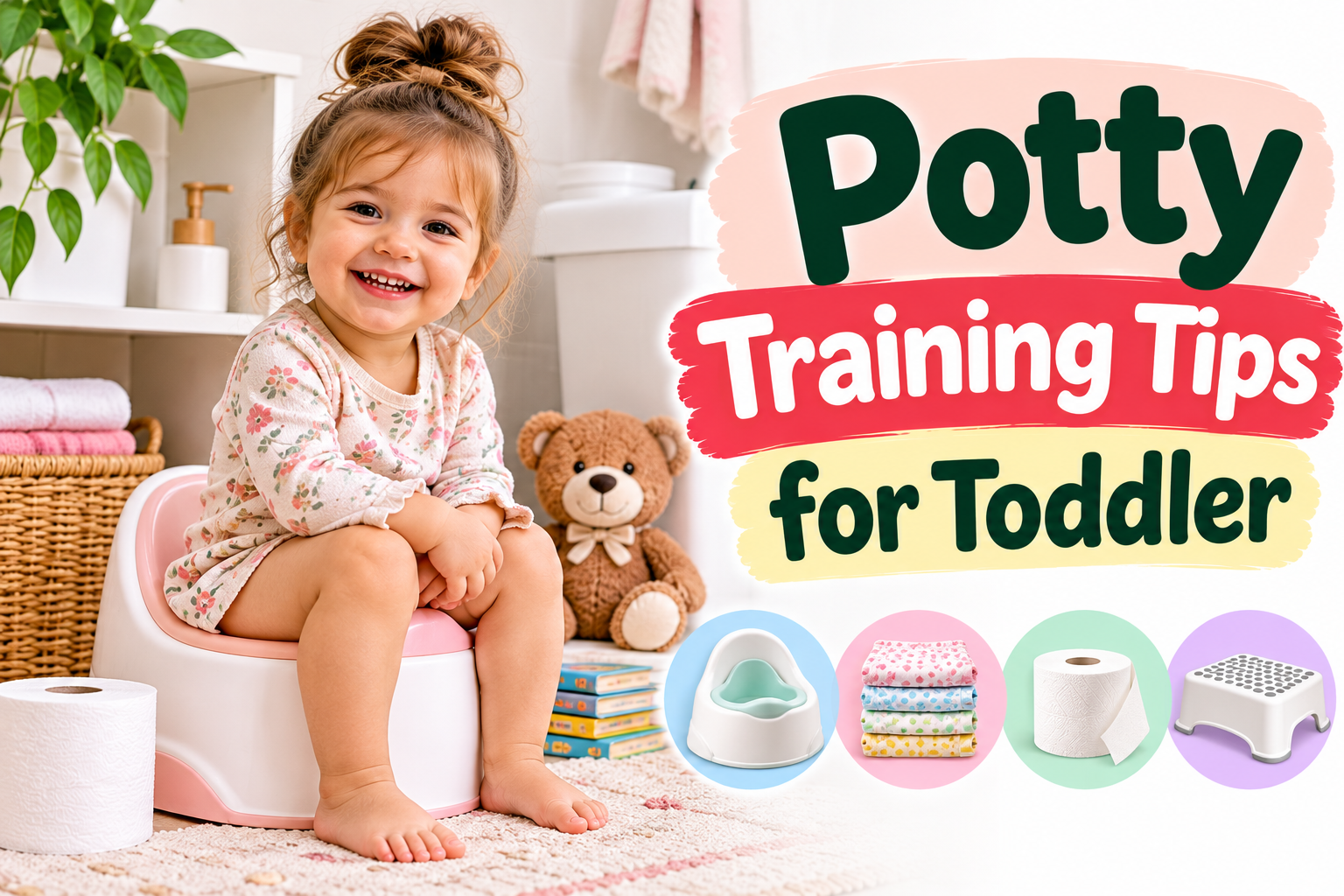
These 25 potty training tips for toddlers will help you build a simple routine, encourage independence, and make the transition from diapers to underwear easier for both you and your little one.
1. Wait Until Your Toddler Shows Signs of Readiness
One of the most important potty training tips is to start when your toddler is developmentally ready, not simply because they’ve reached a certain birthday.
Look for signs such as showing interest in the bathroom, noticing wet diapers, staying dry for longer periods, or communicating when they need a change.
Every child develops at their own pace.
✨ Parenting Tip: Introduce a potty chair before beginning formal training so your toddler can explore it without pressure.
Shop toddler potty training chairs.


2. Choose a Comfortable Toddler Potty Chair
A comfortable potty chair can make a big difference when your toddler is learning.
Choose a stable, child-sized potty with a supportive seat and a removable bowl for easy cleaning.
Some toddlers prefer a standalone potty because their feet can rest firmly on the floor.
✨ Parenting Tip: Let your toddler help choose the potty’s color or design. Feeling involved can make the experience more exciting and less intimidating.
Try a comfortable toddler potty chair.

3. Create a Simple Potty Training Routine
Toddlers thrive on predictable routines, and potty training is no exception.
Offer regular opportunities to use the potty after waking up, before leaving home, and around other natural transitions throughout the day.
Keep the routine flexible rather than forcing your child to sit at strict intervals.
✨ Parenting Tip: Use gentle reminders like, “Let’s see if your body needs the potty before we go outside,” instead of repeatedly asking every few minutes.
Shop potty training routine charts.

4. Let Your Toddler Practice Sitting on the Potty
Before expecting your toddler to use the potty successfully, help them feel comfortable sitting on it.
Start with short, relaxed practice sessions, even while fully clothed.
Allow your child to sit, stand, and explore without pressure.
The goal is to make the potty feel familiar rather than frightening.
✨ Parenting Tip: Never force your toddler to remain seated. A brief, positive experience is more helpful than a long, stressful one.
Try a toddler potty training seat.

5. Use Easy-to-Remove Clothing
Complicated outfits can make potty training unnecessarily difficult.
Choose pants with stretchy waistbands that your toddler can pull down independently.
Avoid overalls, tight jeans, and clothing with complicated buttons during the early stages.
✨ Parenting Tip: Practice pulling pants up and down during playtime so your toddler becomes familiar with the movement before they urgently need the bathroom.
Shop easy pull-on toddler pants.

6. Read Potty Training Books Together
Potty training books can help toddlers understand bathroom routines in a fun, age-appropriate way.
Choose colorful picture books featuring familiar characters learning to use the potty.
Reading together allows your toddler to ask questions and become comfortable with the idea.
✨ Parenting Tip: Read potty books during regular storytime rather than only when your child needs to use the bathroom. This keeps the experience relaxed.
Try potty training books for toddlers.

7. Celebrate Small Potty Training Wins
Potty training involves many little milestones, and every one deserves encouragement.
Celebrate when your toddler tells you they need to go, sits on the potty willingly, or remembers to wash their hands.
A smile, high-five, or encouraging words can help build confidence.
✨ Parenting Tip: Praise effort and growing independence rather than focusing only on successful bathroom trips. Avoid making your child feel disappointed after accidents.
Shop potty training reward charts.

8. Make the Bathroom Feel Toddler-Friendly
A bathroom designed for adults can feel intimidating to a small child.
Add a stable step stool, an appropriately sized potty seat, and easy access to handwashing supplies.
Keep the environment simple, welcoming, and free from unnecessary distractions.
✨ Parenting Tip: Make sure your toddler’s feet are supported while sitting on the toilet. This helps them feel secure and can make bowel movements easier.
Try a toddler bathroom step stool.

9. Teach Your Toddler Simple Bathroom Words
Communication is an important part of potty training.
Use simple, consistent words such as “pee,” “poop,” “potty,” and “bathroom.”
Encourage your toddler to tell you when they feel wet, need a diaper change, or want to try using the potty.
✨ Parenting Tip: If your toddler has limited spoken language, use simple gestures or picture cards to help them communicate bathroom needs.
Shop toddler potty training visual cards.
10. Avoid Punishing Potty Training Accidents
Accidents are a completely normal part of learning.
Your toddler may become distracted while playing or notice the urge to go too late.
Instead of showing frustration, calmly help them change and clean up.
Keeping your response neutral helps prevent shame and anxiety around bathroom routines.
✨ Parenting Tip: Try saying, “Your clothes got wet. Let’s get cleaned up,” without criticizing your child or making the accident a big event.
Try washable toddler training underwear.

11. Try Potty Training Underwear
Training underwear can help some toddlers become more aware of wetness while providing a little extra absorbency.
Choose comfortable cotton styles with soft waistbands.
Remember that training underwear isn’t completely leakproof, so accidents may still happen.
✨ Parenting Tip: Let your toddler choose a favorite color or pattern. Feeling excited about wearing underwear can encourage independence without creating pressure.
Shop cotton potty training underwear.

12. Offer Potty Time After Meals
The body’s natural digestive reflex can make the period after meals a useful opportunity for bowel movements.
Offer your toddler a chance to sit on the potty after breakfast or another regular meal.
Keep the experience brief and relaxed.
✨ Parenting Tip: A few comfortable minutes with supported feet are enough. Never require your toddler to sit until something happens.
Try a toddler toilet seat with step stool.

13. Keep Potty Training Supplies Organized
Potty training becomes much easier when everything you need is within reach.
Create a small bathroom basket containing spare underwear, wipes, clean clothes, and other essentials.
This saves time during accidents and helps your toddler learn where supplies belong.
✨ Parenting Tip: Keep the basket in a convenient but safe location. Store cleaning chemicals separately and securely out of children’s reach.
Shop bathroom storage baskets.

14. Use a Potty Training Timer Gently
Some families find gentle reminders helpful during the early stages of potty training.
A simple timer can remind you to offer bathroom opportunities without constantly watching the clock.
However, toddlers shouldn’t feel pressured to use the potty every time a reminder sounds.
✨ Parenting Tip: Use reminders as flexible prompts rather than strict rules. Follow your toddler’s signals and avoid interrupting every activity.
Try a potty training reminder timer.

15. Teach Proper Handwashing From the Beginning
Potty training is the perfect time to introduce healthy bathroom hygiene habits.
Teach your toddler to wash their hands with soap and running water after using the potty.
Use a sturdy step stool so they can reach the sink safely.
✨ Parenting Tip: Make handwashing fun by singing a short song while scrubbing with soap for at least 20 seconds. Supervise closely.
Shop toddler sink step stools.

16. Prepare for Potty Training Outside the House
Leaving home during potty training can feel intimidating, especially when bathrooms aren’t nearby.
Pack spare underwear, extra clothes, wipes, and a waterproof bag for accidents.
Offer a bathroom opportunity before leaving and identify accessible restrooms when possible.
✨ Parenting Tip: Keep a small potty training kit in your diaper bag or car so you’re prepared without carrying unnecessary supplies.
Try a portable potty training travel kit.

17. Use a Portable Potty for Travel
A portable potty can make bathroom breaks easier during road trips, park visits, and outings.
Choose a compact, stable design that is easy to clean and carry.
Some portable potty seats fold for convenient storage in a travel bag.
✨ Parenting Tip: Practice using the travel potty at home before your first outing so your toddler feels comfortable with it.
Shop portable toddler travel potties.

18. Help Your Toddler Recognize Bathroom Signals
Learning to notice body signals is an important potty training milestone.
Your toddler might suddenly stop playing, hold their legs together, squat, or become unusually quiet.
Gently point out these signals without making your child feel embarrassed.
✨ Parenting Tip: Say something simple like, “It looks like your body might need the potty. Would you like to try?” Let your toddler respond without pressure.
Try potty training picture books.
19. Keep Potty Training Consistent Between Caregivers
Potty training can become confusing when different caregivers use completely different routines.
Talk with grandparents, babysitters, and daycare providers about your toddler’s progress and preferred bathroom words.
Try to maintain similar expectations and supportive responses across environments.
✨ Parenting Tip: Share a simple written routine with caregivers, including your child’s usual bathroom times, preferred potty setup, and how to handle accidents calmly.
Shop potty training progress charts.

20. Don’t Rush Nighttime Potty Training
Daytime and nighttime bladder control develop differently.
Your toddler may stay dry during the day but still need diapers or training pants overnight.
That’s completely normal and doesn’t mean daytime potty training has failed.
✨ Parenting Tip: Use nighttime protection as needed and avoid restricting fluids excessively. If bedwetting or urinary symptoms concern you, talk with your pediatrician.
Try overnight toddler training pants.
21. Protect the Mattress During Potty Training
Accidents can happen during naps and nighttime sleep, even after daytime potty training is going well.
A waterproof mattress protector makes cleanup much easier and helps protect your child’s mattress.
Choose a breathable, washable protector that fits securely.
✨ Parenting Tip: Keep an extra fitted sheet and mattress protector ready so nighttime changes are quick and less disruptive.
Shop waterproof toddler mattress protectors.

22. Make Potty Training Fun Without Pressure
Potty training doesn’t need to feel like a serious daily assignment.
Use playful songs, simple stories, and positive conversations to make bathroom routines more approachable.
Some toddlers enjoy placing stickers on a chart for practicing bathroom skills.
✨ Parenting Tip: If you use stickers, celebrate trying, communicating, and washing hands—not just successful potty trips. Avoid taking rewards away after accidents.
Try potty training sticker charts.
23. Be Patient With Potty Training Regression
A toddler who was using the potty successfully may suddenly start having accidents again.
Changes such as starting daycare, moving homes, illness, or welcoming a new sibling can affect bathroom routines.
Respond with patience and return to simple, supportive habits.
✨ Parenting Tip: Avoid punishment or comparisons. If regression is sudden, persistent, or accompanied by pain, constipation, or urinary symptoms, contact your pediatrician.
Shop toddler potty training activity books.
24. Watch for Constipation During Potty Training
Constipation can make potty training uncomfortable and sometimes lead to stool withholding.
If bowel movements are painful, your toddler may begin avoiding the potty.
Offer age-appropriate fiber-rich foods, water, and regular opportunities for movement.
✨ Parenting Tip: Don’t force your child to sit or strain. If they have hard stools, painful bowel movements, or frequent withholding, speak with their pediatrician.
Try a toddler potty stool with foot support.
25. Take a Break When Potty Training Becomes Stressful
Sometimes, the best potty training strategy is taking a short break.
If your toddler becomes extremely upset, consistently refuses the potty, or seems overwhelmed, stepping away from formal training may help.
Return to diapers or training pants temporarily while keeping bathroom conversations positive.
✨ Parenting Tip: Reintroduce potty training when your child shows renewed interest and readiness. If difficulties continue, ask your pediatrician for guidance.
Shop toddler potty training essentials.
Signs Your Toddler May Be Ready for Potty Training
Not every toddler will show all these signs, but several together can suggest they’re becoming ready to begin.
| Readiness Sign | What It May Look Like |
|---|---|
| Interest in the bathroom | Watching caregivers use the toilet or asking questions |
| Awareness of wet diapers | Noticing discomfort or requesting a diaper change |
| Communication skills | Using words, gestures, or pictures to express needs |
| Longer dry periods | Staying dry for stretches during the day |
| Physical independence | Walking to the potty and helping manage clothing |
| Following simple directions | Understanding basic bathroom routines |
| Interest in underwear | Wanting to wear training underwear like older children |
Remember that readiness varies. Many children begin showing signs between 18 months and 3 years, but there is no universal deadline.
Simple Daily Potty Training Routine for Toddlers
A predictable routine can make potty training feel less overwhelming.
| Time | Potty Training Activity |
|---|---|
| After waking up | Offer a relaxed potty opportunity |
| After breakfast | Invite your toddler to sit briefly |
| Before leaving home | Offer a bathroom break |
| Before nap time | Include the potty in the nap routine |
| After waking from a nap | Offer another opportunity |
| After dinner | Allow a relaxed bathroom visit |
| Before bedtime | Include potty time in the bedtime routine |
Use this schedule as a flexible guide rather than a strict timetable. Follow your child’s signals and avoid forcing bathroom visits.
Common Potty Training Mistakes to Avoid
Even with the best intentions, a few habits can make potty training more stressful than necessary.
- Starting before your toddler is ready: Readiness matters more than age.
- Forcing potty time: Pressure can create resistance and anxiety.
- Punishing accidents: Accidents are a normal part of learning.
- Comparing your child to others: Every toddler develops at a different pace.
- Expecting nighttime dryness immediately: Overnight bladder control often develops later.
- Ignoring constipation: Painful bowel movements can interfere with potty training.
- Changing routines constantly: Simple, consistent habits are easier for toddlers to understand.
- Expecting perfection: Progress is rarely completely smooth.
Essential Potty Training Supplies Checklist
You don’t need dozens of products to potty train successfully. A few practical essentials are usually enough.
- A stable toddler potty chair or properly fitted toilet seat
- A sturdy step stool for foot support and handwashing
- Easy-to-remove pants and comfortable training underwear
- Extra clothes for accidents
- A waterproof mattress protector
- A small basket for bathroom essentials
- A portable potty or travel seat for outings, if needed
- Potty training books or visual routine cards
Choose supplies based on your toddler’s comfort, developmental abilities, and your family’s routine.
Final Thoughts
Potty training doesn’t have to be a race, and your toddler doesn’t need to master everything overnight. 🤎
These 25 potty training tips for toddlers are designed to make the process calmer, more manageable, and less stressful for everyone.
Start with signs of readiness, create a predictable routine, encourage independence, and celebrate the little victories along the way.
There will probably be accidents, unexpected setbacks, and a few moments when you wonder whether your toddler will ever stop wearing diapers. 😅
But with patience, encouragement, and a flexible approach, your child can gradually develop the confidence and skills needed to use the potty independently.
Remember, potty training is a learning process, not a competition.
Which potty training tip are you trying first? Save these ideas for your toddler’s potty training journey and take things one small step at a time! 🚽✨