This Post Contains Affiliate Links. Please Read Our Disclosure for Full Information.
If you’ve ever asked your toddler a question and gotten a dramatic “NO!” in response, congratulations—you’re officially parenting a 2-year-old! 😂💕
At this age, little ones are discovering new words, copying sounds, and figuring out how to communicate their big feelings.
And the best part? You don’t need expensive toys or complicated lessons to encourage your toddler’s speech development.
Simple activities like reading books, singing songs, playing pretend, and naming everyday objects can create wonderful opportunities for language learning.
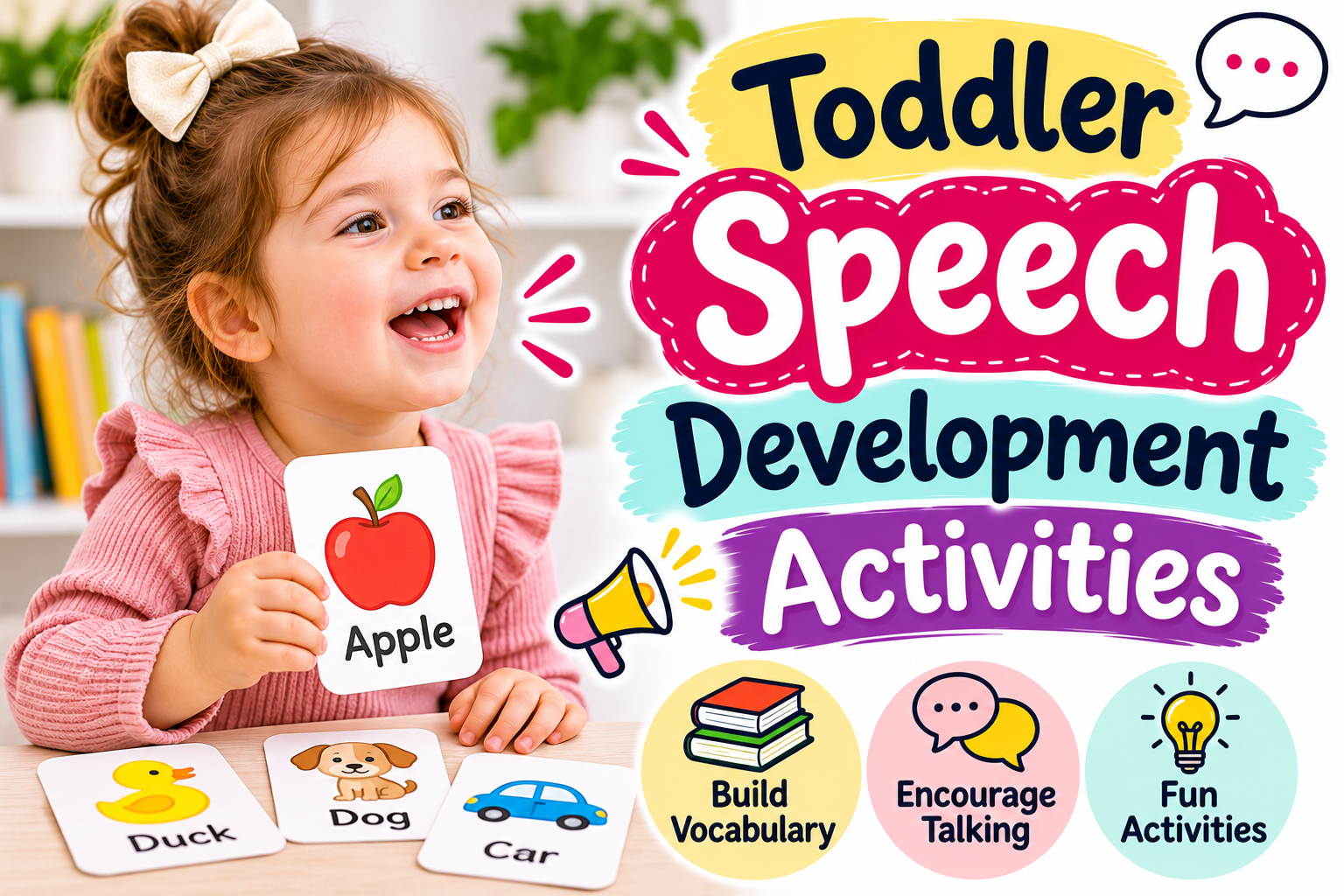
These 21 fun speech activities for 2-year-olds are easy, playful, and perfect for busy parents who want to encourage communication naturally.
Ready for some giggles, silly sounds, and adorable toddler conversations? Let’s get started! 🧸✨
1. Play the Animal Sounds Game
Toddlers absolutely love making silly animal noises, and this activity is a fun way to encourage sound imitation.
Show your little one pictures of familiar animals and make their sounds together. Say, “The cow says moo!” or “The dog says woof!”
Pause and give your toddler time to copy the sound, gesture, or word.
✨ Parenting Tip: Start with two or three familiar animals and repeat them during playtime. Celebrate every attempt without pressuring your toddler to pronounce sounds perfectly.
Shop animal sound learning toys on Amazon.


2. Read Interactive Picture Books Together
Reading is one of the easiest ways to introduce new words into your toddler’s everyday routine.
Choose colorful picture books featuring animals, food, vehicles, or familiar objects.
Point to pictures, name what you see, and ask simple questions like, “Where’s the puppy?”
✨ Parenting Tip: Let your toddler turn the pages and choose what to look at. You don’t have to read every word—talking about the pictures is wonderful language practice.
Shop interactive picture books for toddlers on Amazon.

3. Sing Nursery Rhymes With Hand Movements
Music makes language learning feel like playtime instead of a lesson. 🎶
Sing familiar nursery rhymes such as “Twinkle, Twinkle, Little Star” while using simple hand movements.
Repeat favorite songs and pause before familiar words to give your toddler a chance to join in.
✨ Parenting Tip: Don’t worry if your child prefers gestures over words. Smiling, moving, pointing, and attempting sounds are all meaningful ways to participate.
Shop toddler nursery rhyme books on Amazon.

4. Play With Toy Cars and Practice Action Words
Toy cars are perfect for introducing fun action words like “go,” “stop,” “fast,” and “slow.”
Roll a car across the floor while saying, “Ready, set, go!”
Pause before releasing it and give your toddler time to respond with a sound, word, or gesture.
✨ Parenting Tip: Repeat short phrases naturally, such as “Car goes!” or “Red car!” rather than asking your toddler to repeat every word.
Shop large toddler toy cars on Amazon.
5. Practice Naming Body Parts With a Doll
A baby doll can turn everyday vocabulary practice into adorable pretend play.
Point to the doll’s nose, eyes, hands, and feet while naming each body part.
Then ask your toddler to find the same body parts on themselves.
✨ Parenting Tip: Make it playful by saying, “Where’s baby’s nose?” and gently pointing. Accept pointing or touching as a response instead of requiring spoken words.
Shop soft baby dolls for toddlers on Amazon.

6. Create a Pretend Kitchen Conversation
Pretend cooking is such a fun way to introduce everyday words and short phrases.
Give your toddler a toy kitchen set and pretend to prepare breakfast together.
Say things like “Stir soup,” “More food,” or “Yummy apple!” while following their play.
✨ Parenting Tip: Use short, natural phrases and expand what your toddler says. If they say “apple,” you might respond, “Yes, red apple!”
Shop toddler pretend kitchen play sets on Amazon.

7. Play the What’s in the Bag Game
This simple guessing game is perfect for encouraging curiosity and everyday vocabulary.
Place a few familiar, toddler-safe objects inside a small fabric bag.
Let your toddler pull out one item at a time while you name it and talk about its color, shape, or purpose.
✨ Parenting Tip: Choose familiar objects like a spoon, soft ball, or toy animal. Avoid small objects that could become choking hazards.
Shop toddler sensory mystery bags on Amazon.

8. Blow Bubbles and Practice Simple Words
Bubbles are basically toddler magic. 🫧
Blow a few bubbles while saying words like “pop,” “up,” “more,” and “bubble.”
Pause between turns so your toddler has an opportunity to request more using words, sounds, signs, or gestures.
✨ Parenting Tip: Model “More bubbles?” and respond to your child’s communication attempts. An adult should handle the bubble solution and wand, and prevent children from drinking the liquid.
Shop toddler bubble machines on Amazon.

9. Practice Colors With Large Building Blocks
Building blocks are wonderful for combining language learning with hands-on play.
Use large toddler-safe blocks in different colors and name each one as your child builds.
Try simple phrases like “Blue block,” “Big tower,” or “Tower fell!”
✨ Parenting Tip: Focus on playful conversation rather than testing color knowledge. At this age, hearing words repeatedly is more important than getting every answer correct.
Shop large building blocks for toddlers on Amazon.

10. Play a Simple Puppet Conversation Game
Puppets make everyday conversations feel exciting and silly.
Use a soft hand puppet to say hello, ask simple questions, and pretend to have a conversation with your toddler.
You might say, “Hi! What’s your name?” or “Puppy is hungry!”
✨ Parenting Tip: Keep your puppet’s language short and playful. Give your toddler plenty of time to respond, even if they answer with a smile or gesture.
Shop soft hand puppets for toddlers on Amazon.

11. Name Everyday Objects Around the House
You don’t need special toys to encourage speech development—your home is already full of learning opportunities.
Walk around with your toddler and name familiar objects like “chair,” “door,” “cup,” and “table.”
Add simple descriptions such as “Big chair” or “Open door.”
✨ Parenting Tip: Follow your toddler’s attention. If they’re interested in the refrigerator, talk about what’s inside instead of redirecting them to something else.
Shop first words flashcards for toddlers on Amazon.

12. Practice Simple Choices During Playtime
Offering choices encourages toddlers to communicate what they want.
Hold up two familiar toys and ask, “Ball or car?”
Wait for your toddler to point, gesture, make a sound, or say a word before responding.
✨ Parenting Tip: Model the chosen word naturally. If your child points to the ball, say, “Ball! You want the ball!” and hand it over without requiring them to repeat it.
Shop toddler learning toy sets on Amazon.

13. Play With Farm Animal Figurines
Farm animal toys are perfect for introducing names, sounds, and simple action words.
Create a little pretend farm and move the animals around while saying phrases like “Cow eats,” “Pig sleeps,” or “Horse runs.”
Let your toddler choose which animal to play with next.
✨ Parenting Tip: Choose large, age-appropriate animal figures without detachable parts. Repeat familiar words naturally during play.
Shop large farm animal toys for toddlers on Amazon.

14. Use a Toy Phone for Pretend Conversations
Toddlers love copying grown-ups, especially when it comes to talking on the phone.
Give your little one a pretend phone and act out simple conversations.
Say, “Hello!” “How are you?” and “Bye-bye!” while taking turns.
✨ Parenting Tip: Keep the conversation short and playful. Pause after speaking so your toddler has time to respond in their own way.
Shop pretend play phones for toddlers on Amazon.

15. Practice Action Words With a Ball
A simple ball can create endless opportunities for language learning.
Roll, bounce, and gently toss a soft ball while using words like “roll,” “catch,” “throw,” and “stop.”
Make the activity interactive by taking turns and describing what happens.
✨ Parenting Tip: Use a large, lightweight ball and play in a clear, safe space. Keep your language short so your toddler can connect the words with the actions.
Shop soft toddler play balls on Amazon.

16. Play the Mirror Face Game
Toddlers love making funny faces, and a mirror can make this activity even more entertaining.
Sit together in front of a child-safe mirror and make happy, surprised, and silly expressions.
Name the feelings while copying each other’s faces.
✨ Parenting Tip: Say simple phrases like “Happy face!” or “Big smile!” Avoid pressuring your child to copy specific mouth movements or sounds perfectly.
Shop shatter-resistant toddler mirrors on Amazon.

17. Create a Simple Picture Matching Game
Picture matching is a fun way to build vocabulary and encourage your toddler to notice familiar objects.
Use large picture cards featuring animals, food, or everyday items.
Place two or three cards on the floor and ask your toddler to find a familiar picture.
✨ Parenting Tip: Start with just a few pictures to keep the activity manageable. Name each picture together rather than turning the game into a quiz.
Shop toddler picture matching cards on Amazon.

18. Talk About Food During Snack Time
Snack time is a perfect opportunity to introduce useful everyday words.
Name the foods your toddler is eating and describe simple characteristics like color, texture, or temperature.
Say things like “Sweet banana,” “More apple,” or “Crunchy cracker.”
✨ Parenting Tip: Encourage natural conversation without making eating dependent on speaking. Always serve foods in age-appropriate sizes and supervise your toddler while eating.
Shop toddler snack plates on Amazon.

19. Play Dress-Up and Name Clothing Items
Dress-up play is a fun way to teach practical vocabulary your toddler hears every day.
Use simple clothing items like hats, socks, jackets, and shoes.
Name each item while helping a doll or stuffed animal get dressed.
✨ Parenting Tip: Use short phrases such as “Shoes on!” or “Hat off!” Choose toddler-safe clothing without long strings, loose decorations, or small detachable pieces.
Shop toddler dress-up clothing sets on Amazon.

20. Practice Simple Instructions With a Toy Basket
Following simple directions is an important part of early language development.
Place a few familiar toys beside a basket and give playful instructions like “Put the ball in” or “Give me the car.”
Demonstrate the action if your toddler needs help.
✨ Parenting Tip: Start with one-step directions and use gestures to support understanding. Celebrate participation rather than expecting perfect responses.
Shop toddler toy storage baskets on Amazon.

21. Create a Daily Storytelling Routine With Family Photos
Family photos can be a wonderful way to encourage meaningful communication.
Look through a small photo album featuring familiar people, pets, and everyday activities.
Point to pictures and say things like “Daddy is smiling,” “Grandma is cooking,” or “You are playing!”
✨ Parenting Tip: Let your toddler choose the pictures and respond however they can. Expand their words naturally—for example, if they say “Mama,” you might say, “Yes, Mama is smiling!”
Shop soft family photo albums for toddlers on Amazon.

Simple Tips to Encourage Your 2-Year-Old’s Speech Every Day
You don’t need to schedule formal lessons to support your toddler’s communication skills.
Try incorporating these simple habits into your everyday routine:
- Talk during daily activities: Describe what you’re doing while cooking, dressing, or cleaning.
- Follow your child’s interests: Talk about the toys, objects, and activities that naturally capture their attention.
- Use short, clear phrases: Simple language makes it easier for toddlers to connect words with meaning.
- Give your toddler time to respond: Pause and allow them to communicate using words, gestures, signs, or sounds.
- Expand their words: If your toddler says “dog,” respond with “Big dog!” or “Dog is running!”
- Read and sing together: Familiar books and songs create repeated opportunities to hear and use language.
- Avoid constant correction: Model words naturally rather than repeatedly asking your child to say them correctly.
- Celebrate communication: Pointing, gestures, signs, sounds, and spoken words can all be meaningful ways to connect.
Final Thoughts
Helping your toddler develop communication skills doesn’t have to involve complicated lessons, expensive learning programs, or endless flashcards. 💕
Sometimes, the most valuable language-learning moments happen while you’re reading a favorite book, rolling a toy car across the floor, or making silly animal sounds together.
These 21 fun speech activities for 2-year-olds are designed to make communication feel natural, playful, and enjoyable for both you and your little one.
Remember, every child develops at their own pace, and toddlers communicate in many different ways.
Focus on connection, interaction, and creating opportunities for your child to express themselves without pressure.
If you’re concerned about your toddler’s speech, language understanding, or hearing, reach out to your pediatrician or a qualified speech-language pathologist. Early support can make a meaningful difference.
And don’t forget to enjoy those adorable little conversations—even when your toddler’s favorite word is still “NO!” 😂❤️
Save these 21 fun speech activities for 2-year-olds to your Pinterest toddler speech development board for easy, playful language-learning ideas you can try at home! 🧸✨