This Post Contains Affiliate Links. Please Read Our Disclosure for Full Information.
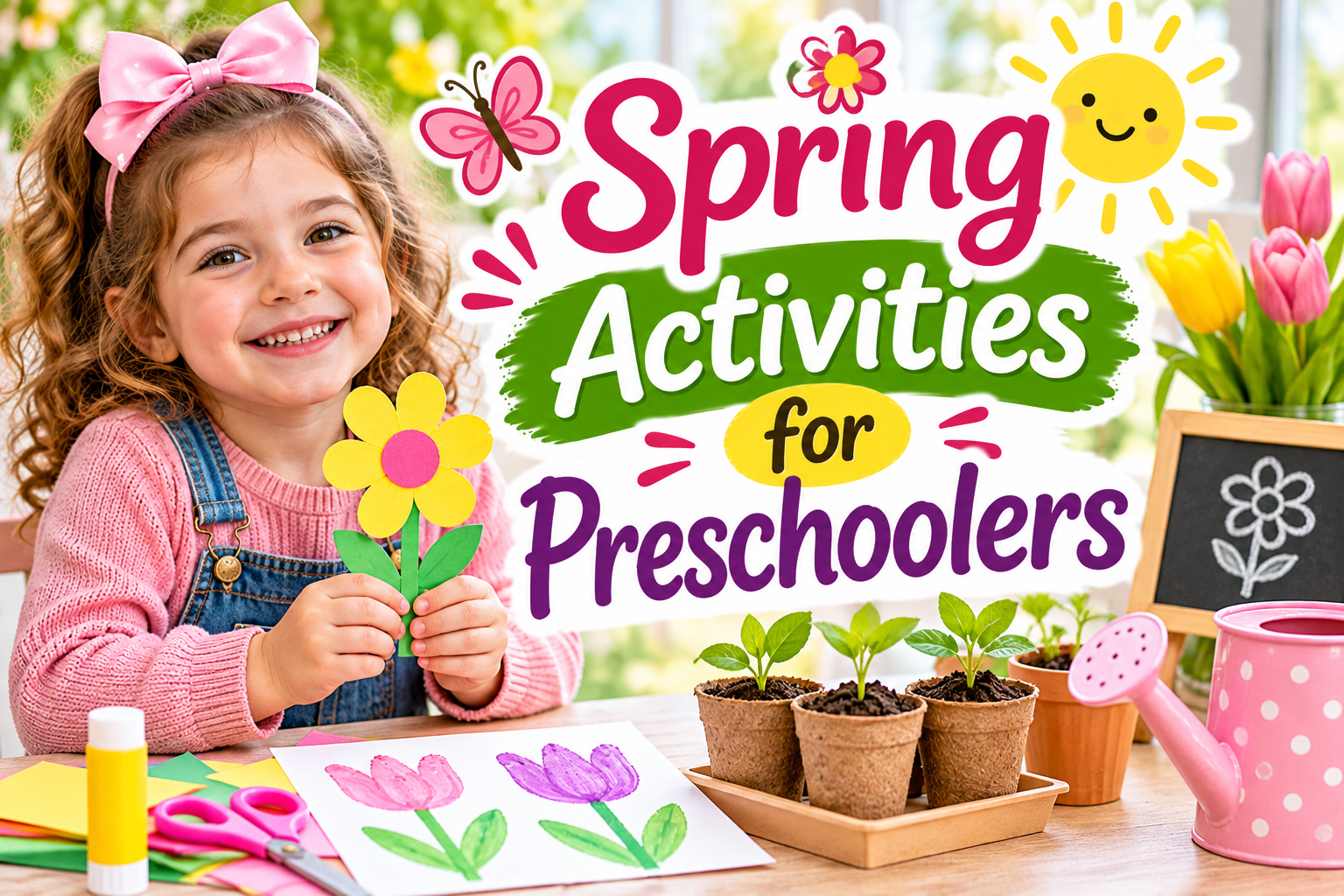
Spring is the perfect time to make learning fun with colorful flowers, butterflies, rainbows, and adorable garden-themed activities! If you’re looking for easy ways to teach your preschooler counting, letter recognition, shapes, and early reading skills, these hands-on spring activities are just what you need.
The best part? Most of these spring math and literacy activities for preschoolers use simple supplies and can be enjoyed at home, in daycare, or in preschool classrooms.
1. Spring Flower Counting Activity
Turn colorful artificial flowers into a fun counting game! Write numbers from 1 to 10 on small flowerpots or paper cups, then ask your preschooler to place the matching number of flowers inside each container.
This hands-on activity helps children practice number recognition, counting, and one-to-one correspondence while developing fine motor skills.
Shop: Artificial Flowers for Kids Crafts

2. Butterfly Alphabet Matching Game
Make learning the alphabet exciting with colorful butterfly cutouts! Write uppercase letters on one set of butterfly wings and lowercase letters on another, then let children find the matching pairs.
Start with a few familiar letters before introducing the entire alphabet. This adorable spring literacy activity encourages letter recognition and visual matching.
Shop: Alphabet Learning Flash Cards


3. Rainbow Pom-Pom Counting Mats
Rainbows make counting practice so much more colorful! Print rainbow counting mats with numbers from 1 to 10 and give your preschooler large, colorful pom-poms.
Ask them to place the correct number of pom-poms on each rainbow. This simple math activity develops counting skills, number recognition, and color identification. Choose large pom-poms and supervise children who may put small objects in their mouths.
Shop: Large Rainbow Craft Pom-Poms

4. Spring Letter Tracing with Playdough
Help your preschooler practice letter formation using soft, colorful playdough! Print large alphabet letters on laminated sheets and ask children to roll playdough into long ropes.
They can shape the dough along each letter to practice recognizing its form. Introduce spring words like flower, rain, and sun for extra vocabulary practice.
Shop: Kids Playdough Set

5. Ladybug Counting Spots Activity
Ladybugs are perfect for teaching preschoolers basic counting! Create paper ladybugs with numbers written on their wings, then give children black dot stickers.
Ask them to add the matching number of spots to each ladybug. This adorable activity reinforces number recognition and counting while strengthening fine motor skills.
Shop: Black Round Dot Stickers

6. Spring Alphabet Sensory Bin
Create a spring-inspired sensory bin filled with shredded green paper, large plastic flowers, and alphabet letters. Hide the letters inside and encourage children to find and identify them.
For an extra literacy challenge, ask your preschooler to name a spring-related word beginning with each letter they discover. Use large, age-appropriate pieces and supervise the activity.
Shop: Magnetic Alphabet Letters

7. Flower Petal Number Matching
Make beautiful paper flowers with numbers written in their centers. Cut out colorful petals and add dots to each one, representing different quantities.
Children must match the correct petal to the flower’s number. This hands-on math game encourages counting, number recognition, and problem-solving.
Shop: Colorful Construction Paper

8. Spring Beginning Sounds Matching Game
Help children build early phonics skills with spring-themed picture cards! Prepare cards showing familiar objects such as butterflies, flowers, rainbows, suns, and bees.
Say each word aloud and ask your preschooler to match it with the letter that represents its beginning sound. Keep the activity playful and focus on just a few sounds at a time.
Shop: Beginning Sounds Learning Cards

9. Butterfly Symmetry Painting Activity
Combine art and early math with a colorful butterfly symmetry activity! Fold a butterfly-shaped sheet of paper in half, then let your preschooler place a few drops of washable paint on one wing.
Fold the paper again, press gently, and open it to reveal a symmetrical butterfly design. Talk about how the patterns appear on both sides while introducing the concept of symmetry.
Shop: Washable Kids Paint Set

10. Spring Sight Word Flower Garden
Create a pretend flower garden filled with simple sight words! Write familiar words such as the, see, can, and my on paper flowers, then attach them to craft sticks.
Invite children who are ready for early reading to pick flowers, identify words, and use them in simple sentences. For beginners, replace sight words with their names or familiar letters.
Shop: Wooden Craft Sticks

11. Spring Shape Sorting Garden
Turn basic shape recognition into a cute spring garden activity! Cut large flowers from colorful paper using circles, triangles, squares, and rectangles.
Ask children to sort the flowers into matching shape categories. Encourage them to describe each shape by counting its sides and corners.
Shop: Preschool Shape Sorting Toys

12. Spring Nature Alphabet Hunt
Take literacy learning outdoors with a spring alphabet scavenger hunt! Give your preschooler a simple alphabet checklist and explore your backyard, garden, or local park.
Look for objects beginning with familiar sounds, such as B for bird, F for flower, and L for leaf. This activity builds vocabulary, observation skills, and letter-sound awareness.
Shop: Kids Nature Scavenger Hunt Cards

13. Raindrop Counting and Number Recognition
Make rainy spring days educational with a raindrop counting activity! Cut blue paper raindrops and write numbers from 1 to 10 on colorful paper clouds.
Ask your preschooler to place the matching number of raindrops beneath each cloud. For an extra challenge, arrange the clouds in numerical order before counting.
Shop: Blue Construction Paper

14. Spring Story Sequencing Cards
Help children develop early reading comprehension through spring-themed storytelling! Create picture cards showing the stages of planting a seed, watering it, watching it sprout, and seeing a flower bloom.
Mix up the cards and encourage your preschooler to place them in the correct order. Ask them to explain what happens first, next, and last to strengthen sequencing and language skills.
Shop: Preschool Sequencing Cards

15. Spring Pattern Building with Flowers and Butterflies
Introduce early math patterns with colorful spring-themed manipulatives! Gather paper flowers, butterflies, and leaves in different colors or shapes.
Start with a simple repeating pattern like flower-butterfly-flower-butterfly, then ask your preschooler to continue the sequence. As their confidence grows, introduce more challenging patterns such as flower-flower-butterfly.
Shop: Preschool Pattern Blocks

Spring Math and Literacy Skills at a Glance
| Activity | Learning Skills |
|---|---|
| Flower Counting | Counting and number recognition |
| Butterfly Alphabet Matching | Uppercase and lowercase letters |
| Rainbow Pom-Pom Mats | Counting and color recognition |
| Playdough Letter Tracing | Letter formation and fine motor skills |
| Ladybug Counting | One-to-one correspondence |
| Alphabet Sensory Bin | Letter recognition and vocabulary |
| Flower Petal Matching | Quantity and number matching |
| Beginning Sounds Game | Phonological awareness |
| Butterfly Symmetry | Early geometry and symmetry |
| Sight Word Garden | Early word recognition |
| Shape Sorting Garden | Shape identification |
| Nature Alphabet Hunt | Letter sounds and vocabulary |
| Raindrop Counting | Counting and number order |
| Story Sequencing Cards | Storytelling and sequencing |
| Spring Pattern Building | Pattern recognition |
Tips for Teaching Preschool Math and Literacy Through Play
Making learning enjoyable is especially important during the preschool years. Here are a few ways to help children get the most from these activities:
- Keep activities short: Around 10–15 minutes is a helpful starting point, depending on your child’s interest.
- Focus on hands-on learning: Children often learn best when they can touch, move, sort, and explore objects.
- Start with familiar skills: Introduce a few numbers or letters before increasing the difficulty.
- Use everyday conversations: Ask questions like “How many flowers do you see?” or “What sound does butterfly start with?”
- Encourage exploration: Let children experiment and make mistakes without pressure.
- Mix indoor and outdoor learning: Spring nature walks offer wonderful opportunities for counting, observing, and building vocabulary.
- Celebrate effort: Focus on curiosity and participation rather than getting every answer correct.
Final Thoughts
Spring is full of wonderful opportunities to make preschool learning exciting! From counting colorful flowers to matching butterfly letters and exploring nature, these 15 spring math and literacy activities help little learners develop important early skills through play.
Choose a few favorites, gather some simple supplies, and enjoy making learning a fun part of your spring routine. Remember, the goal isn’t perfection—it’s helping children feel curious, confident, and excited to discover new things!