This Post Contains Affiliate Links. Please Read Our Disclosure for Full Information.
Helping kids let go of old toys isn’t always easy. Even toys they haven’t touched in months can suddenly become favorites when it’s time to donate. With a little patience and the right approach, you can help your children make thoughtful choices, practice generosity, and create more space for the things they truly love.
1. Start With a Simple Conversation About Giving
Before pulling out toy bins, talk to your child about why donating toys can be a wonderful thing. Explain that toys they no longer use could bring happiness to another child.
Keep the conversation positive rather than making it about having too much stuff. Ask questions like, “Do you think another child would enjoy playing with this?”
A children’s book about kindness and sharing can help younger kids understand generosity through relatable stories and colorful illustrations.


2. Create Keep, Donate, and Unsure Piles
Giving kids clear choices makes toy decluttering much less overwhelming.
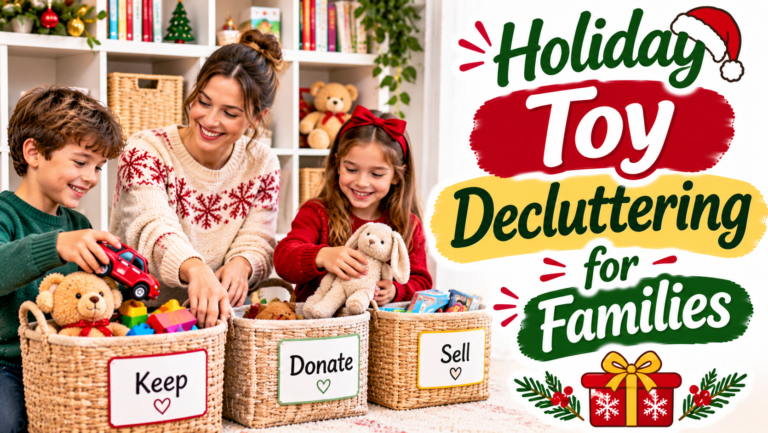
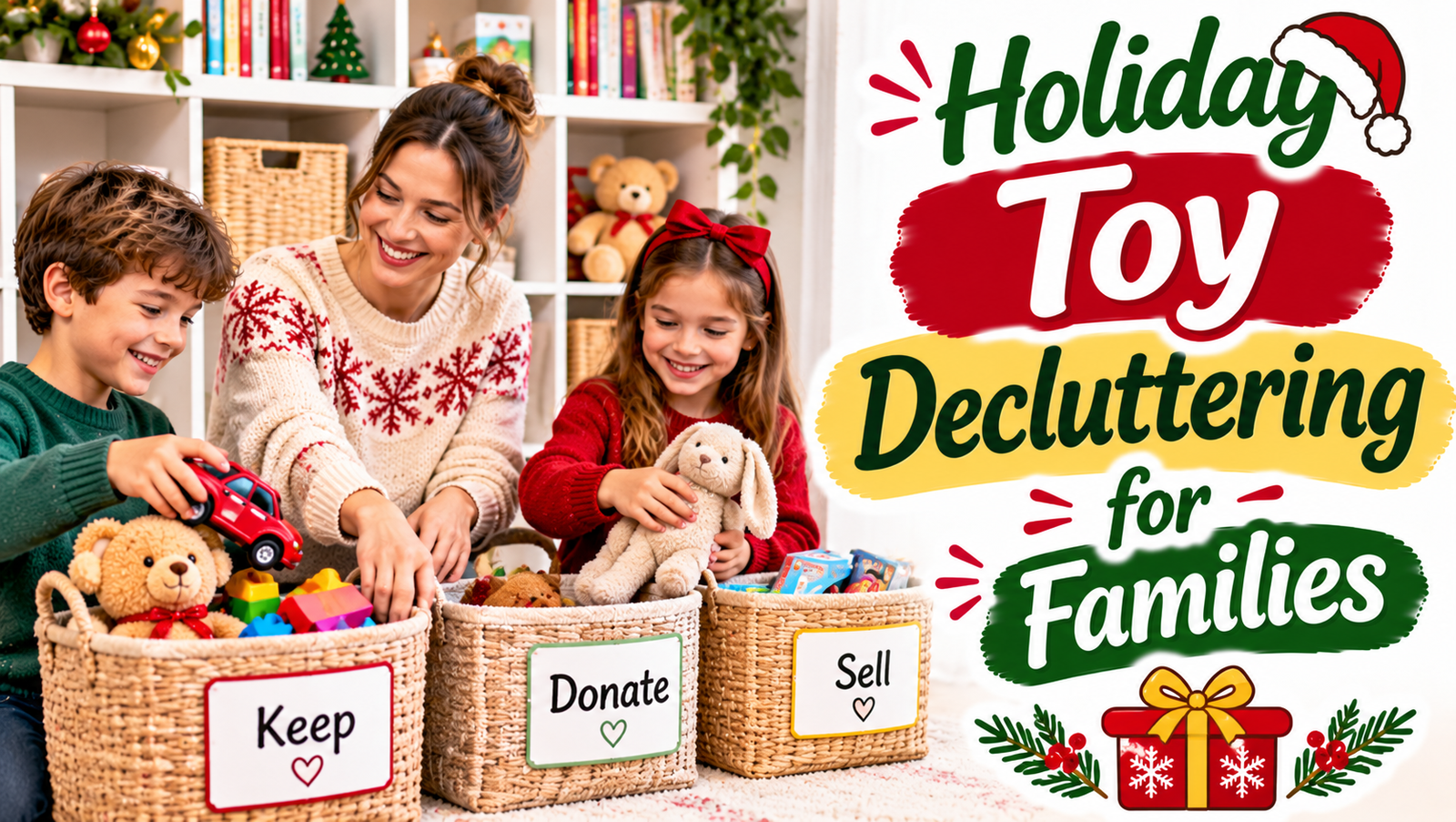
Set up three areas labeled “Keep,” “Donate,” and “Not Sure.” Let your child place each toy into a category without rushing their decisions.
The “Not Sure” pile is especially important because it gives kids permission to think about something before letting it go.
A set of collapsible storage bins makes sorting simple and keeps everything organized throughout the process.

3. Let Kids Choose Their Own Donation Goals
Instead of announcing that ten toys must go, invite your child to set a small, achievable donation goal.
They might decide to donate three stuffed animals, two puzzles, or a handful of toys they no longer enjoy.
Giving children ownership of the decision helps them feel more confident and less resistant.
Use colorful reward chart stickers to track completed sorting sessions or celebrate thoughtful decisions. Focus on their effort rather than rewarding them for donating more toys.

4. Begin With Toys They Have Outgrown
Starting with sentimental favorites can turn a simple decluttering session into an emotional battle.
Instead, begin with toys that are clearly too young for your child, such as baby rattles, toddler stacking toys, or beginner puzzles.
These are often easier to part with because your child can recognize how much they’ve grown.
A toy storage organizer with removable bins helps children see what they already own and identify toys they rarely use.

5. Make Toy Sorting a Fun Game
Decluttering doesn’t have to feel like a chore.
Turn the process into a treasure hunt by asking your child to find toys they haven’t played with recently, toys that no longer interest them, or toys they think another child might love.
You can also play a quick “Would You Rather Keep This?” game by comparing two toys at a time.
A visual countdown timer for kids can make sorting sessions feel manageable. Try a relaxed 10-minute round and stop before your child becomes tired or frustrated.

6. Use the Toy Rotation Method
Sometimes children aren’t ready to donate a toy simply because they haven’t had enough time to decide.
Try placing uncertain toys in a separate rotation box for a few weeks.
If your child asks for a toy, bring it back into their regular play area. If they don’t, gently revisit whether they’d like to keep it or donate it.
A clear plastic storage box with a lid keeps these toys protected and visible while you give your child time to make a decision.

7. Help Kids Understand Their Feelings About Toys
Children can develop strong emotional attachments to toys, even ones they rarely play with.
Instead of saying, “You never use this,” try asking, “What do you love about this toy?”
Your child might remember receiving it for a birthday or playing with it during a special family trip.
A feelings flash card set for kids can help younger children identify and express their emotions when choosing what to keep.

8. Take Pictures of Special Toys Before Donating
Some toys hold wonderful memories, even when children have outgrown playing with them.
If your child wants to remember a special toy but feels ready to pass it along, suggest taking a picture.
You could create a small photo collection of favorite childhood toys and the memories connected to them.
A kids instant print camera makes this activity more interactive, allowing children to capture and keep pictures of the toys they choose to donate.

9. Create a Special Box for Sentimental Toys
Not every toy needs to be donated.
Some stuffed animals, dolls, action figures, or handmade gifts have special meaning, and it’s perfectly okay for children to keep them.
Create a dedicated memory box for a few meaningful items that deserve a permanent place in your family’s keepsakes.
A decorative keepsake memory box gives these treasured toys a safe home without filling every bedroom shelf.

10. Give Kids Responsibility for Preparing Donations
Once your child has chosen toys to donate, invite them to help prepare everything.
They can check that puzzle pieces are complete, match toy accessories, wipe down suitable surfaces, and place items neatly into donation boxes.
This teaches responsibility and shows that donating means giving something another person can genuinely enjoy.
A pack of reusable microfiber cleaning cloths is useful for gently wiping appropriate hard-surface toys with adult guidance before packing them away.

11. Let Kids Decorate Their Donation Box
Make the donation process feel special by letting children decorate the box that will hold their chosen toys.
They might draw hearts, write encouraging messages, or add colorful decorations.
Explain that the box represents toys they have thoughtfully chosen to share with others.
A washable marker set for kids gives children an easy way to decorate paper labels or cardboard donation boxes with their own artwork.

12. Involve Kids in Choosing Where the Toys Go
Children may feel more comfortable donating when they understand where their toys will end up.
Research local charities, family shelters, community donation programs, and thrift stores together. Explain what each organization does and how donated items may help families.
Let your child help choose a suitable organization and, if possible, accompany you when dropping off the toys.
Consider using a simple gratitude journal for kids afterward. Your child can draw or write about the experience and what sharing means to them.

Always check the organization’s donation guidelines before dropping anything off. Some locations accept only certain types of toys, and many do not accept damaged items or used plush toys.
13. Make Toy Donations a Regular Family Tradition
Donating toys is easier when it becomes a normal part of family life rather than a stressful once-a-year event.
Choose a few natural opportunities, such as before birthdays, during spring cleaning, or before the winter holidays.
Invite your children to review their toys, notice how their interests have changed, and decide whether they have anything they’d like to pass along.
A family activity planner calendar can help you schedule occasional toy-sorting days alongside other family activities.

What to Do When Kids Don’t Want to Donate Toys
Even with encouragement and preparation, your child might not feel ready to part with certain toys.
That’s okay.
Try to avoid forcing decisions, secretly removing favorite toys, or making children feel guilty about keeping something they love.
Instead, acknowledge their feelings, set aside uncertain items, and revisit the conversation another day.
You can still set reasonable household boundaries around storage space while allowing children meaningful choices about their belongings.
Remember that learning generosity is a gradual process, and children develop these skills at different ages.
Final Thoughts
Helping kids choose which toys to donate is about much more than organizing a playroom. It’s an opportunity to teach kindness, decision-making, gratitude, and responsibility.
Start small, respect your child’s feelings, and make the process positive.
With patience and encouragement, children can gradually learn that passing along toys they’ve outgrown can make room for new experiences while bringing joy to someone else.