This Post Contains Affiliate Links. Please Read Our Disclosure for Full Information.
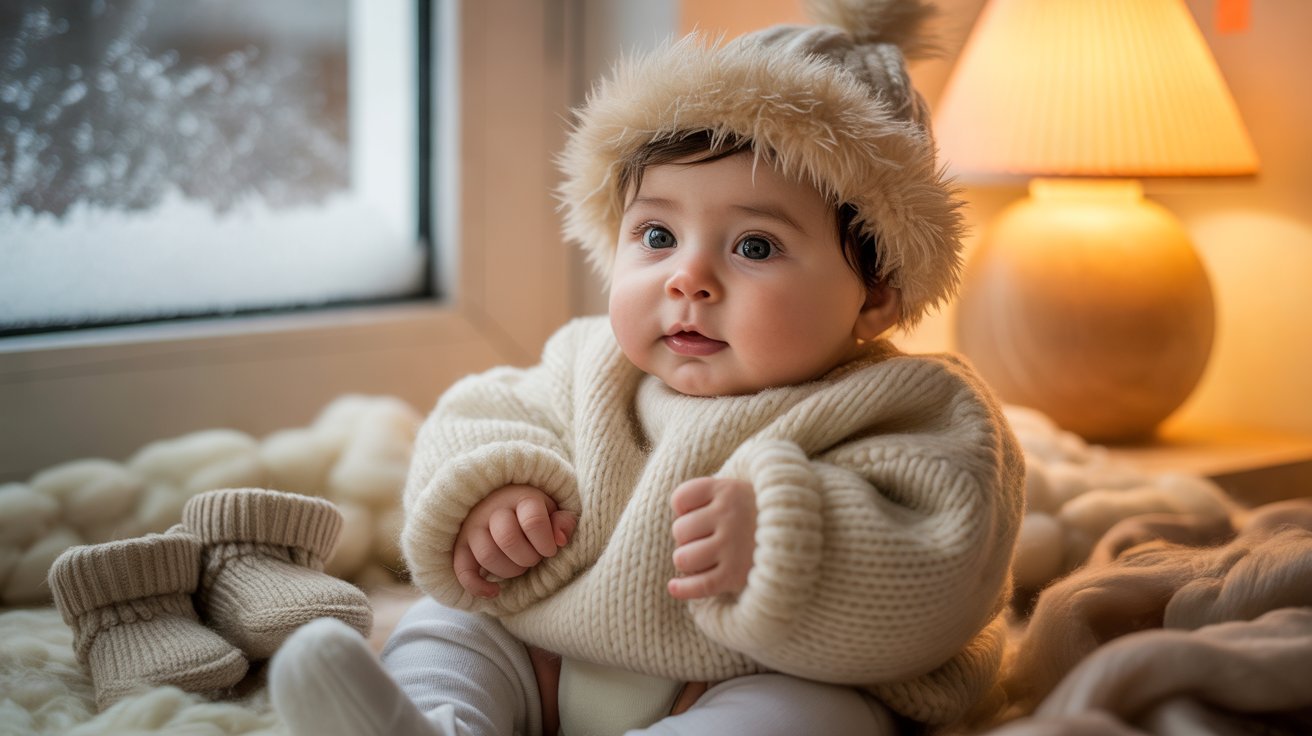
Winter with a baby is a whole different adventure, isn’t it? ❄️ Between those adorable tiny sweaters, fuzzy socks, and ridiculously cute winter hats, dressing your little one for cold weather can feel like the sweetest part of parenting.
But here’s the tricky part: how do you keep your baby warm without making them too hot?
Babies, especially newborns, aren’t as good at regulating their body temperature as adults. That means choosing the right winter clothes is about much more than picking the cutest outfit.
From layering baby clothes correctly to choosing safe sleepwear and avoiding bulky car seat jackets, there are a few important things every parent should know.
These 21 tips for dressing your baby in winter safely will help you keep your little bundle of joy comfortable, cozy, and appropriately dressed throughout the colder months. 💕
1. Dress Your Baby in One More Layer Than You’re Wearing
Wondering how many layers your baby actually needs? A helpful starting point for young babies is one more light layer than a comfortably dressed adult would wear in the same environment.
For example, if you’re comfortable in a long-sleeve shirt and sweater, your baby might need a cotton bodysuit, a sleeper, and an additional light layer.
Adjust according to the temperature and your baby’s comfort.
✨ Parenting Tip: Check your baby’s chest or upper back for warmth rather than relying on cold hands.
Explore soft cotton baby bodysuits for comfortable winter layering.


2. Start With a Soft, Breathable Cotton Base Layer
A comfortable winter outfit begins with the layer closest to your baby’s skin.
Soft cotton bodysuits are a practical choice because they’re breathable, gentle, and easy to layer underneath warmer clothing.
Choose a well-fitting bodysuit that doesn’t bunch up around your baby’s neck or restrict movement.
Long sleeves are especially useful during colder months.
✨ Parenting Tip: Look for envelope necklines or snap closures to make diaper changes and outfit changes easier.
Try long-sleeve cotton baby onesies for everyday winter comfort.

3. Choose Multiple Lightweight Layers Instead of One Heavy Outfit
One giant fluffy outfit might look adorable, but several lightweight layers are usually more practical.
Layering allows you to adjust your baby’s clothing when moving between chilly outdoor temperatures and warm indoor spaces.
Start with a bodysuit, add a comfortable sleeper, and use a lightweight sweater or jacket when needed.
✨ Parenting Tip: Remove extra layers promptly when entering heated rooms. Babies can overheat even during winter.
Shop lightweight baby cardigan sweaters for adjustable cold-weather layering.

4. Check Your Baby’s Chest or Back to Avoid Overheating
Here’s something that surprises many new parents: cold hands don’t automatically mean your baby is cold.
Babies often have cooler hands and feet because their circulation is still developing.
Instead, gently feel their chest or upper back to assess whether they’re comfortably warm.
If your baby feels sweaty, unusually hot, or flushed, remove a layer and reassess.
✨ Parenting Tip: Never keep adding clothing simply because your baby’s fingers feel chilly. Watch their overall comfort and behavior.
A lightweight baby cotton sleeper makes adjusting indoor clothing easier.

5. Keep Your Baby’s Head Warm Outdoors With a Proper Hat
A soft winter hat can help protect your baby’s head and ears when you’re heading outside in chilly weather.
Choose a hat that fits comfortably without slipping over your baby’s eyes or covering their nose and mouth.
Avoid styles with long ties, loose decorations, or dangling cords.
And remember, hats are for appropriate outdoor use—not indoor sleep.
✨ Parenting Tip: Remove your baby’s hat when returning indoors or entering a warm car to help prevent overheating.
Try a soft baby winter beanie.

6. Use Footed Pajamas to Keep Tiny Feet Comfortable
Baby socks have a mysterious talent for disappearing approximately three seconds after you put them on. 😂
That’s why footed pajamas are such a convenient winter essential.
They keep your baby’s legs and feet covered without needing separate socks that might slip off.
Choose breathable, properly fitted sleepwear appropriate for your room temperature.
✨ Parenting Tip: Make sure footed pajamas have enough room for your baby’s toes and don’t become tight when your baby stretches.
Explore cotton footed baby pajamas.

7. Never Put a Bulky Winter Coat Under Car Seat Harness Straps
This is one of the most important winter baby safety tips every parent should know.
Thick jackets and snowsuits can compress during a crash, creating dangerous slack in your baby’s car seat harness.
Instead, dress your baby in thin, warm layers and fasten the harness snugly.
Once your baby is securely buckled, place a blanket over the harness for additional warmth.
✨ Parenting Tip: Remove the blanket when the car becomes warm, and never place loose blankets between your baby and the harness.
Try a lightweight baby fleece jacket for suitable layering when it doesn’t interfere with harness fit.

8. Choose a Wearable Sleep Sack Instead of Loose Blankets
Loose blankets might seem like the coziest way to keep your baby warm at night, but they can increase the risk of suffocation.
A properly sized, non-weighted wearable sleep sack is a safer alternative for babies who need additional warmth.
Choose the appropriate fabric and warmth rating for your nursery temperature.
Always place your baby on their back on a firm, flat sleep surface.
✨ Parenting Tip: Select a sleep sack with a fitted neckline that cannot ride over your baby’s face. Avoid weighted sleep products.
Shop non-weighted baby wearable sleep sacks.

9. Avoid Overbundling Your Baby During Indoor Sleep
It’s tempting to pile on extra clothing when winter nights feel chilly, but overheating is a serious concern during infant sleep.
Dress your baby according to the room temperature rather than the outdoor weather.
A comfortable sleeper and an appropriately rated sleep sack may be sufficient.
Avoid hats, loose blankets, thick quilts, and excessive layers in the crib.
✨ Parenting Tip: If your baby’s chest feels hot or they’re sweating, remove a layer. Keep their head and face uncovered during sleep.
Try breathable baby sleepwear.

10. Keep Your Baby’s Hands Warm With Safe Clothing
Tiny baby fingers can feel chilly during winter, especially when you’re outside.
For young babies, clothing with built-in fold-over cuffs can help cover their hands without requiring separate mittens.
These cuffs are convenient because they’re attached to the garment and less likely to get lost.
Make sure the cuffs don’t restrict circulation or movement.
✨ Parenting Tip: Choose built-in mittens for appropriate outdoor use, and avoid loose accessories or dangling strings during sleep.
Explore baby sleepers with fold-over mittens.

11. Dress Your Baby According to the Actual Temperature
Not every winter day requires the same outfit.
A mild, sunny afternoon may call for fewer layers than a freezing, windy morning.
Check the outdoor temperature, wind conditions, and how long you’ll be outside before dressing your baby.
Remember that indoor heating can make thick winter clothing unnecessary once you’re back inside.
✨ Parenting Tip: Keep an extra lightweight layer in your diaper bag so you can adjust your baby’s clothing when temperatures change.
Try a baby layering cardigan.

12. Use a Stroller Blanket Safely During Outdoor Walks
A stroller blanket can provide extra warmth during chilly outdoor walks.
Place it over your baby’s legs and body while keeping their face completely uncovered.
Make sure the blanket cannot slip over their mouth or nose or become tangled around them.
Never drape a blanket over the entire stroller canopy, as this can restrict airflow and trap heat.
✨ Parenting Tip: Check your baby regularly and remove the blanket when they become too warm. Avoid loose blankets during sleep.
Find a lightweight baby stroller blanket.

13. Choose Soft Fabrics That Won’t Irritate Sensitive Skin
Baby skin can be delicate, and winter dryness may make irritation more noticeable.
Choose soft, breathable fabrics that feel comfortable against your baby’s skin.
Cotton is a practical option for base layers, while soft fleece can work as an additional outer layer when appropriate.
Avoid scratchy materials, rough seams, and clothing with irritating tags.
✨ Parenting Tip: Wash new baby clothes before their first use with a gentle, fragrance-free detergent.
Try soft organic cotton baby clothes.

14. Avoid Tight Clothing That Restricts Movement
Winter outfits shouldn’t make your baby feel like a tiny stuffed marshmallow. 😅
Choose clothing that allows your baby to move their arms, legs, and hips comfortably.
Tight waistbands, restrictive sleeves, and overly snug socks can cause discomfort.
Check that layers don’t bunch up around your baby’s neck or under their arms.
✨ Parenting Tip: Look for stretchy fabrics and flexible seams, especially for babies who are beginning to roll, crawl, or explore.
Shop stretchy cotton baby rompers.

15. Choose Easy-to-Remove Layers for Diaper Changes
Winter diaper changes can feel like an Olympic event when your baby is wearing five complicated layers.
Make life easier by choosing clothes with convenient snap buttons, two-way zippers, or envelope necklines.
These features allow you to change diapers without completely undressing your baby.
Less time exposed during changes means less discomfort in a chilly room.
✨ Parenting Tip: Keep a clean diaper and wipes ready before opening your baby’s clothing to make changes quicker.
Try two-way zipper baby sleepers.

16. Keep an Extra Winter Outfit in Your Diaper Bag
Babies have an impressive ability to create laundry emergencies at the worst possible moments.
Spit-up, diaper leaks, and unexpected spills can leave clothing damp and uncomfortable during winter outings.
Pack an extra bodysuit, sleeper, and pair of socks in your diaper bag.
Store them in a clean, waterproof pouch so they’re easy to find.
✨ Parenting Tip: Check your backup outfit regularly because babies grow quickly, and last month’s clothes may no longer fit.
Try a waterproof baby clothes storage pouch.

17. Remove Extra Layers When Entering Heated Buildings
Moving from chilly outdoor air into a heated store, restaurant, or home can quickly make your baby too warm.
Remove hats, heavy outer layers, and unnecessary blankets once you’re inside.
Babies may not be able to communicate overheating clearly, so regularly check their comfort.
Watch for sweating, flushed skin, or unusual warmth.
✨ Parenting Tip: Choose zip-up jackets or button-front cardigans so you can adjust your baby’s clothing without completely undressing them.
Explore zip-up baby fleece jackets.

18. Protect Your Baby’s Feet With Comfortable Socks
Keeping tiny toes comfortable is important during cold-weather outings.
Choose soft, breathable socks that fit snugly enough to stay on without leaving deep marks around your baby’s ankles.
For babies who aren’t walking yet, warm socks or soft booties are usually more practical than stiff shoes.
✨ Parenting Tip: Check sock cuffs regularly to make sure they’re not too tight. Remove damp socks promptly to keep your baby’s feet comfortable.

19. Use a Room Thermometer to Guide Nighttime Clothing
Guessing whether your baby’s nursery is too warm or too cold can be stressful.
A room thermometer helps you monitor the actual temperature instead of relying on how the room feels.
Use that information alongside the sleepwear manufacturer’s temperature guidance to choose appropriate clothing and sleep sack warmth.
Avoid trying to make the room excessively warm.
✨ Parenting Tip: Keep your baby’s sleep area away from direct heating vents and portable heaters. Check their chest or back for signs of overheating.
Try a digital nursery room thermometer.

20. Avoid Loose Scarves and Clothing With Dangling Strings
Tiny scarves might look adorable in winter photos, but loose accessories can create strangulation or entanglement hazards.
Avoid dressing babies in scarves, neck warmers with loose ends, or clothing with long drawstrings.
Instead, choose properly fitted jackets with comfortable neck coverage that doesn’t interfere with breathing.
Keep decorative cords and detachable accessories away from your baby’s face and neck.
✨ Parenting Tip: Check winter outfits for loose buttons, detachable decorations, and other small parts before dressing your baby.
Explore baby winter jackets without drawstrings.

21. Watch Your Baby’s Comfort Instead of Following a Strict Layering Rule
Every baby is different, and the perfect winter outfit depends on the weather, activity, age, and individual comfort.
Use layering recommendations as a starting point, not a rigid formula.
Check your baby’s chest or back, observe their behavior, and adjust clothing when needed.
If your baby is unusually sleepy, difficult to wake, has breathing problems, or shows signs of significant cold stress or overheating, seek urgent medical care.
✨ Parenting Tip: Keep a few versatile baby winter layering essentials available so you can make quick clothing adjustments.

Quick Winter Baby Dressing Guide
Here’s a simple reference to help you choose practical winter clothing for different situations.
| Situation | Suggested Clothing Approach |
|---|---|
| Mild indoor temperature | Comfortable cotton sleeper or appropriate light layers |
| Cool indoor room | Sleeper with a properly rated, non-weighted sleep sack for sleep |
| Chilly outdoor walk | Breathable base layer, warm outer layer, and suitable outdoor hat |
| Very cold outdoor conditions | Additional adjustable layers and limited exposure |
| Car seat travel | Thin layers under a snug harness; blanket over secured harness if needed |
| Indoor nap or nighttime sleep | Appropriate sleepwear, no hat, loose blankets, or weighted products |
| Heated shopping mall | Remove outdoor hats and extra layers |
| Stroller outing | Weather-appropriate clothing with unobstructed airflow |
Important: This guide is general information, not a fixed temperature chart. Premature babies, newborns with medical conditions, and babies with difficulty regulating body temperature may need individualized advice from their pediatrician.
Frequently Asked Questions About Dressing Babies in Winter
How many layers should a baby wear in winter?
A common starting point for young babies is one more light layer than a comfortably dressed adult in the same environment. Adjust based on the actual temperature, your baby’s comfort, and whether they’re awake or sleeping.
How do I know if my baby is too cold?
Check your baby’s chest or upper back rather than relying only on their hands and feet. A persistently cool trunk, unusual lethargy, poor feeding, or concerning behavior warrants prompt medical attention. A baby who seems seriously unwell needs urgent assessment.
Can babies sleep wearing winter hats?
No. Babies should generally sleep indoors with their heads uncovered. Hats during sleep can contribute to overheating and may slip over the face.
Is it safe to put a baby in a car seat wearing a winter jacket?
Bulky winter coats and snowsuits should not be worn underneath car seat harness straps because they can prevent a secure fit. Use thin layers, buckle the harness snugly, and add warmth over the secured harness if needed.
Should I cover my baby’s stroller with a blanket in winter?
You can use an appropriately positioned blanket over your baby’s lower body while supervised, but never cover the entire stroller with a blanket. Doing so can restrict airflow, trap heat, and make it difficult to monitor your baby.
What is the safest way to keep a baby warm while sleeping?
Use appropriate, well-fitting sleepwear and, if needed, a properly sized non-weighted sleep sack. Place your baby on their back on a firm, flat sleep surface without loose blankets, pillows, toys, or other soft bedding.
Final Thoughts
Dressing your baby for winter doesn’t have to feel like a daily guessing game. ❄️💕
The key is finding that sweet spot between keeping your little one comfortably warm and avoiding overheating.
Start with soft, breathable layers, choose practical winter clothing, and make adjustments as temperatures change throughout the day.
Remember that safe winter baby clothing is about comfort, proper fit, and temperature awareness—not simply adding more layers.
Pay special attention to safe sleep practices and car seat safety, since these are two situations where bulky clothing and extra blankets can create unnecessary risks.
And don’t forget to trust your observations. You know your baby’s usual behavior, and noticing changes in comfort, feeding, or alertness can help you recognize when something needs attention.
With a little preparation, you can enjoy cozy winter mornings, peaceful indoor snuggles, and those adorable cold-weather outings with greater confidence.
Save these 21 tips for dressing your baby in winter safely to your Pinterest baby care board so you’ll have them handy throughout the colder months.
Stay warm, stay safe, and enjoy those precious winter cuddles! 🤍