This Post Contains Affiliate Links. Please Read Our Disclosure for Full Information.
Snowy days are perfect for turning curious little minds into mini scientists! ❄️🔬
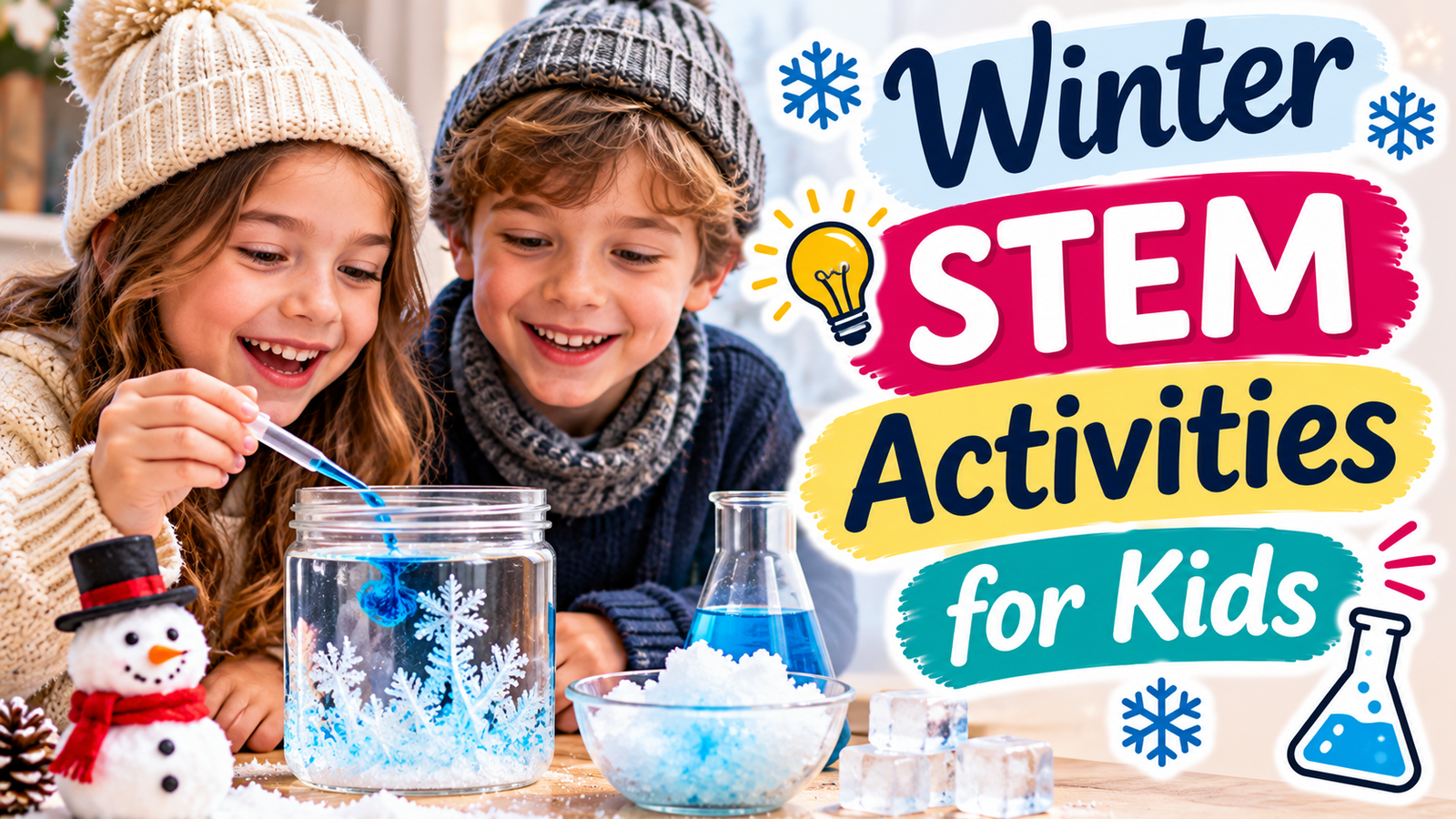
These 15 snow science activities for preschoolers make learning about melting, freezing, temperature, and winter weather exciting. With simple supplies and hands-on experiments, kids can explore science through play, whether you’re using real snow or homemade alternatives.
1. Snow Melting Experiment
Discover what happens when snow comes indoors with this simple preschool science experiment.
Fill two clear containers with equal amounts of snow. Place one in a warmer room and the other in a cooler indoor location.
Let your preschooler predict which container will melt first, then observe the changes together.
✨ Parenting Tip: Ask, “Where did the snow go?” to introduce the idea that snow melts into liquid water.
Shop clear science experiment containers on Amazon.

2. Colorful Snow Mixing Experiment
Turn ordinary snow into a colorful science activity!
Fill a shallow tray with clean snow and provide small cups of water mixed with washable food coloring.
Let children use droppers to add different colors and watch how they spread through the snow.
✨ Parenting Tip: Encourage preschoolers to predict what happens when blue and yellow colors meet.
Shop kids science droppers on Amazon.

3. Salt and Snow Melting Experiment
Explore how salt affects melting snow with an easy winter science activity.
Fill two shallow containers with similar amounts of snow. Sprinkle a little salt over one container while leaving the other untouched.
Watch what happens and compare the results.
✨ Parenting Tip: Explain that salt can help ice and snow melt by lowering the freezing point of water. Supervise closely and keep experiment materials out of mouths.
Shop preschool science experiment trays on Amazon.

4. Snow Temperature Investigation
Help preschoolers explore the difference between warm and cold temperatures.
Place snow in a container and use a child-friendly thermometer to measure its temperature with adult assistance.
Compare it with the temperature of room-temperature water.
✨ Parenting Tip: Introduce simple words like cold, warm, freezing, and melting while observing the thermometer.
Shop kids science thermometers on Amazon.


5. Snow and Ice Comparison Activity
Snow and ice are both forms of frozen water, but they look and feel different.
Place a small amount of snow and a few ice cubes in separate clear containers.
Let children observe their shapes, textures, and melting behavior.
✨ Parenting Tip: Ask, “Which one feels fluffy?” and “Which one looks smooth?” to encourage observation and descriptive language.
Shop preschool observation trays on Amazon.

6. How Much Water Is in Snow?
This snow science experiment introduces preschoolers to the idea that fluffy snow contains frozen water.
Fill a clear measuring cup with loose snow and mark the snow level.
Allow it to melt completely, then compare the remaining water level with the original snow level.
✨ Parenting Tip: Let your child guess whether the melted water will fill the entire cup before revealing the result.
Shop plastic measuring cups for kids on Amazon.

7. Snowball Melting Race
Make learning about melting fun with a friendly snowball experiment.
Create two similarly sized snowballs and place them in separate containers.
Set one in a warmer indoor spot and the other in a cooler location. Observe which snowball melts faster.
✨ Parenting Tip: Ask children to make a prediction before starting and celebrate their curiosity regardless of the outcome.
Shop kids science activity containers on Amazon.

8. Snowflake Observation Activity
Snowflakes are fascinating examples of patterns found in nature.
Catch falling snowflakes on a dark piece of chilled paper or fabric and observe them using a magnifying glass.
Encourage children to notice different shapes and patterns before the snowflakes melt.
✨ Parenting Tip: Explain that snowflakes are made of ice crystals and often have six-sided structures.
Shop magnifying glasses for preschoolers on Amazon.

9. Make Fake Snow With Baking Soda
No real snow outside? Create a winter-inspired sensory science activity indoors!
Mix baking soda with small amounts of water until it forms a crumbly, snow-like texture.
Let preschoolers explore the texture using scoops, spoons, and small containers.
✨ Parenting Tip: Explain that this is pretend snow, not real frozen water. Supervise closely, avoid creating airborne powder, and remind children not to taste it.
Shop winter sensory play tools on Amazon.

10. Snow Absorption Experiment
Explore how different materials absorb water as snow melts.
Place equal amounts of snow on a paper towel, sponge, and plastic tray.
Watch what happens as the snow melts and compare how the materials handle the water.
✨ Parenting Tip: Introduce the word absorb by explaining that some materials soak up water while others do not.
Shop preschool science activity kits on Amazon.

11. Snow and Warm Water Experiment
Discover how warm water changes snow with a simple hands-on activity.
Place snow inside a shallow tray and provide a small cup of comfortably warm water.
Let children use a dropper to slowly add water to the snow and observe how quickly it melts.
✨ Parenting Tip: Use lukewarm water, never hot water, and encourage children to describe what they see happening.
Shop large plastic pipettes for kids on Amazon.

12. Build and Test Mini Snow Structures
Turn snow into a fun building and engineering challenge.
Give preschoolers small cups, molds, and scoops to create miniature snow towers or snow castles.
Try building with loose snow and slightly packed snow to compare which structures hold their shape better.
✨ Parenting Tip: Ask, “What makes your snow tower stronger?” to introduce basic engineering and problem-solving skills.
Shop snow building molds for kids on Amazon.

13. Snow Freezing and Melting Cycle
Introduce preschoolers to the water cycle with a simple freezing and melting experiment.
Let a small container of snow melt into water, then pour the water into an ice cube tray.
An adult can place the tray in the freezer and show the children how liquid water becomes solid ice again.
✨ Parenting Tip: Use the words solid, liquid, freeze, and melt to help children understand changes in water.
Shop silicone ice cube trays on Amazon.

14. Snow Melting on Different Surfaces
Does snow melt at the same speed on every surface? Let preschoolers investigate!
Place similar amounts of snow on a metal tray, plastic plate, and wooden board that have been kept in the same room.
Observe the snow over time and compare how quickly it melts.
✨ Parenting Tip: Explain that different materials transfer heat differently, which can affect how snow melts.
Shop kids science observation supplies on Amazon.

15. Snow Prediction and Observation Journal
Turn snow science into a simple preschool journaling activity.
Before each experiment, ask children to predict what will happen.
Let them draw pictures of the snow before and after the activity, then talk about what they discovered.
✨ Parenting Tip: Use a three-step format: “I think,” “I see,” and “I learned.” Preschoolers can draw their answers while adults write down their words.
Shop preschool science journals on Amazon.

Quick Tips for Snow Science Activities With Preschoolers
A few simple preparations can make winter science experiments safer, easier, and more enjoyable.
- Keep activities short: Most preschoolers enjoy experiments that take around 10–20 minutes.
- Use shallow containers: Trays and clear plastic bowls make observations easier.
- Encourage predictions: Ask what children think will happen before each experiment.
- Introduce simple science words: Practice terms like melting, freezing, temperature, and absorb.
- Prepare for spills: Keep towels nearby when experimenting with snow and water.
- Supervise every activity: Avoid tasting snow or experiment materials, and wash hands afterward.
- Stay warm outdoors: Use appropriate winter clothing and bring activities inside when children become uncomfortable.
- Try indoor alternatives: Ice cubes and homemade sensory snow work well when natural snow isn’t available.
Final Thoughts
Snow offers wonderful opportunities for preschoolers to explore science through curiosity, observation, and hands-on play. ❄️💙
These 15 snow science activities for preschoolers make it easy to introduce early STEM concepts while keeping winter learning exciting and age-appropriate.
Whether you’re watching snow melt, experimenting with colors, building mini snow structures, or exploring frozen water, every activity offers something new to discover.
Start with a simple melting experiment, ask plenty of questions, and let your little scientist lead the exploration!
Save these 15 snow science activities for preschoolers to your Pinterest winter activities for kids board for fun and educational snowy-day inspiration! ✨